
CBD In Europe: Is it Becoming Popular?

In the early 2010s, the rest of the United States turned to Colorado as an example of the potential success of cannabinoid commerce. Similarly, Europe is now looking to the United States as an example of how to mainstream cannabinoids into the everyday lives of shoppers.

There’s no reason to overstate the situation, and on the contrary, honesty helps the most: European CBD is not the sister of the American market that many hoped it would be by now. Where some see delays, though, others will envision persistent opportunities.

Just because European CBD hasn’t grown the way we expected doesn’t mean it isn’t growing. Where there’s growth, there’s an opportunity — learn the best approaches to the still-hesitant European market in this guide.

Overview of European CBD

Despite being host to many distinct cultures, Europe has politically aligned with the United States since the formation of the North Atlantic Treaty Organization (NATO) after the events of World War II. As a result, most political movements that gain steam in the USA echo across the Atlantic — albeit, often in miniature.

The UK was one of the first major European powers to accept CBD. Once Germany, considered by most to be the de facto head of the European Economic Area (EEA), also gave the green light to hemp-derived cannabinoids, it wasn’t long before the entire EEA began accepting CBD products with less than 0.2% THC — with a few exceptions, of course.

Some EEA nations, including Scandinavian countries Norway and Sweden, do not allow CBD products across their borders that contain any detectable traces of THC. Such complexities are simply to be expected from the immensely multifaceted European market, which spans dozens of cultures and biomes while crisscrossing a fractal patchwork of perpetually revised national names and borders.

History of CBD in Europe

European CBD remained in a gray area for a number of years after its (somewhat) official acceptance in the United States in 2014. The first CBD products became available in the UK sometime circa 2016, but they were often sold outside of existing regulatory capacities amidst a seeming disinterest among domestic law-enforcement agencies.

The UK is the most USA-aligned nation in Europe, which it demonstrated during the Brexit movement of 2016. As CBD became popular in the UK, the phenomenon began spreading into nearby EU nations, prompting the attention of France, Germany, and other major economic powers.

By 2018, the UK had approved medical CBD for a handful of conditions, simultaneously giving an indirect nod to the CBD general market. Products containing less than 0.2% THC generally were now given a pass as the nation sought to establish more-comprehensive cannabinoid legislation.

That legislation has still yet to materialize, but the EU has moved on ahead without the UK. Bulgaria was the first EU nation¹ to officially allow general-market CBD commerce in 2019, and most other EU countries rapidly followed suit.

The current situation

Do not mistake the current stance of laissez faire acceptance of CBD in Europe for a definitive ruling on the matter. Though it likely would not admit it frankly, the EU is almost certainly waiting for the US to say anything truly definitive on the subject of CBD, an event the whole world has been eagerly anticipating for nigh-on a decade.

In the meantime, the most likely possibility is that the European Commission has simply deemed CBD too complicated to either fully regulate or fully ban. Individual member nations appear to be doing fine with the current situation even if it remains somewhat undetermined. There is not currently considerable impetus to change anything — until the US makes the first move, that is.

The latest Prohibition Partners data

As bureaucrats debate in the background, average Europeans are cautiously exploring the international, massively diverse CBD market that has suddenly emerged in EEA countries. Put simply, Europeans haven’t yet incorporated CBD into their daily habits as fully as Americans, but all evidence indicates that they’re well on their way:

– Major impediments to CBD industry growth have disappeared
– Europeans are producing CBD products that rival American quality
– Average people know what CBD is and are open to trying it
– Perspectives on cannabinoids continue to evolve throughout Europe

To add some solidity to our statements, we’ll look at the latest data from cannabis market analyst Prohibition Partners. Just published in January 2023, a report² shows that Europeans are certainly exploring the cannabinoid even if it might be some time before CBD adoption levels equalize between American and European markets.

The Prohibition Partners report focused on one specific metric of CBD use: Frequency among existing users. Put another way, Prohibition Partners wanted to know how often European CBD users use CBD. Here’s what they found out:

– 16.4% use CBD once or more per day
– 12% use CBD twice or more per week
– 11.5% use CBD at least once per week
– 12.4% use CBD at least once per month
– 14.4% use CBD every few weeks

– 33.2% only use CBD infrequently

Comparison to the American market

There are no exact, direct comparison sets of data to use when judging the differences between American and European CBD use patterns. In 2020, however, New Frontier Data released a report³ that provides roughly comparable results, but in regards to American CBD users:

– 21% use CBD once or more per day
– 19% use CBD at least once per week
– 17% use CBD at least once per month
– 18% use CBD every few weeks
– 25% only use CBD infrequently

At a glance, more American CBD users enjoy the cannabinoid on a daily basis in the United States, and fewer use CBD infrequently. The Prohibition Partners splits respondents into six cohorts while the New Frontier report only has five, so the results are not directly comparable.

It’s also worth noting that the European data provided by Prohibition Partners is three years newer than Frontier’s American results. If recent trends are any consideration, it’s almost a certainty that CBD has reached considerably greater acceptance in the United States over the last three years.

What CBD use frequency means

In big-picture terms, how does CBD use frequency translate into overall sales and market growth? Put as simply as possible, the more CBD people use, the more they will buy. CBD use frequency is, therefore, one of the key drivers supporting overall CBD market growth, which is, in turn, the primary determiner of profit capacity.

How frequently a single CBD user repurchases the cannabinoid has little impact on the future of a region’s cannabinoid industry. If all CBD users in a given region repurchase cannabinoid products at a considerably greater rate, however, growth of the CBD industry in that region will swell rapidly.

Making CBD In Europe an integral product

The goal, then, is to help European CBD customers catch up to American use frequency. Inherent cultural differences may make exact equity in this regard impossible, but there are certainly effective methods for gently encouraging Europeans to use CBD more often:

Express the benefits

Despite their origination in Eurasia, cannabis and cannabinoids are often seen as an American phenomenon in Europe. Predominantly culturally conservative throughout America’s mid-century transformation, Europeans have traditionally held a skeptical view toward cannabis.

Today, individuals marketing CBD in both regions might find Europeans at once more skeptical and less educated regarding CBD. That’s a reflection of the relative lack of prevalence of CBD in Europe combined with a culture that still largely views anything that comes out of cannabis as a drug.

It is very important, as a result, to express all the benefits of CBD in Europe with the utmost clarity — especially the cannabinoid’s lack of intoxicating properties.

Explain superiority over competing products

As once was (and, in some ways, still is) the case in the United States, many Europeans simply don’t understand why they should use CBD instead of ibuprofen, melatonin, or other non-prescription products they rely on daily. Europeans are even more enthusiastic about natural and organic products than Americans, though, making it imperative to point out how CBD is an all-natural, plant-derived substance that interacts with your system gently and mildly.

Stress affordability

CBD has something unavoidable going against it in Europe — socialized medicine. In many European countries, pharmaceutical medications are free to the consumer (or nearly so) while CBD products are usually only purchasable out of pocket.

Europeans must, therefore, be convinced that CBD is superior enough to their existing medical and relaxation solutions to be worthy of the increased cost. As long as it is done delicately, you can even use CBD’s outlier status to your advantage by pointing out that it simply is not available through government-subsidized means of acquisition.

Normalize European CBD

Perhaps, in the end, much of the reticence Europeans have shown towards CBD comes from a feeling of lack of ownership. CBD is a seemingly American phenomenon, and they aren’t sure if they should partake.

The brands that succeed in Europe will be those that make CBD European. When it comes to CBD, Europeans don’t want the unfamiliar and the different. They want safety, affordability, and reliability.

Understanding and respecting the European market

It is a distinctly American mistake to assume that cultural values in Europe and America are the same. On the whole, Europeans are proud of their often-ancient cultures and aren’t keen to be lectured on the art of life by those from relatively newer societies, such as the United States.

When the benefits of CBD are expressed to Europeans, it should be done so in the same way you would tell a friend who has been away about recent developments at home. Friendliness goes a long way, but assuming too much will turn a friendly Euro encounter into unexpected culture shock.

As an example of how to set the proper mood, keep in mind that the Cannabis sativa plant itself originated in Eurasia. People of the Old World have been cultivating and preparing cannabis in extracts for uncounted millennia.

Just because contemporary Americans have learned how to isolate and industrialize cannabinoids does not make cannabis any less a plant of European heritage. Today’s Europeans might simply be reminded that many great powers must break away from their points of origin to reach full fruition — powers, perhaps, even as great as cannabis and its priceless cask of cannabinoids.

Sources

1. Hasse, J. (2019, May 23). This EU Country Has Become The First To Allow Free Sale Of CBD. Forbes. https://www.forbes.com/sites/javierhasse/2019/05/23/this-eu-country-has-apparently-become-the-first-to-allow-free-sale-of-cbd/?sh=3fc6a34936c9

2. The European CBD Report: Health & Wellness | Reports | Prohibition Partners. (2023, February 10). Prohibition Partners. https://prohibitionpartners.com/reports/the-european-cbd-report-health-and-wellness/

3. New Frontier. (n.d.). 2020 U.S. CBD Report. https://newfrontierdata.com/cannabis-insights/frequency-of-use-among-u-s-cbd-consumers/
CBD for Pets vs. Humans: Differences in Products and Dosages

Just like humans, most pets are equipped with endogenous systems designed to handle cannabinoids. That doesn’t mean, though, that CBD products for pets and humans are exactly the same.

In most cases, there’s no danger in using a CBD product that isn’t explicitly designed for your species. Man and beast alike, though, both benefit from using the products that are best for them. In this guide, learn the differences between CBD products made for pets and humans, and find out how to correctly determine CBD dosage in any animal.

CBD use in mammals

As a class of animals, all mammals are equipped with endocannabinoid systems. This is an endogenous system of neuroreceptors and signaling compounds that mainly processes body-generated, cannabinoid-like substances like anandamide¹.

When mammals ingest cannabinoids, their endocannabinoid systems are activated, leading to a relatively typical response across species. Of course, peculiarities of biology vary between mammals, leading to commensurately varied responses. Overall, though, all mammals are equipped with roughly similar systems for handling cannabinoids, usually making it acceptable to share these unique cannabis compounds with pets.

CBD use in humans

The safety² and basic usage parameters³ of CBD in humans are now reasonably well understood. Scientists have been gathering evidence regarding the usefulness of CBD in humans for more than 70 years, and this research has accelerated massively in the era of the online CBD industry.

Put simply, most people can tolerate reasonable doses of CBD reasonably well. Initial research indicates that CBD remains well-tolerated in excess of 1500mg per day, which is the average dose contained in an entire CBD tincture product.

Overall, CBD usage in humans does not appear to pose any considerable danger, and it may offer impressive benefits. Our understanding of the usefulness of CBD in humans has helped us better understand how this substance might also be of use in other animals.

CBD use in pets

Noting the effectiveness they experienced when using CBD, owners began giving CBD to their pets. Almost immediately, hundreds of pet owners took to social media and product review pages to rave about the incredible results they’d witnessed in their animals.

Dogs with anxiety could now be left alone, remaining relaxed when their owners returned home. Neurotic cats would finally leave heat spots alone. Some pets even seemingly defied serious illnesses, securing markedly improved quality of life.

Not all pets react to CBD the same, however, and all pets handle CBD at least a little bit differently than humans.

CBD use in non-mammal animals

Cannabis researchers have concluded that some form of an endocannabinoid system exists in every animal on earth except insects and protozoa⁴. This means birds, lizards, and even fish have endocannabinoid systems that might be impacted by CBD usage. The overall physiology of non-mammal animals is so different, however, that it would be prudent to consult with a veterinarian before going any further.

Types of CBD products for humans

The human-oriented face of the CBD industry has recently consolidated into a handful of popular product types. Alongside tinctures and capsules, which have always enjoyed roughly the same degree of relative popularity, CBD shoppers have welcomed edibles like gummies and topicals like lotions or salves. We’ll discuss each of the major types of CBD products used with humans below:

Tinctures

Also known as CBD oils, CBD tinctures are the original products — they’re what made CBD popular, and they still serve as the backbone of the modern hemp industry. Shoppers love the simplicity of ingredients and pinpoint dosing offered by tinctures.

Topicals

CBD topicals have primarily become popular among two groups of customers — people managing chronic pain and those focused on preserving beauty or preventing aging. Over the last decade, chronic pain sufferers have looked on with guarded hope as thousands of testimonials to the pain-fighting efficacy of CBD appeared online.

More recently, the apparent antioxidant benefits of CBD have attracted the attention of beauty-focused individuals as well. CBD facial serums and moisturizers have proliferated particularly well, and while sometimes admittedly overpriced, cannabinoid-infused cosmetic products appear to have genuine benefits.

Edibles

In recent years, CBD edibles like gummies have shot ahead to become some of the most popular online cannabinoid products. It’s unclear why it took so long for this product category to reach its full potential, but whatever the case may be, shoppers now flock to the delicious convenience of CBD gummies and similar edibles, which cover up the taste of hemp oil while also making every dose of cannabinoids into a sweet treat.

Capsules

CBD capsules remain popular even though gummies now also present a viable alternative to tinctures. For some, the advantages of CBD capsules remain unassailed: The ingredients are as simple as possible, there are no spikes in blood sugar to worry about, and taking CBD is just as easy as taking any other daily pill. Cannabinoid capsules are nothing fancy, but that’s precisely the point.

Inhalants

There are two primary ways that people inhale CBD: vaping and smoking. Vaping is when you vaporize cannabinoids before inhalation with a device such as a vape cartridge or disposable vape pen. Smoking is a more-familiar practice that involves fully incinerating cannabinoid-bearing plant material prior to inhalation. Noting that both methods of using cannabinoids are currently untested.

Types of CBD products for pets

Now that we’ve covered the primary ways humans use CBD, it’s time to turn to the methods chosen for their pets;

Tinctures

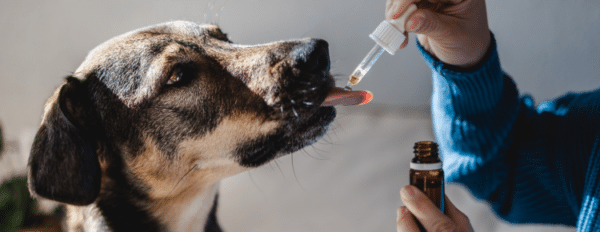
Just as is the case with humans, tinctures are the most popular CBD product given to pets. This approach might seem like quite the undertaking, but owners have developed a variety of ways to give pets tinctures orally:

  • Simply holding the mouth and facilitating swallowing
  • Adding the tincture to food
  • Allowing it to absorb into a treat
  • Dosing the dog while asleep

Topicals

Pets are like humans in that some conditions are best treated topically. In the case of heat spots, for instance, some owners apply CBD lotions or salves directly to the affected area. Of course, applying CBD topicals becomes much more difficult in situations where fur is still present.

Treats

Humans have edibles, pets have treats. CBD-infused dog treats are all the rage among owners these days, and CBD treats for cats are also catching on. Chances are that if there’s a pet, there’s a CBD product that has been designed with its species in mind.

Infused toys

If you look hard enough, you’ll come across CBD-infused chew toys for dogs sold online. These products are invariably of questionable quality and safety, though, and serve more of a novelty function rather than providing any genuine value. It is advised to consult with a veterinarian prior to giving this product to your pet.

CBD dosage in humans

Giving CBD to humans and pets isn’t exactly the same. Below, we’ll start by taking a look at proper dosing considerations in humans and then move on to pets.

Average dosing by weight

There is no universally determined ideal daily dose of CBD by weight. It has been suggested, though, that a daily range of 1-50mg/kg (milligrams-per-kilograms) of CBD is acceptable with an ideal daily range sitting somewhere closer to the 1-3mg/kg mark.

For context, an average adult male weighs around 60kg and a female weighs around 50kg. As a result, an ideal daily dose of CBD in males may range anywhere from 60-180mg while an ideal dose in women would be 50-150mg. Keep in mind that it appears this recommendation can normally be exceeded by at least ten times without noticing any significant deleterious effects.

Special considerations

When determining ideal CBD dosing in humans, conflicts with other substances and medications must be kept in mind. While not usually dangerous, CBD competes for enzymes used to metabolize many common drugs — usually drugs that come with a “grapefruit warning.”

If using drugs that conflict with CBD, lower doses may be recommended, or it may be recommended that CBD not be used at all. Human users of CBD should seek medical consultation before and while using the cannabinoid.

CBD dosage in pets

CBD dosing in pets is more difficult to determine specifically given the vast differences between domesticated animal species. We can discuss generally, though, the considerations that should be taken when determining CBD dosing in animals.

Average dosing by weight

Very little research has been conducted into ideal CBD dosing in animals, but one study⁵ in dogs and cats concluded that daily doses of 2mg/kg might be appropriate. Given the smaller size of most pets compared to humans, the overall daily dose will be much smaller.

At 2mg/kg, for instance, the average cat (4kg) would only need 8mg CBD per day. A small dog (10kg) would need 20mg, a medium dog (20kg) would need 40mg, and a large dog (30kg+) would need 60mg or more daily.

Special considerations

The physiology of each pet kept by humans is different. Products or usage recommendations that hold true for one pet should not be assumed to also be true for a pet of a different species or even of a different breed.

It is highly recommended that owners consult with a trusted veterinarian before choosing a CBD product or establishing a dosage schedule for their pets. Professional assistance may be even more useful in this regard than it is when determining accurate CBD dosing in humans.

Pet & human CBD: More similar than different

For the average, skeptical consumer, two questions come to mind when confronted with the idea of giving CBD to their pets. One, is this just a fad or gimmick? And two, how do I know that giving my pet CBD is safe?

It’s a fundamental truth that human biology differs from animal biology. Even given the massive differences in the way these genes are expressed, though, there’s hardly any difference between the genetic codes of most animals on Earth.

The fact that we all have endocannabinoid systems should make us feel closer to our furry, feathery, and even scaly friends. Human beings may have been the ones to discover CBD, but it’s pertinent that we extend the potential benefits of this compound to our fellow animals, now that the knowledge about its effects is widely available.

Sources

1. Scherma, M., Masia, P., Satta, V., Fratta, W., Fadda, P., & Tanda, G. (2019). Brain activity of anandamide: a rewarding bliss? Acta Pharmacologica Sinica, 40(3), 309–323. https://doi.org/10.1038/s41401-018-0075-x

2. Larsen, C. P., & Shahinas, J. (2020b). Dosage, Efficacy and Safety of Cannabidiol Administration in Adults: A Systematic Review of Human Trials. Journal of Clinical Medicine Research, 12(3), 129–141. https://doi.org/10.14740/jocmr4090

3. Argueta, D. A., Ventura, C. M., Kiven, S. B., Sagi, V., & Gupta, K. (2020). A Balanced Approach for Cannabidiol Use in Chronic Pain. Frontiers in Pharmacology, 11. https://doi.org/10.3389/fphar.2020.00561

4. Silver, R. M. (2019). The Endocannabinoid System of Animals. Animals, 9(9), 686. https://doi.org/10.3390/ani9090686

5. Deabold, K. A., Schwark, W. S., Wolf, L. A., & Wakshlag, J. J. (2019). Single-Dose Pharmacokinetics and Preliminary Safety Assessment with Use of CBD-Rich Hemp Nutraceutical in Healthy Dogs and Cats. Animals, 9(10), 832. https://doi.org/10.3390/ani9100832

How to Build A Cannabinoid Pet Brand in 2024 [Updated]

When CBD pet products first appeared on the market, brands faced heavy skepticism as they attempted to explain why CBD is useful for pets. Over the last decade, however, pet CBD products have sporadically gained popularity, sometimes boasting massive 1,000% year-over-year gains.

These days, the CBD pet industry is valued at over half a billion dollars, making it one of the largest and fastest-growing CBD product subcategories. As 2023 unfolds, new opportunities and challenges will appear for brands that are active in the pet CBD space.

Leveraging recent data from Statista, we can identify the consumers most likely to purchase CBD pet products and understand their preferences. This insight allows us to develop a pet product line that offers maximum value with minimal drawbacks.

This guide explores the recent growth of the CBD pet category and where these products are gaining traction. By the end, you’ll know what 2024 consumers want in hemp pet products and how to build your brand.

Who buys CBD products?

To market a product effectively, a brand should follow a few key steps. The first step is finding out who already buys that product. In the case of CBD pet products, the answers are easy to find thanks to a March 2021 shopper survey¹ published on Statista.

This survey of more than 1,500 respondents sought to determine where people who buy CBD pet products live. Categories of communities included major cities, suburbs, and small towns.

Although pet ownership is widespread, Statista found most CBD pet product buyers live in cities, where demand is higher. Urban residents are far more likely to buy CBD pet products than those in small towns or suburbs.

Pet health as a cosmopolitan concern

These statistical results make sense. City-dwellers are often more affluent and socially plugged in, allowing pricier trends like CBD to catch on more easily. 

Rural shoppers may consider CBD pet products but lack the exposure urbanites have. Target rural areas with educational social media campaigns during product launches.

There’s also the well-understood fact that people who live in cities are just more likely to closely follow trends. While attempting to widen the market for CBD pet products beyond major cities, it’s also important to avoid alienating your urban residents.

What do pet owners want in CBD products?

Before patients discussed CBD with physicians, veterinarians explored its potential for pets. Many pet owners still consult vets before trying CBD, demonstrating the importance of vet recommendations in the decision-making process.

According to the results of another Statista survey² (conducted in cooperation with Brightfield Group), pet owners have a common set of concerns they frequently bring up in the vet’s office. Chief among these concerns appears to be the safety of CBD, which was the most popular topic for pet owners to bring up with their vets when considering the cannabinoid for their pets. These discussions highlight the need for brands to educate both vets and consumers about their products.

Owners asked vets about CBD’s effectiveness for pets, proper dosages, and which CBD products work best for specific animals. Providing answers to these questions on product packaging and marketing materials can help bridge the knowledge gap.

Safety

CBD is considered safe, but pet owners often confirm this with vets. Providing detailed safety information on labels and online helps build trust. Including third-party lab results or certifications can further reassure pet owners of product quality.

Effectiveness

When consulting their veterinarians, pet owners want to make sure CBD will work. As long as you don’t overdo it, this is your call to make sure your CBD pet products contain a reasonable, effective dose of CBD. Highlighting real-life testimonials, research, or case studies of successful outcomes can also instill confidence in your products.

Dosage

Veterinarians often lack clear answers on proper CBD dosages for animals. Offering potent, portionable products, like a 10mg dog biscuit breakable into 2.5mg pieces, helps address this issue. Including dosage guidelines based on pet size or weight can simplify decision-making for pet owners.

Product Type

There’s no wrong answer when it comes to which CBD product type is best for pets. CBD-infused pet treats and CBD tinctures designed for pets are the most popular options to be sure, but that doesn’t mean they’re the only CBD pet product categories worthy of your consideration.

Some pets might prefer for CBD oil to be added to their food, but others might like CBD treats best. There may be even more pet-favorite CBD product types that simply haven’t been explored properly yet.

Is pet CBD popular?

There’s a reason brands and investors are leaning so heavily into the pet side of the CBD industry. While CBD products designed for humans continue to gain impressive popularity year-over-year, pet CBD has exhibited the greatest breakthrough success in recent years, sometimes boasting nearly unbelievable gains.

According to a Statista survey³ published in November 2022, for instance, sales of pet CBD products in the United States grew tenfold between 2018 and 2019. What began as a market only worth a few million dollars in 2017 was estimated to appreciate to over $500 million in 2021, which is a remarkable rate of growth even for the CBD industry.

10x year-over-year category growth

How was it possible for CBD pet products to display such rapid, voluminous growth? The ten-times increase that CBD pet products displayed between 2018 and 2019 might be partially attributed to the breakout success that sometimes occurs when a previously unknown product type enters the mainstream.

CBD pet products haven’t displayed such prodigious year-over-year growth again, but the category continues to outpace many other types of CBD products, indicating that the CBD pet market is far from tapped.

$560 million in 2021

With sales exceeding half a billion dollars, CBD pet products are a small but significant opportunity for brands seeking diversification. As the CBD industry grows, CBD pet products will grow along with it. 

Guide to selling pet CBD in 2024

Now that you’re aware of the potential waiting to be fulfilled within the CBD pet industry, let’s shift to some practical tips you can use to formulate winning pet CBD products in 2024 and beyond. Below, we’ll list out six specific steps you can take to optimize or launch your line of CBD pet products:

1. Focus on urban priorities

Half of CBD pet product buyers live in big cities, where urbanites often embrace new health and wellness trends.

Today, people are deeply concerned about the safety of the food and supplements they consume. Urbanites who view pets as family expect the same safety and purity in pet products as in their own.

If your pet products include ingredients acceptable only for animals, now is the time to align with your audience’s priorities. Urban CBD shoppers willingly pay more for pet products they trust to be safe and high-quality.

2. Showcase safety

You can relate to shoppers that your products are safe in a variety of ways, starting with clear and effective labeling. Stick with an easy-to-read theme, and use small icons and symbols that shoppers already associate with desired attributes like “organic” and “non-GMO.”

Today’s educated urban consumers want to be able to research products they’re considering buying on the internet. Make sure the online information accompanying your product is thorough, professional, and easy to find.

Lab reports can help relate to shoppers that your products are potent and toxin-free, but some of the most-educated CBD consumers now know enough to ask where the CBD extract in their products came from as well. That’s when it can be useful to be able to tell extra-inquisitive customers that you sourced your CBD from a professional, certified lab.

3. Respect the importance of dosage

Recent statistical data show that pet CBD shoppers are concerned with giving the right dose of CBD to their cats and dogs. As it is in humans, CBD appears to be quite safe in other mammals, but still, it can’t be helped that shoppers want to know exactly how much CBD they’re giving their pets.

They also want to be sure the amount of CBD they’re giving their pets isn’t harmful, which is where gentle education regarding the interspecies safety of CBD as a compound can come in. It’s important to accommodate this trend primarily, however, by making it easy for pet owners to use your products to give their pets exact doses of CBD.

4. Differentiate within a growing category

Over the last few years, pet CBD underwent the massive, ballooning growth that has occurred at one time or another in every other CBD product subcategory. Now that the market is approaching saturation, however, it’s important to anticipate a more-competitive future environment in which proper diversification will be necessary to ensure that your CBD pet products stand out.

Simply focusing on organic purity, for instance, can be enough to make your product noticeable to shoppers — and in a genuine way that imparts real value.

5. Demand professional formulation

Achieving optimum quality with CBD products isn’t easy. Hemp extract is inherently a tricky substance to work with, and shoppers increasingly demand higher and higher standards of safety and purity.

If you attempt to make CBD pet products in your own facilities, you won’t be able to compete with larger operators that have the resources to invest in better equipment and advanced processes. Since purchasing CBD from a bulk producer is often less expensive than making it yourself, the choice here is clear.

There’s a massive disparity even between large-scale CBD producers, though. Make sure to choose a producer that proactively seeks out all available certifications and properly prioritizes transparency.

6. Anticipate massive growth

Lastly, don’t forget that pet CBD remains one of the fastest-growing CBD subcategories, and it will likely remain so for the foreseeable future. There are still plenty of pet owners who would buy CBD if they were educated on its benefits and came across the right product.

When formulating your CBD pet line, focus on the universal appeal that’s necessary to allow a product to become popular. Even though it’s taking hold in the cities first, pet CBD is gradually becoming mainstream. The products that survive the test of time will be those that seamlessly blend the priorities of urbanites with the universally accessible benefits that will be demanded of the future’s pet CBD.

Summary: Should You Build A Cannabinoid Pet Brand in 2024

While 2019 may have been the year that pet CBD broke through to the surface, 2024 could prove to be the year that the CBD pet product phenomenon becomes fully mainstream. Purchases of pet CBD products may be slanted toward cities for now, but people everywhere are talking about CBD with their vets, and the pet CBD submarket gets closer to an inevitable $1 billion valuation every day.

To make sure your pet CBD products are successful in 2024 and the years beyond, position yourself as an assistant in the ambassadorship urbanites always display toward rural residents. Trends that start in the cities inevitably make their way into the countryside, so it’s only a matter of time before rural owners start giving their pets CBD in greater numbers.

Even though organic product purity isn’t as much of a concern for rural shoppers, they’ll accept the same products that have been presented to urbanites due to the naturally downstream position of rural culture from city culture. Wherever they live, what everyone appreciates is clear, informative product labeling. If rural shoppers are provided with everything they need to know about CBD pet products, they won’t be so concerned if the subtler attributes of a particular product differ from their exact preferences.

It’s a scientific fact that nearly all animals have endocannabinoid systems, meaning they’re biochemically compatible with the benefits cannabinoids like CBD have to offer. Never forget as well that the endocannabinoid system encompasses much more than just CBD — not even hardly explored yet is the wide world of potential lying in wait for CBN, CBG, and CBDV pet products.

Sources

  1. 1. Statista. (2021, October 19). Breakdown of U.S. pet owners who used pet CBD products in 2021, by residential area. https://www.statista.com/statistics/1242559/pet-cbd-usage-by-residential-area-us/
  2. 2. Statista. (2021b, October 19). Topics pet CBD users discuss with vets in the United States in 2021. https://www.statista.com/statistics/1242561/pet-cbd-topics-spoken-about-with-vets-us/
  3. 3. Statista. (2022d, November 16). CBD pet product market size in the U.S. 2017-2021. https://www.statista.com/statistics/1111883/cbd-pet-product-dollar-sales-us/

Terpenes vs. Cannabinoids | 2023 Guide

Even casual students of the plant quickly recognize that cannabis is incredibly complex. It is an unusual species among plants, boasting a multitude of peculiar qualities and including a tumultuous mix of both exclusive and widespread compounds.

Nature seems to have had something different in mind with the cannabis plant, and we’re just now beginning to understand how all its different components work together. Most worthy of study are observed interactions between cannabinoids and terpenes, which are only present together in Cannabis sativa.

While we’ll sometimes pit them against each other in this guide, our ultimate goal is to articulate how perfectly terpenes and cannabinoids go together. The chemical complexities of the cannabis plant can take some time to tease apart, but the reward is a fuller understanding of what makes our favorite products so effective.

Chemical composition of cannabis flower: Overview

Let’s begin by summarizing the most important points we will cover in the article:

– Unique within the plant kingdom Cannabis sativa plays host to both terpenes and cannabinoids

– Terpenes are also found abundantly in other sources in nature

– Cannabinoids are only found in cannabis and hemp

– Terpenes and cannabinoids bear many striking similarities

– They also appear to synergize together remarkably well

– Nature seems to have designed cannabinoids and terpenes to be used together

– The best cannabinoid products feature terpenes

– There are considerable variations in quality between terpene products, though

– Understanding the interaction between cannabinoids and terpenes is the key to unlocking the mysteries of cannabis

What are cannabinoids?

Cannabinoids are unique lipid compounds only found in the Cannabis sativa plant. This claim has been disputed from time to time, and it is certainly true that certain cannabinoid mimicking (cannabimimetic) compounds are present in other members of the plant kingdom.

The exact chemical structures of cannabinoids like CBD or CBG, however, have never been found in any non-cannabis plants. These compounds are the primary reason cannabis has been such a fervent target of International research over the last century. Generally speaking, only cannabinoids in the THC family are intoxicating — all others lack notably intoxicating effects.

What do cannabinoids do?

Cannabinoids in the THC family and some others stimulate an endogenous signaling structure spread throughout the human body called the endocannabinoid system. This endocannabinoid system is primarily comprised of neural receptors dubbed CB1 and CB2.

CB1 receptors directly trigger a strong dopamine response, which is responsible for the habit forming properties of THC. Activation of this neuroreceptor also causes a profound and unique sense of intoxication that some researchers have likened to a hallucinogenic effect.

Activation of the CB2 receptor, on the other hand, mainly causes an anti-inflammatory response without any accompanying profound sense of intoxication. Many cannabinoids, in addition, do not activate either receptor, and some hinder the activation of conventional cannabinoid receptors.

CBD is an excellent example of a cannabinoid that does not have any notable activation response at CB1 or CB2 receptors. In the case of your brain’s intoxicating CB1 receptors, in fact, CBD appears to have an inhibitory function, potentially reducing the experienced effects of THC.

Are cannabinoids found in other plants?

No, cannabinoids are only found in cannabis. This is an educated judgment reached in full knowledge of the existence of cannabimimetic compounds present in certain other plants, such as flax and Boswellia serrata.

None of these compounds exactly mimic the structure of cannabinoids, so it can be truly said that Cannabis sativa is the only source of cannabinoid compounds in nature. In laboratory conditions, cannabinoids can be synthesized using non-cannabis materials, but the costs generally preclude such ventures from taking on commercial proportions.

Top 5 cannabinoids

Following are brief dossiers on the five most popular cannabinoids currently used in hemp products:

1. Cannabidiol (CBD): Renowned for its apparent anti-inflammatory and anxiety-relieving properties, CBD has become incredibly popular over the last decade, paving the way for further cannabinoids to enter the market.

2. Cannabigerol (CBG): The first cannabinoid to reach popular status after CBD was CBG, which is now being looked at for pain-relief, digestive, and antibacterial applications.

3. Cannabinol (CBN): A metabolite of THC, CBN nonetheless lacks notable intoxicating properties while seemingly helping some users get to sleep at night.

4. Cannabichromene (CBC): Researchers believe CBC may activate a critical neuroreceptor even more strongly than CBD, potentially making it a very powerful pain fighting tool.

5. Cannabidiolic acid (CBDa): The chemical precursor to CBD, CBDa may be capable of activating certain neural receptors more strongly than CBD, differentiating it from its decarboxylated form.

What are terpenes?

Terpenes are so structurally similar to cannabinoids that they must be variations on the same core design. Where cannabinoids veer away from terpenes is in their aromatic properties — while both compound classes are known for their anti-inflammatory utility, cannabinoids do not have any notable aroma.

The aroma of terpenes, though, has been their main allure throughout history. They are the scents behind essential oils and the secret ingredients of the most delicately balanced perfumes. More recently, terpenes have become just as sought-after as cannabinoids for their pinpoint-targeted therapeutic benefits.

What do terpenes do?

Before we can coherently discuss the effects of terpenes, it must first be understood that there are at least 400 different terpenes¹. Just as is the case with cannabinoids, there are considerable differences between the effects of different terpenes. There are only a few dozen cannabinoids to contend with at most, though, making it relatively simple to map out their effects.

When it comes to terpenes, there are so many different effect profiles to collate that it becomes necessary to research each terpene individually to predict its effects. Limonene, for instance, is known for its stimulating effects, but linalool does the exact opposite. The most that can be said for terpenes on the whole is that they’re nearly all known to exert anti-inflammatory effects dispersed throughout the entire body.

Are terpenes found in other plants?

Another considerable difference between cannabinoids and terpenes is their presence in other plants. While cannabinoids are entirely unique to cannabis, terpenes are spread widely throughout nature. From the aroma of lavender to the zest of orange peel, terpenes are everywhere in the plant kingdom, and they’re the cornerstones of ancient remedies and modern therapies alike.

Botanists have long been enraptured by the sheer purity in which terpenes are presented in cannabis flower. Most plants contain a few different terpenes at most, and in relatively low concentrations.

Every strain of cannabis, however, contains a swirling matrix of dozens of different cannabinoids, encapsulated in virginal perfection within the trichome oil sacs that appear along the surface of cannabis buds during the flowering cycle. Cannabis is widely known for producing some of the most fragrant flowers in the botanical world, and these richly sophisticated aromas are entirely attributable to terpenes.

In the modern hemp market, cannabis-derived terpenes are widely understood to be higher-quality than terpenes derived from other plants. When mixed expertly, however, it can be difficult to tell the difference between botanical and cannabis-derived terpenes.

Top 5 terpenes

A full list of terpenes could fill an entire book, but here are the facts on five of the most abundant terpenes found in cannabis:

1. Myrcene: Responsible for the dankness in mangoes, myrcene has a distinctly herbaceous, hoppy aroma. It’s one of the most abundant cannabinoids in almost every strain of cannabis, and it’s believed to have antioxidant properties.

2. Caryophyllene: Known for its peppery aroma, caryophyllene is the zing in black pepper and the reason cannabis sometimes smells spicy. It’s one of the only terpenes known to act as a cannabinoid by activating the CB2 receptors².

3. Limonene: Limonene is the reason citrus fruits smell citrusy. It’s believed to have energizing properties, and like other terpenes, it appears to fight oxidative stress.

4. Linalool: The soothing aroma of lavender is courtesy of linalool. Scientists believe there may be genuine merit to the terpene’s sleep-inducing properties³.

5. Pinene: Pinene is what makes pine needles smell piney. In addition to exhibiting antioxidant properties, pinene might also help open your airways.

Using terpenes and cannabinoids in products

To craft a memorable cannabinoid product, it’s often now necessary to also incorporate terpenes. Doing so isn’t a simple task of tossing the two ingredient types together slipshod, though. Combining terpenes and cannabinoids is an art, and if it is mastered, the quality of the resulting products will speak for itself.

Special considerations

– Terpenes and cannabinoids combine excellently, but not when combined willy-nilly

– It’s best to replicate the combinations of cannabinoids and terpenes found in nature

– As a result, strain-specific terpene blends are the most desirable

– You can, however, mix terpenes at your discretion if you have a good grasp of their individual properties

– Human intervention could, theoretically, boost the synergy between terpenes and cannabinoids to heights unachievable in nature

– Mixing terpenes inexpertly runs the very real chance of subverting natural synergy and reducing a product’s overall effectiveness

The entourage effect

It has become abundantly clear to the scientific community that the entourage effect is only a shadow of its full self when terpenes are removed. A recent peer-reviewed study⁴ reflects the long-held views of Dr. Ethan Russo — namely, that terpenes are just as essential to the efficacy of the entourage effect as cannabinoids.

A product should not be claimed to offer the entourage effect unless it contains terpenes. Furthermore, a product with terpenes can only fully offer the entourage effect if the terpenes it contains are well-selected and high-quality.

Terpene quality

Once they have achieved their decarboxylated forms, cannabinoids are relatively chemically stable. The same cannot be said for terpenes, which decay rapidly in efficacy when exposed to oxidative stress.

Terpenes added to cannabinoid products, therefore, must be handled with utmost care during the extraction and distillation process. Manufacturers of terpenes should be able to provide assurance that their products are undamaged and offer full efficacy.

Strain-specific benefits

Just as the benefits of cannabinoids should be viewed in synergy, not individually, terpenes also appear to offer enhanced synergistic benefits when they are kept organized in certain ratios. When in doubt, keep terpenes in strain-specific ratios. You’ll at least be able to replicate the effects of a specific target strain that way.

Terpenes & cannabinoids: Synergy, not competition

Terpenes and cannabinoids are very different. But, just as can be the case in differences between people, it is these very differences that provide both types of compounds with their vast strength.

On its own, a cannabinoid (or even multiple cannabinoids) cannot achieve the full scope of the promised therapeutic power of cannabis. The same goes for terpenes, which lack pure power without cannabinoids. Combined together correctly within their own camps and then melded into one cohesive unit, however, the vast diversity of benefits between cannabinoids and terpenes achieves an indomitable strength.

Sources

1. Cannabis 101: What’s the Deal with Terpenes? (2021, May 20). Healthline. https://www.healthline.com/health/cannabis-terpenes

2. Aly, E., Khajah, M. A., & Masocha, W. (2019). β-Caryophyllene, a CB2-Receptor-Selective Phytocannabinoid, Suppresses Mechanical Allodynia in a Mouse Model of Antiretroviral-Induced Neuropathic Pain. Molecules, 25(1), 106. https://doi.org/10.3390/molecules25010106

3. Xu, L., Li, X., Zhang, Y., Ding, M., Sun, B., Su, G., & Zhao, Y. (2021). The effects of linalool acupoint application therapy on sleep regulation. RSC Advances, 11(11), 5896–5902. https://doi.org/10.1039/d0ra09751a

4. Ferber, S. G., Namdar, D., Hen-Shoval, D., Eger, G., Koltai, H., Shoval, G., Shbiro, L., & Weller, A. (2020). The “Entourage Effect”: Terpenes Coupled with Cannabinoids for the Treatment of Mood Disorders and Anxiety Disorders. Current Neuropharmacology, 18(2), 87–96. https://doi.org/10.2174/1570159×17666190903103923

Which CBD Product Types Do Today’s Shoppers Prefer?

Shopper preferences for CBD product types are shifting. At the same time, average Americans are increasingly positive about CBD, and more than half of the country has now tried the cannabinoid.

What does this all mean for those of us focused on formulating the best, most successful CBD products on the market? Find out as we unpack a recent Forbes Health survey that provided unprecedented insight into the factors that make shoppers and CBD products come together.

The Forbes Health CBD survey: Key findings

Published in April 2022, a detailed survey in Forbes Health¹ showed just how far consumer sentiment in the United States has shifted in favor of CBD. Less than a decade ago, fewer than a third of Americans had tried CBD, but according to Forbes, the percentage of American adults who have used the cannabinoid is now in the majority: 60%.

Most Americans think CBD is safer than alcohol, but a third still don’t understand basic CBD product differences.

Below, we’ll break down the most important findings of the Forbes Health survey by category.

CBD gummies, capsules, and oils are the most popular

Let’s examine Forbes’ survey on the CBD products shoppers use, allowing respondents to select multiple product types. The findings were as follows:

– Gummies & edibles: 58%

– Capsules: 55%

– Tinctures: 55%

– Lotions: 53%

– Other topicals: 42%

– Vapes: 32%

– Flower: 16%

Shooting past CBD oils to take first place are CBD gummies, a shift everyone with a stake in the industry should note immediately. Americans now prefer CBD gummies over all other CBD products.

More than half of the respondents who use CBD use lotions, which seems surprisingly high. Serums, balms, and other alternative topicals are also becoming increasingly popular — in fact, they’re nearly as popular as CBD tinctures.

Almost a third of American CBD users now use CBD vapes, a trend that has emerged unexpectedly. Plus, another 16% use CBD flower, making it important to track these product categories carefully going forward.

64% of Americans think CBD is safer than alcohol

What’s behind this sudden embrace of practically every CBD product type imaginable? The American public largely agrees that CBD is safe and desirable in most ways.

The majority (bordering on “most”) of Americans now believe CBD is safer than alcohol. With 64% of Americans now starting to recognize the impressive safety benefits of CBD, it’s clear that the current scope of the industry is only the beginning. The CBD industry’s growth is currently limited by a lack of knowledge, a rapidly disappearing barrier.

60% of American adults have tried CBD

It has finally happened — the majority of Americans have used CBD. Some liked it, others loved it, and still others weren’t so sure. CBD has undeniably reached the heart of America, encountering little resistance along the way.

What is there to resist, after all? CBD has few — if any² — serious side effects, and it can be offered in a way in which any associations with THC are entirely erased. Freed from stigma, CBD stands as a highly effective, safe, and affordable natural compound.

CBD education remains minimal

Some Americans still don’t have much to judge CBD on. According to the Forbes Health survey, 33% of respondents flat-out don’t know the difference between isolate, broad-spectrum, and full-spectrum CBD. Another 23% weren’t sure, making only 43% of respondents certain they knew the difference.

Knowing what makes isolate CBD different from broad-spectrum isn’t a deal-breaker by any means. Understanding how much shoppers know about this aspect of CBD helps gauge the overall status of CBD education. In short, CBD ambassadors have struggled to clearly explain the different types of CBD products and their functions.

Further implications

That’s not all the Forbes Health survey had to say, and we also have some thoughts to add. What does this sea change in the CBD industry mean in wider contexts? Let’s explore.

CBD is now remarkably popular and widespread

Take a moment, and let it sink in that the majority of Americans have now tried CBD. For those in the industry since the start, it often felt like this day would never arrive. We can look back now, though, and understand how we got here to predict where we’re going.

First, why is CBD now so popular? Because the reasons for using it have changed. CBD initially gained public attention for its role in treating childhood epilepsy before the focus shifted to managing chronic pain in adults. Now, there has been another shift — a much more important one.

People are using CBD primarily to relax (62%).

In regards to percentages, very few members of the population suffer from childhood epilepsy. More have chronic pain concerns, but not a plurality.

Every single person in the United States (and beyond, for that matter) likes to relax. Many prefer feeling just relaxed enough to ease worries and feel better without feeling high. In that way, CBD is a nearly perfect solution, and the average American has caught wind.

Quality will become increasingly important as education spreads

Interest in CBD has surged as people recognize it’s relaxing even without pain, cutting through misguided marketing claims. With mainstream interest, though, come mainstream critiques, making product quality an increasing priority for every ethical CBD company.

As we’ve mentioned, less than half of CBD shoppers are certain they know the difference between common types of CBD extracts. This particular facet of uncertainty is intimately tied to another: shopper perceptions of the danger of failing a drug test after using CBD.

Even as recently as 2022, 46% of Americans believed that using CBD could cause a positive drug test, a concern that — albeit rooted in valid science — is not relevant to most people who use CBD. As industry professionals know, only full-spectrum CBD has any chance of causing a positive drug test, and even then, you usually have to use quite a lot.

Average shoppers have very little to fear from drug testing after using CBD products. The occasional false positive does occur, but not to the extent that nearly half of Americans are justified in their worry that CBD might make them test positive for THC.

Speaking of testing, though, it will come out sooner or later that only 7% of CBD companies properly test their products for potency and contaminants. When the wall of ignorance breaks and that day inevitably comes, only those companies that offer genuinely high-quality, fully-tested products will see the other side.

There is plenty of room to add more cannabinoids

Social acceptability plays a massive role in shopping habits. Consumers will adopt new trends if they seem socially acceptable, and they’ll overlook the genuine merits of others if they’re deemed unacceptable.

It’s fascinating to see how Americans view the social acceptability of CBD versus THC. In a Forbes Health survey, 45% of respondents found CBD socially acceptable but not THC. Comparatively, only 16% approved of using both CBD and THC.

For those with any understanding of the history of the CBD industry, this might come as something of a shock. CBD originally gained popularity exclusively among those who had some degree of openness to Cannabis sativa in general. As these data show, however, the core of the CBD shopper base has moved to those who approve of CBD but not THC.

What about cannabinoids that aren’t either CBD or THC, though? In the case of cannabinoids that are like CBD, the Forbes Health data show that consumers will be open-minded. They’ve accepted CBD already, after all, and they’re curious about what else the hemp plant has to offer.

The bottom line: How to offer CBD products shoppers want

Nobody seemingly steered the situation this way, but American shoppers now seem to equate CBD with their evening beer, albeit healthier. Sure, CBD is still used for pain, and it’s used for a lot of other purposes too. What all those purposes lack, though, is universality. Everyone needs to relax, and CBD seemingly gets the job done with practically zero drawbacks.

As long as it’s in the same line of relaxing, trustworthy CBD, shoppers will be eager to try whatever products you create. Cannabigerol (CBG) and cannabinol (CBN) are prime targets — especially CBN given its recent explosive growth trajectory and inherent associations with relaxation, the new prime driver of CBD sales.

Don’t make the mistake of believing everything associated with hemp will be accepted with the same enthusiasm, though. CBD users like the cannabinoid because of what it does, not because of what it is.

CBD shopper preferences FAQ

Learn more about how CBD shopping habits are developing below:

1. What are the most popular CBD product types on the market?

Right now, the three most popular types of CBD products are gummies, capsules, and tinctures. These have remained the top 3 CBD product types for quite some time, but it’s only recently that gummies and edibles have overtaken tinctures to reach the number-one slot.

2. What are the 3 types of CBD?

The three major types of CBD extracts are isolate, broad-spectrum, and full-spectrum. As the name implies, isolate features isolated CBD — nothing else. Full-spectrum CBD, on the other hand, retains all the beneficial compounds present in CBD-rich hemp flower. Broad-spectrum does the same but removes any traces of THC — sometimes to the detriments of the natural, aromatic terpenes that emerge in Cannabis sativa during flowering.

3. What is the best CBD type?

Most users agree that broad-spectrum CBD is the best type of extract since it offers the best of both worlds. On the one hand, there is no THC, entirely eliminating any potential of failing a drug test. On the other, all the cannabinoids and terpenes present in full-spectrum extract are still there — provided that your broad-spectrum CBD was produced by a competent extractor, that is. However, there is no factual “best” type of CBD, just preference.

Sources

1. Hall, A. (2022, April 21). Survey: 64% Of U.S. Adults Think CBD Is Safer Than Alcohol, Despite Legality Concerns. Forbes Health. https://www.forbes.com/health/body/2022-cbd-survey/

2. Larsen, C. P., & Shahinas, J. (2020). Dosage, Efficacy and Safety of Cannabidiol Administration in Adults: A Systematic Review of Human Trials. Journal of Clinical Medicine Research, 12(3), 129–141. https://doi.org/10.14740/jocmr4090

US Cannabinoid Product Mislabeling Remains a Major Concern

Hemp is an incredibly complex plant. One of its myriad functions is to remediate soil by removing toxins. The hemp plant retains these toxins, which can then be unknowingly ingested.

That’s only one of the problems related to mislabeling that are rampant within the modern hemp industry. Shoppers understandably want to know what is in their CBD products, but since the federal government doesn’t compel them to, many CBD brands don’t provide genuine information.

According to recent Leafreport data, over half of Cannabinoid products have mislabeling. Find out what that means and how to avoid mislabeled products in this guide.

Overview of the issue

CBD may seem mainstream now, but it still exists within an entirely unique legal and regulatory environment. Let’s summarize CBD’s regulatory status in bullet points:

  • The 1971 Controlled Substances Act made CBD illegal since it is part of Cannabis sativa.
  • The 2014 Farm Bill provided for legal CBD under very specific circumstances, inadvertently opening a legal loophole that founded the online CBD industry.
  • The 2018 Farm Bill expanded on previous legislation to allow widespread hemp cultivation and commerce in the United States — provided that CBD products contain less than 0.3%.
  • Federal law does not mandate testing for CBD products before they reach the market.
  • Individual brands can either choose to properly test their products or not, leading to serious quality control concerns.

The latest Leafreport data

Now, we’ll turn to Leafreport to provide more data on CBD product testing in the United States. According to a document entitled “CBD Market Report: Over Half of CBD Products Are Mislabeled¹,” CBD mislabeling remains rampant in the United States.

Out of the 221 products that Leafreport tested, only 40% actually contained the amount of CBD listed. Many products contained isolate CBD despite being labeled as full-spectrum or listed with a different type of CBD.

Only 88 of the 221 CBD products tested earned an overall “A” grade for testing. 50 products (22%) earned a “B” grade, and 10% (21) earned a “C” grade.

What’s truly shocking, though, is the number of tested CBD products that utterly failed to match their stated potency. Leafreport discovered 62 products that were deserving of an “F” grade — 28%.

Let’s take a closer look at the most important findings Leafreport included:

  • 60% of CBD products tested were at least 10% off from their stated potency
  • The average CBD product was 25% off from its stated potency
  • Beverages had the worst labeling, with only 18% listing correct potency, and two products containing no CBD at all.
  • 44% of products labeled as broad or full-spectrum actually contained isolate CBD

After providing the raw statistics, Leafreport turned to experts in the field for their opinions. One expert noted that, when it comes to CBD, “there is no reason for a consumer to purchase a product that has not been tested.” Another chimed in that the problem with CBD testing is “made worse by businesses that don’t follow basic aspects of quality control.” A third expert hoped to see “more accuracy and regulation around testing practices and product labeling” as the industry evolves.

Experts agree that inaccurate labeling is one of the biggest safety and credibility challenges in the CBD industry. CBD brands should focus heavily on transparency and testing to succeed as credible professionals in the industry.

Why cannabinoid product mislabeling matters

All too often in the CBD industry, there is a sense of unearned entitlement. Why should we have to prove to customers that our products are safe? We worked so hard to make them, after all.

Shoppers expect more than a simple “trust us.” They’re accustomed to ironclad assurances from agencies like the FDA confirming product safety and quality.

Since the FDA doesn’t opine on CBD product safety yet, it’s incumbent upon CBD producers to fill the assurance gap. CBD companies must ensure shoppers feel safe buying their products; it’s not the consumer’s job to test for safety.

Continued mislabeling of cannabinoid products will lead educated consumers to view the CBD industry as untrustworthy and unprofessional. CBD producers can use Leafreport’s results to improve transparency and labeling, boosting their success while enhancing the industry’s reputation.

Reliable products gain shopper trust

The CBD industry has faced growing pains but now holds legitimacy similar to other major natural health sectors. CBD commands respect like melatonin or arnica but struggles with challenges in regulation and testing.

A lack of proper testing enables deceptive practices and prevents CBD producers from fully understanding their products’ reliability. As a result, inconsistent batch quality can disappoint shoppers over time, even with identical lab tests for multiple batches.

Savvy shoppers now recognize the importance of batch-specific testing, emphasizing the need to modernize and increase CBD industry transparency. While CBD has shown lasting influence, poor labeling practices will drive consumers away if the industry stays unaccountable.

How to use mislabeling to your advantage

As shoppers grow aware of mislabeled cannabinoid products, companies with accurate labeling will gain more trust. If your products are properly tested and labeled, confidently share that information with shoppers.

This highlights the clear advantages of partnering with a CBD white labeler. Since they manage larger operations with better equipment, it’s easier for white labelers to accurately test their CBD products. Cannabinoid products from a CBD private labeler come fully tested and ready for sale, offering assurance without added cost.

In general, we should promote proper, accurate labeling throughout the CBD industry. While some companies tarnish CBD’s reputation with subpar products, offering shoppers a superior option is always a positive step.

Cannabinoid product mislabeling FAQ

Learn more about the details and dangers of cannabinoid product mislabeling below:

1. How many CBD products are mislabeled?

According to recent data from Leafreport we’ve commented on previously, only 7% of CBD companies properly test for contaminants, and only 40% of CBD products match their labeled potency. Overall, it’s safe to say that the majority of CBD products are either untested, mislabeled, or both — posing significant concerns for shoppers.

2. How accurate are CBD labels?

On average, CBD labels are not particularly accurate. In some cases, consulting lab reports provided by the brand can be helpful, but these reports can be falsified or inaccurate. The most surefire way to confirm the accuracy of a CBD product label is to have the product tested by an independent lab and to buy your products from a reputable brand who works with industry leading manufacturers, like GVB.

3. What are the labeling requirements for CBD products?

There are no federal labeling requirements for CBD products, and most states also do not impose labeling requirements for CBD products sold within their borders. The only “requirement” that CBD companies have to test their products is their reputation — educated shoppers will only trust CBD companies that test their products, and shoppers are becoming more educated on CBD all the time.

4. Do you need FDA approval to sell CBD?

No, FDA approval is not required to sell CBD products. The vast majority of CBD products, in fact, are not even eligible for FDA approval. As a result, approval from this federal organization is not the type of credential you should be looking for when determining the safety of CBD products.

5. Is there an FDA warning about CBD?

The FDA has issued numerous warnings to CBD products for mislabeling their products or making illegal claims. This federal agency has not issued any warnings to consumers, however, specifically regarding any potential dangers posed by CBD.

6. How do you know if CBD is real?

One of the best ways to determine if a CBD product is genuine is to check the lab report for the specific product in question. You’ll need to make sure that the report is for the product’s unique batch and that it was issued by a credible lab.

If you still have concerns about the authenticity of a CBD product, you may want to bring it to a lab for further testing yourself. You can avoid all the hassle, though, simply by sourcing your CBD from a reliable, large private labeling company.

Sources

1. Oleinik, G. (2022). CBD Market Report: Over Half of CBD Products Are Mislabeled. www.leafreport.com. https://www.leafreport.com/education/cbd-market-report-over-half-of-cbd-products-are-mislabeled-15084

Japanese CBD Industry Growth Forecast: Now to 2025

Just a few years ago, nobody would have expected that Japan would be on the cusp of becoming one of the largest hemp markets outside North America and Europe. Now, though, the Japanese market has undeniably opened to CBD, leading analysts to predict a national market size exceeding ¥80 billion, the equivalent of around $600 million.

How did the Japanese CBD market turn around so suddenly, and what does it all mean for investors both at home and abroad? Discover the key takeaways from a recent Yano Research report, and learn our thoughts regarding ideal positioning within the quickly evolving Japanese CBD market.

The Yano Research Institute Report on the Japanese CBD Industry

In August of 2022, Yano Research Institute, one of Japan’s leading market research firms, released a compendious report¹ detailing their findings on the size of the Japanese CBD market. In 2019, Yano reports — the first year CBD entered the Japanese market — the domestic hemp industry was worth a paltry ¥4.7 billion, swelling to nearly ¥10 billion the following year.

Now, in 2023, Yano forecasts the Japanese CBD industry to swell to more than ¥47 billion — exactly ten times its entry size four years prior. How did such massive growth occur during such a short span of time? Yano provides a few key factors to consider:

– CBD has been prevalent in Japanese media since 2019

– COVID led to increased interest in natural health

– CBD is presented as a relaxing remedy

– The Japanese government is becoming more pro-CBD

– More Japanese CBD products are being made in Japan, stoking national pride

“Made in Japan” CBD

The evolving Japanese CBD industry increasingly emphasizes CBD products that are at least partially manufactured in Japan. During the early days of the Japanese CBD industry, many consumers were reticent to try the cannabinoid since it was almost always provided in the form of imported products.

Many Japanese CBD brands import partially processed ingredients to create finished products domestically. Japan’s white-label CBD industry supports local production and international suppliers while assuring consumers of product quality. Producing CBD products domestically helps regulators ensure quality, including the absence of detectable THC.

Just as it is changing everywhere else around the world, though, the Japanese stance toward THC is shifting. If upcoming legislative efforts are successful, it is likely that importers will soon have a much easier time getting raw hemp materials through Japanese customs.

A more-welcoming island

The Yano report goes on to comment on the development of a CBD-friendly culture throughout the Japanese island. Traditionally very conservative, the anti-drug Japanese populace has recently softened toward CBD to some degree, as is reflected by ongoing legislative efforts to normalize CBD commerce within Japan.

Yano predicts that CBD products will soon be widespread in Japanese chain convenience stores like 7-Eleven and possibly in Japanese Costcos. This increased acceptance of CBD is largely driven by major name brands adopting these products and leveraging the trust they’ve already built with Japanese shoppers.

Japanese consumers’ mistrust of anything related to cannabis remains a significant obstacle. Possessing even a small amount of THC cannabis is a serious felony, making citizens fearful that using CBD might associate them with unsavory social activities.

The best way that brands can overcome this reticence is to continually point out how CBD is different from THC from both the perspective of effects and legality. Unlike the United States, in which THC is legal in many places, this intoxicating cannabinoid remains fully illegal everywhere in Japan, something that brands catering to Japanese audiences must always keep in mind.

An aging empire

Not mentioned explicitly in the Yano report but highly relevant is the shifting demographic makeup of the Japanese islands. With elderly Japanese making up a staggering portion of the population², issues regarding aging will continue to carry ever-greater importance within the social fabric of Japan.

In the United States, CBD is highly popular among those with age-related conditions like rheumatoid and osteoarthritis, despite lacking federal endorsement.

Now that CBD is becoming accepted throughout Japan for purposes of relaxation, it’s only a matter of time until the nation’s aging population begins to embrace the non-intoxicating cannabinoid for its age-related purposes as well. In the coming years, Japan will offer valuable insights into how elderly individuals adapt to CBD in a culturally distinct, homogeneous society.

A massive demand for CBD

While Japan’s regulatory moves regarding CBD are also promising, the main driver for growth that Yano identifies in its report is simply demand for CBD products. The Japanese people fully support CBD, focusing only on whether the products are made in Japan and free of THC traces.

As long as suppliers meet these needs by offering raw materials for broad-spectrum or isolate CBD production to competent Japanese finished product manufacturers, demand for CBD in Japan should grow at least as much as Yano predicts — if not even more.

Yano’s key predictions

To summarize, what exactly does the Yano report predict?

– 2022 projected Japanese CBD sales: ¥25,936b ($196.62m)

– 2023 projected Japanese CBD sales: ¥47,667 ($361.36m)

– 2025 projected Japanese CBD sales: ¥82,979 ($629.30m)

In contrast, the US CBD market was valued at $8 billion in 2022 and is projected to reach $20 billion by 2025. Even though CBD’s original market will always be much bigger, a market in East Asia making up around 5% of the US CBD industry’s size is nothing to scoff at.

And again, the key drivers for the Japanese CBD market’s growth that Yano identifies are:

– Increased prevalence of CBD in Japanese culture

– Relaxing regulations

– Made in Japan CBD products

– Products made by major domestic brands

Overall, Yano comes across as extremely optimistic for the future of the Japanese CBD industry without making any predictions that sound particularly far-fetched. It’s not unreasonable to assume that Japan will be on its way to a $1 billion CBD market within the next few years — and there are plenty of other international locales that are opening up to CBD alongside the Empire of the Sun.

Discussion

The key question is whether optimism about the Japanese CBD industry is justified. A few years ago, this question lacked a clear answer.

Now, though, the situation has objectively changed. Instead of coming down hard against CBD as some skeptics predicted, the Japanese government has instead moved to embrace the cannabinoid as long as it is rid of any association with illegal drugs. The Japanese people, for their part, have shown an even greater demand for CBD than anyone initially predicted, resulting in growth projections that may, at first glance, seem fantastical.

CBD’s power to potentially heal is clearly a trending topic in Japan, though, and it now seems that the last vestiges of any legitimate impediment to the establishment of a highly productive Japanese CBD industry are rapidly washing away.

The bottom line: Is the Japanese CBD market worth investing into?

Abstract prognostications aside, what is the overall likelihood of success for an average international entrepreneur currently attempting to enter the Japanese CBD market? For one thing, we believe your chances of success will be much higher as long as you follow these simple tips:

1. Japanese shoppers have unequivocally demonstrated that they prefer to buy their CBD products from Japanese brands. Position yourself as a supplier of raw or partially processed ingredients, not the face that will be selling products to average Japanese people.

2. Do not underestimate the seriousness of Japanese distrust of THC. Products entering the Japanese market must be entirely THC-free, emphasizing partially processed extracts with THC already removed.

3. Despite facing heavy consumer demand, most Japanese CBD brands are inexperienced in formulating and marketing products. Behind the scenes assistance can and should be offered in a courteous and respectful approach..

4. Japanese brands want to succeed, and they are enthusiastic about CBD. Assist them effectively in their journey to success, and your efforts will be rewarded handsomely.

Overall, there has never been a better time to become involved in the Japanese CBD market in some way. Tread carefully, and always look to the behavior of the Japanese CBD market itself for guidance.

Sources

  1. 1. CBD Product Market in Japan Grew to 18,541 Million Yen in 2021, 185.9% of Previous Year | Yano Research Market solution provider. (n.d.). https://www.yanoresearch.com/en/press-release/show/press_id/3013
  2. 2. Author, N. (2022, September 19). Over 75s make up over 15% of Japan’s population for first time. The Japan Times. https://www.japantimes.co.jp/news/2022/09/19/national/japans-graying-population/

What 2022’s Cannabis Harvest Means for the Industry’s Future

According to a recent Gallup poll, Americans are placing more emphasis on the importance of proper sleep than ever before. It has been known for decades that sleep is essential to health, but it’s only recently that scientists have uncovered just how essential a good night of rest is to your defense against disease and expected lifespan.

What, exactly, does Gallup have to say about the relationship between Americans and their sleep, and what does it mean for the growing and solidifying American hemp market? We will cover all the details in this guide and provide you with concrete tips to follow in light of these shifting attitudes towards sleep.

The 2022 Gallup sleep poll

First, the basic facts: In 2022, Gallup partnered with mattress manufacturer Casper to survey more than 3,000 American adults regarding their attitudes toward sleep. Titled the “Casper-Gallup State of Sleep in America 2022 Report¹,” the results of this poll cover a wide range of topics — most importantly, for our purposes, the self-perception of Americans regarding how much the quality of their sleep affects their daily activities.

Before we move on to what the Gallup poll means specifically for cannabinoids, let’s take a moment to summarize its overall key findings:

– One-third of adult Americans (~80 million people) are dissatisfied with their sleep quality

– Good mental health is shown to be associated with healthy sleep

– Younger adults are the most likely to struggle with sleep and stress

– 55% of Americans make sleep a high priority

– Women value sleep more than men

– People who like their mattresses are more likely to sleep well

– More than $40 billion is lost yearly since workers fail to show up due to bad sleep

– Only 7% of adults indicate that their sleep last night was excellent

Americans increasingly value sleep

According to the Gallup-Casper poll, an increasing number of Americans are becoming aware of both the positive and negative impact their sleep habits can have on their quality of life. One of the most fascinating components of the poll was an assay of the areas in life respondents believed were affected by their sleep quality. Here’s a summary of the key findings:

– 49% of Americans believe their sleep quality affects their mood

– 49% of Americans believe their sleep quality affects their work performance

– 45% of Americans believe their sleep quality affects their general health

Furthermore, percentages of Americans who believe sleep affects their lives in the following ways stand thusly:

– Ability to exercise: 31%

– Ability to have fun: 30%

– Relationships with family: 26%

– Healthiness of food choices: 23%

The average person has always known that failing to sleep properly the night before makes it hard to do their job. Just as ubiquitous is the platonism that sleep is essential to your health.

A growing contingent of Americans, though, are clearly becoming aware of the impact of sleep on seemingly ancillary areas of life. More than a quarter of adults in the country, for instance, now realize that their close relationships suffer when they don’t rest well. Nearly a quarter also realize they’re more likely to binge junk food or go down the drive-thru line when they’re sleepy.

Younger Americans value sleep more

The data from Gallup clearly indicate that sleep is a growing priority as the nation evolves. Among the oldest group surveyed (65+), only 31% admitted that sleep impacted their mood while that number more than doubled in 18 to 29-year-olds: 68%.

The discrepancy is nearly as large but not quite as extreme when it comes to self-assessments regarding the overall importance of sleep to health. Again, 31% of 65+ respondents agreed that sleep quality impacted their health, but 59% of the survey’s youngest cohort recognized how much poor sleep could harm them.

Here are a few other areas in which younger Americans are more focused on how their sleep quality affects their health:

– % of 18-29 vs. 65+ Americans who believe sleep impacts their ability to exercise: 39% vs. 18%

– % of 18-29 vs. 65+ Americans who believe sleep impacts their ability to have fun: 46% vs. 19%

– % of 18-29 vs. 65+ Americans who believe sleep impacts their interpersonal relationships: 33% vs. 18%

– % of 18-29 vs. 65+ Americans who believe sleep impacts the healthiness of their diet: 28% vs. 16%

There are two major implications that can be drawn from this information. First, younger Americans are already very aware of the impact of sleep on their health, so they’re prepared to recognize the benefits of cannabinoids.

That doesn’t necessarily have to come at the detriment of reducing reach to older shoppers, though. In many cases, older individuals simply have less experience with the internet and are therefore less aware of the latest trends in natural health. Instead of as an averse audience, view older shoppers as simply less aware of the potential ways that cannabinoids might improve their sleep quality.

– Pro tip: If advertising online, create separate campaigns targeted at younger and older audiences. Calibrate your approach based on which demographic engages best.

Trust in conventional sleep medications wanes

Since at least 2010², it has been understood that many patients who are prescribed conventional sleep medications continue to present symptoms — in some cases, those symptoms also worsen. Doctors across the nation still prescribe everything from benzodiazepines to antidepressants in an attempt to help people get to sleep. The results are varied to say the least.

It’s not that prescription sleep medications are acutely ineffective. Pharmacologists have developed highly complex ways to assist human consciousness in shutting down for the night.

The issue, rather, lies in long-term treatment. Whether or not the drugs are safe, they usually fail to address any underlying issues that may be supporting sleep problems. Every dose sweeps insomnia further under the rug but does not remove it from the equation.

In response, many insomnia sufferers have turned to natural substances for help. Often poorly researched and only questionably effective, many of these natural sleep aids have also recently lost favor.

Natural treatments are debunked

“Debunked” might be somewhat too strong of a word, but there’s certainly more skepticism surrounding ingredients like melatonin than there once was. With this growing unease regarding the “first wave” of natural health ingredients aimed at sleep, newer substances like cannabinoids are rising to the fore.

Like melatonin, for instance, CBD affects already-existing areas of the brain. Unlike melatonin, however, CBD is not a hormone and, therefore, does not appear to have any capacity to impact your endocrine system in the way that melatonin might.

Cannabinoids rise to the fore

In many ways, consumers are beginning to view cannabinoids as “upgrades” to their existing natural health routines. Carrying both the grandeur and stigma of prohibition, cannabinoids nonetheless genuinely deliver benefits that have researchers around the world scratching their heads in amazement.

Shoppers appreciate the gentle naturalness of cannabinoids. They also appreciate, though, that these unassuming compounds appear to carry a great deal of heft — despite their humble origins and lack of side effects, there’s a lot that cannabinoids can do to improve our lives. People are awakening to this fact around the globe.

The usefulness of cannabinoids for sleep

Which specific cannabinoids show the most promise for sleep? We’ll give two pertinent examples below:

CBD

Not enough studies have been conducted into the potential benefits of CBD for sleep yet, but the initial evidence that has been amassed is compelling in itself. Even more compelling are the reams and reams of anecdotal evidence provided in the form of product reviews, blog articles, and social media testimonials originating from real people who have experienced the power of CBD for themselves.

Rather than causing intoxication like THC, CBD is gently relaxing — a property that users indicate goes great lengths toward helping them sleep at night. Better yet, most users indicate that CBD does not make them feel groggy in the morning.

CBN

Less studied still than CBD, CBN is a derivative of THC that has been denatured of most of its intoxicating properties. Instead of making you feel high, CBN is usually described as having mildly sedative effects — though researchers will need to publish more on the subject before we opine further.

How to fulfill rising demand for cannabinoid sleep products

The time is now to further the discussion surrounding cannabinoids and sleep by bringing a greater number of excellent products to the market. Chiefly, gummies and tinctures are the most popular cannabinoid sleep products at present, but the market is ready for expansion.

Whichever idea you might have for a cannabinoid sleep product, it has a chance as long as it brings genuine value to shoppers. Find a unique angle of approach, and start making your way into the cannabinoid sleep industry without delay.

Knowledge is power, sleep is health

In retrospect, it’s incredible the things that we didn’t know just a few decades ago. As society has progressed, previously held beliefs, including unquestioning trust in conventional pharmaceutical treatments, much of what people once took for granted has disappeared, leaving new truths behind.

Nowadays, you don’t have to be lucky enough to come across an illuminative newspaper or magazine article to learn about natural health revolutions that may be reshaping your world. An average shopper can learn everything they need to know about CBD or any other natural health product within a few minutes of searching on Google, a level of information freedom that has never before existed in the history of the human race.

The revelation has emerged, and people now know that sleep is the time-honored key to health and longevity. Any substances that help them sleep better without having any serious short-term or long-term negative effects will immediately be adopted by today’s cohort of educated and alternative-minded consumers. It’s only a matter of time, therefore, until cannabinoids attain even greater popularity as substances used to either facilitate or improve sleep.

The more knowledge people have, the more power they have. And, the more power people have, the more they will use that power to better themselves. It’s simply our role to help shoppers achieve these goals with the assistance of natural cannabinoid products.

Sources:

  1. 1. Gallup, Inc. (2022, April 18). Casper-Gallup State of Sleep in America 2022 Report. Gallup.com. https://www.gallup.com/analytics/390536/sleep-in-america-2022.aspx
  2. 2. Krakow, B., Ulibarri, V. A., & Romero, E. F. (2010). Patients With Treatment-Resistant Insomnia Taking Nightly Prescription Medications for Sleep. Primary Care Companion to the Journal of Clinical Psychiatry. https://doi.org/10.4088/pcc.09m00873bro

Cannabinoid Opportunities Emerge with Sleep-Focused Shoppers

According to a recent Gallup poll, Americans are placing more emphasis on the importance of proper sleep than ever before. Scientists have long known that sleep is vital for health. Recent findings show how crucial rest is for disease defense and longevity.

What does Gallup say about Americans and their sleep, and how does it impact the American hemp market? We will cover these details in this guide and provide practical tips for shifting attitudes about sleep.

The 2022 Gallup Sleep Poll

First, the basic facts: In 2022, Gallup partnered with mattress manufacturer Casper to survey more than 3,000 American adults regarding their attitudes toward sleep. Titled the “Casper-Gallup State of Sleep in America 2022 Report¹,” the results of this poll cover a wide range of topics — most importantly, for our purposes, the self-perception of Americans regarding how much the quality of their sleep affects their daily activities.

Before we move on to what the Gallup poll means specifically for cannabinoids, let’s take a moment to summarize its overall key findings:

  •  One-third of adult Americans (~80 million people) are dissatisfied with their sleep quality
  •  Good mental health is shown to be associated with healthy sleep
  •  Younger adults are the most likely to struggle with sleep and stress
  •  55% of Americans make sleep a high priority
  •  Women value sleep more than men
  •  People who like their mattresses are more likely to sleep well
  •  More than $40 billion is lost yearly since workers fail to show up due to bad sleep
  •  Only 7% of adults indicate that their sleep last night was excellent

Americans Increasingly Value Sleep

According to the Gallup-Casper poll, more Americans now recognize both the benefits and drawbacks of their sleep habits. One of the survey’s most intriguing findings was the breakdown of which aspects of life respondents felt were most influenced by sleep quality. Here’s a summary of the key findings:

  • 49% of Americans believe their sleep quality affects their mood
  • 49% of Americans believe their sleep quality affects their work performance
  • 45% of Americans believe their sleep quality affects their general health

Furthermore, percentages of Americans who believe sleep affects their lives in the following ways stand thusly:

  • Ability to exercise: 31%
  • Ability to have fun: 30%
  • Relationships with family: 26%
  • Healthiness of food choices: 23%

The average person has always known that failing to sleep properly the night before makes it hard to do their job. Just as ubiquitous is the platonism that sleep is essential to your health.

A growing number of Americans now see how sleep affects seemingly minor parts of life. Over a quarter say poor rest harms their close relationships. Nearly one in four say they’re more prone to binge junk food or hit the drive-thru when tired.

Younger Americans Value Sleep More

The data from Gallup clearly indicate that sleep is a growing priority as the nation evolves. Among the oldest group surveyed (65+), only 31% admitted that sleep impacted their mood, while that number more than doubled in 18 to 29-year-olds: 68%.

The gap remains large regarding sleep’s health importance. While 31% of those 65+ believed sleep impacts health, 59% of the youngest group recognized the harm of poor rest.

Here are a few other areas in which younger Americans are more focused on how their sleep quality affects their health:

  • % of 18-29 vs. 65+ Americans who believe sleep impacts their ability to exercise: 39% vs. 18%
  • % of 18-29 vs. 65+ Americans who believe sleep impacts their ability to have fun: 46% vs. 19%
  • % of 18-29 vs. 65+ Americans who believe sleep impacts their interpersonal relationships: 33% vs. 18%
  • % of 18-29 vs. 65+ Americans who believe sleep impacts the healthiness of their diet: 28% vs. 16%

There are two major implications that can be drawn from this information. First, younger Americans are already very aware of the impact of sleep on their health, so they’re prepared to recognize the benefits of cannabinoids.

That doesn’t necessarily have to come at the detriment of reducing reach to older shoppers, though. Many older individuals have less online experience, so they’re less aware of current natural health trends. Rather than viewing them as resistant, see them as simply uninformed about how cannabinoids might enhance sleep.

Pro tip: If advertising online, create separate campaigns targeted at younger and older audiences. Calibrate your approach based on which demographic engages best.

Trust in Conventional Sleep Medications Wanes

Since at least 2010², it has been understood that many patients who are prescribed conventional sleep medications continue to present symptoms — in some cases, those symptoms also worsen. Doctors across the nation still prescribe everything from benzodiazepines to antidepressants in an attempt to help people get to sleep. The results are varied to say the least.

It’s not that prescription sleep medications are acutely ineffective. Pharmacologists have developed highly complex ways to assist human consciousness in shutting down for the night.

The issue, rather, lies in long-term treatment. Whether or not the drugs are safe, they usually fail to address any underlying issues that may be supporting sleep problems. Every dose sweeps insomnia further under the rug but does not remove it from the equation.

In response, many insomnia sufferers have turned to natural substances for help. Often poorly researched and only questionably effective, many of these natural sleep aids have also recently lost favor.

Natural Treatments Are Debunked

“Debunked” might be somewhat too strong of a word, but there’s certainly more skepticism surrounding ingredients like melatonin than there once was. With this growing unease regarding the “first wave” of natural health ingredients aimed at sleep, newer substances like cannabinoids are rising to the fore.

Like melatonin, for instance, CBD affects already-existing areas of the brain. Unlike melatonin, CBD is not a hormone and does not seem to affect the endocrine system in similar ways.

Cannabinoids Rise To The Fore

In many ways, consumers are beginning to view cannabinoids as “upgrades” to their existing natural health routines. Carrying prohibition’s grandeur and stigma, cannabinoids still offer benefits that leave researchers worldwide amazed.

Shoppers appreciate the gentle naturalness of cannabinoids. These unassuming compounds still pack a punch—despite modest origins and minimal side effects, cannabinoids can improve our lives. People are awakening to this fact around the globe.

The Usefulness of Cannabinoids for Sleep

Which specific cannabinoids show the most promise for sleep? We’ll give two pertinent examples below:

CBD For Sleep

Studies on CBD for sleep remain limited, but the evidence gathered so far is compelling. Even more telling are the countless anecdotal reports in product reviews, blogs, and social media from real users.

Rather than causing intoxication like THC, CBD is gently relaxing — a property that users indicate goes great lengths toward helping them sleep at night. Better yet, most users indicate that CBD does not make them feel groggy in the morning.

CBN For Sleep

Less studied than CBD, CBN is a THC derivative with minimal intoxicating properties. Instead of causing a high, it’s often described as mildly sedative, but more research is needed.

In 2024, a study titled A Double-Blind, Randomized, Placebo-Controlled Study of the Safety and Effects of CBN With and Without CBD on Sleep Quality, explored the impact of cannabinol (CBN) on sleep quality. As the first trial of its kind to focus specifically on CBN, the research highlights its potential to improve sleep by reducing nighttime awakenings and overall disturbances. These findings provide valuable insights for future research and treatment development, especially as demand grows for natural sleep alternatives.

How to Tulfill Rising Demand for Cannabinoid Sleep Products

The time is now to further the discussion surrounding cannabinoids and sleep by bringing a greater number of excellent products to the market. Chiefly, gummies and tinctures are the most popular cannabinoid sleep products at present, but the market is ready for expansion. 

Whichever idea you might have for a cannabinoid sleep product, it has a chance as long as it brings genuine value to shoppers. Find a unique angle of approach, and start making your way into the cannabinoid sleep industry without delay.

Knowledge is Power, Sleep is Health

In retrospect, it’s incredible the things that we didn’t know just a few decades ago. As society has progressed, previously held beliefs, including unquestioning trust in conventional pharmaceutical treatments, much of what people once took for granted has disappeared, leaving new truths behind.

Now, you don’t need a special magazine or newspaper to discover natural health revolutions reshaping your world. You can learn everything about CBD or other natural products in minutes on Google, which offers unprecedented information freedom.

The revelation has emerged, and people now know that sleep is the time-honored key to health and longevity. Any substances that help them sleep better without having any serious short-term or long-term negative effects will immediately be adopted by today’s cohort of educated and alternative-minded consumers. It’s only a matter of time, therefore, until cannabinoids attain even greater popularity as substances used to either facilitate or improve sleep.

The more knowledge people have, the more power they have. And, the more power people have, the more they will use that power to better themselves. It’s simply our role to help shoppers achieve these goals with the assistance of natural cannabinoid products.

Sources:

  1. Gallup, Inc. (2022, April 18). Casper-Gallup State of Sleep in America 2022 Report. Gallup.com. https://www.gallup.com/analytics/390536/sleep-in-america-2022.aspx
  2. Krakow, B., Ulibarri, V. A., & Romero, E. F. (2010). Patients With Treatment-Resistant Insomnia Taking Nightly Prescription Medications for Sleep. Primary Care Companion to the Journal of Clinical Psychiatry. https://doi.org/10.4088/pcc.09m00873bro

Can You Use CBN for Sleep?

The more we learn about the hemp plant, the clearer it becomes that each cannabinoid has its own ideal uses and special benefits. Scientific inquiry sometimes reveals these benefits, but users more often discover them accidentally while exploring new forms of hemp. In the case of CBN for sleep, it’s a little bit of both.

New research supports CBN’s usefulness for sleep, but anecdotal evidence from countless users has primarily shaped the consensus on this topic.

Is it a good idea to use CBN for sleep? If so, which brands are best to turn to when you’re in need of a solid CBN sleep product? Find the answers in this guide.

What is CBN?

Cannabinol (CBN) is a natural THC metabolite formed through oxidative stress from aging or UV light exposure. In THC-rich cannabis, CBN concentrations increase over time as the plant material ages or is exposed to other oxidative stressors.

Like CBD, CBN is considered to be non-intoxicating, but the cannabinoid can’t entirely get away from its roots in THC. CBN doesn’t cause a high but is often described as more profoundly relaxing than CBD.

[Updated] New 2024 Research on CBN and Sleep

Recent research has provided new insights into the potential of cannabinol (CBN) as a sleep aid. A study published in Neuropsychopharmacology demonstrated that CBN increased both non-rapid eye movement (NREM) and rapid eye movement (REM) sleep in rats, leading to an overall increase in total sleep time. Notably, these effects were comparable to those of zolpidem, a commonly prescribed sleep medication.

The study confirmed that CBN doesn’t cause intoxication, setting it apart from cannabinoids like THC. Additionally, the metabolite of CBN exhibited a stronger affinity for cannabinoid receptors, which may enhance its sleep-promoting properties.

These findings align with earlier research indicating that CBN can prolong sleep duration in animal models. These preclinical results are promising, but more research and human clinical trials are needed to confirm CBN’s safety and efficacy.

As the body of evidence grows, CBN continues to show potential as a natural alternative for improving sleep quality. Individuals interested in exploring CBN for sleep should consult healthcare professionals and consider current research findings to make informed decisions.

Effects of CBN

Users often describe THC-rich cannabis high in CBN as very relaxing or sleep-inducing. This effect persists when CBN is isolated from THC, with many calling it the most relaxing, sleep-inducing cannabinoid.

Is CBN intoxicating?

No, CBN does not cause the type of intoxication associated with THC. CBN can be so relaxing it induces sleep, but it won’t cause paranoia, hallucinations, or significant mental effects.

CBN vs. CBD

Though they’re each unique compounds, CBN and CBD are more similar than they are dissimilar. Neither cannabinoid causes intoxication, and both occur naturally in the hemp plant.

CBN and CBD differ significantly in the amount of research conducted on each. While CBN received early attention in cannabis science, it has been largely overlooked until its recent surge in popularity.

While CBD’s potential benefits are easier to predict, studies alone make it harder to confirm CBN’s effectiveness for sleep. To support anecdotal evidence suggesting CBN aids sleep, we’ve mainly relied on scientific research conducted on CBD. However, the study in the updated section above shines a positive list of the usefulness of CBN for sleep!

Is CBN good for sleep?

Anecdotal evidence and limited studies suggest CBN has potential as a sleep aid, warranting further research. Initial studies are inconclusive, but enough evidence has been accumulated to justify further research into CBD and sleep. Many users now prefer CBN to CBD for sleep, a shift in the market that speaks to this cannabinoid’s unique benefits.

CBN sleep studies

In recent decades, researchers have published a handful of studies exploring CBN’s potential benefits for sleep. We’ll start with an exhaustive review of evidence¹ related to the subject published in the journal Cannabis & Cannabinoid Research in October of 2021.

Jamie Corroon notes that claims about CBN’s sleep-promoting effects may originate from “cannabis lore” about old cannabis causing sleepiness. He then examines the evidence supporting CBN’s sleep-inducing properties gathered over the years.

Is it dangerous to use CBN for sleep?

We may not know enough about CBN yet to conclude whether or not it’s useful for sleep, but there’s significantly more evidence regarding CBN’s overall safety. Most of the clinical studies that included CBN in the late 20th century, for instance, closely examined this cannabinoid’s safety, generally finding that it had a favorable side effect profile compared to THC.

Using CBN for sleep will not cause psychoactive effects, and it won’t make you feel paranoid and anxious, either. Similar to CBD, CBN’s side effects are typically limited to sleepiness and occasional mild gastrointestinal issues like nausea.

As a result, trying CBN for sleep shouldn’t pose any significant additional risks. You might find it helpful to start by trying CBN and CBD at the same time: Helpfully, most CBN products also include CBD already.

Is CBD good for sleep?

Research into CBN’s effectiveness for sleep is just beginning, unlike CBD, which has more evidence supporting its potential benefits. While CBD hasn’t been definitively proven as sleep-promoting, existing studies suggest its potential against insomnia, sleep apnea, and other sleep-related issues warrants further investigation.

CBD sleep studies

To date, enough studies have been conducted into the effectiveness of CBD for sleep to result in hundreds of endnotes attached to popular studies on the subject. One of the most-cited CBD sleep studies circulating on the internet is entitled “Cannabidiol in Anxiety and Sleep: A Large Case Series²” and was featured in the January publication of The Permanente Journal.

As the first major clinical study into the effects of CBD on sleep, it’s understandable that this piece of research received a lot of attention. Consisting of a sample of 72 adults with anxiety and poor sleep, the study found that CBD reduced anxiety in 79.2% of patients and improved sleep scores in 66.7% with fluctuations over time. The study also yielded some results on CBD’s safety: All but three patients tolerated the cannabinoid with no major side effects.

In 2021, this clinical research was followed up with an exhaustive review of available evidence on CBD and sleep³ published in Neurotherapeutics. Starting with the assessment that “the results indicate a potential therapeutic role for cannabinoids in the management of some sleep disorders,” the review goes on to note that “CBD use has been shown to increase total sleep percentage [… and] had a positive effect on anxiety-related REM sleep suppression.” Furthermore, the review relates how a “case series evaluating CBD for treatment of insomnia in patients with post-traumatic stress disorder (PTSD) showed decreased sleep disturbances.”

Overall, it’s clear that the evidence surrounding CBD and sleep is mounting from multiple directions. It wouldn’t be surprising if CBD received increased recognition as a promising sleep-promoting substance over the coming years.

Is it dangerous to use CBD for sleep?

CBD has been the subject of a great deal of safety-related studies over the last decade or so as products containing the cannabinoid have flooded the market. One of the latest of said studies, published in 2020, summarizes all previous research on the subject. Titled “Dosage, Efficacy and Safety of Cannabidiol Administration in Adults: A Systematic Review of Human Trials⁴,” the review was published in the Journal of Clinical Medical Research and began by admitting that “the administration [of CBD] was well tolerated with mild side effects.”

In reaching this conclusion, the authors reviewed over 350 studies including 22 controlled clinical trials. They separated their analysis into the use of CBD for specific conditions and found that serious adverse effects (AE) were hardly ever reported. While using CBD may pose some risks in certain situations, it appears quite difficult to make this cannabinoid dangerous.

5 brands to buy CBN products from

Encouraged by CBD’s success, hemp brands are diving into CBN, incorporating this unique, non-intoxicating cannabinoid into their products. Usually, in combination with CBD, CBN is gradually making its way into the world of online hemp, making it important for potential users to be able to determine which CBN brands are worth buying from.

As you search the CBN market for the best deals on the best products, consider these five brands before any others:

#1 Calmy Wellness

Calmy is taking an unusual approach to the CBD industry by offering a line of hemp drink mixes. Called Mornin’, Anytime, and Sleep-Aid, these powdered drink mix packets contain a variety of different cannabinoids: In the case of Sleep-Aid, both CBD and CBN.

Each pouch of Calmy Sleep-Aid Drink Mix contains 10mg CBD and 5mg CBN, which is usually considered to be an ideal ratio. Also present are magnesium and theanine, both of which are believed to have calming or sleep-promoting effects.

If you’re looking for an unconventional method of getting CBD and CBN into your system, this drink mix packet is certainly worth a shot. Also worth trying are Calmy’s vitamin D Anytime pouch and their CBG and green tea Mornin’ pouch.

#2 Daytrip CBD

Next on our list is Daytrip CBD, a clean and simple CBD brand that offers a trio of edibles and a line of sparkling waters. In its sparkling water products, Daytrip is notable for using high-bioavailability, fast-acting extracts that deliver the effects of their cannabinoids with greater intensity than usual.

Daytrip’s Blueberry Hibiscus gummies are enhanced with terpenes to provide flavor-specific effects, offering a unique and enjoyable experience. For those seeking deep relaxation, these gummies are an excellent choice. Additionally, Daytrip has introduced a new sleep-enhancing gummy, the Blackberry Lemon Sleep-Enhancing Gummies, designed to promote better sleep.

#3 Binoid

Binoid is a massive brand that offers a huge array of different cannabinoids. For their core tinctures, however, Binoid has chosen to focus on CBD and CBN with both cannabinoids present in Binoid Good Night CBD Oil. This powerhouse tincture contains not only CBD and CBN but also valerian root, skullcap, and lemon essential oil for a flavorful, all-natural experience.

Some CBN users might like the idea of drink mixes, but others may prefer to take a more conventional route. For those who still rely on tinctures as their preferred method for using cannabinoids, Binoid’s Good Night tincture provides a familiar approach in the form of an unusually high-quality hemp oil.

#4 Moonstruck CBD

The brain naturally uses melatonin to tell itself that it’s time to go to sleep, so it only makes sense to include melatonin in a hemp tincture designed to help you get to sleep. That’s exactly what Moonstruck CBD has done in their Melatonin Sleep Tincture, an oil that combines 1500mg CBD and 90mg melatonin for a combined approach to getting you to sleep at night.

This broad-spectrum tincture is THC-free and lightly flavored with lemon and vanilla to mask any hemp taste. One of the most impressive benefits of this tincture is its concentration: With 50mg CBD per milliliter, you don’t have to take much to feel the effects.

#5 Twine CBD

Twine CBD is an up-and-coming hemp company that recently launched a line of hemp gummies. One offering from this lineup features melatonin, combining hemp cannabinoids with this natural hormone in a tasty and convenient format.

Featuring 25mg CBD and 2mg melatonin per gummy, these berry-flavored edibles contain everything necessary to experience the desired effects in just 1-2 gummies. For those who would rather take their nightly dose of hemp in the form of a tasty treat, these delicious CBD isolate gummies are well worth a shot.

The bottom line: Trying CBN for sleep is easy

With new compounds becoming available to try all the time, it’s a fact that the cannabinoid renaissance is now upon us. And, while in the past getting your hands on cannabinoids to try as an individual was next-to impossible, it’s now easy to buy CBD, CBG, and even CBN products online from any number of different sources.

The risks of trying CBN for sleep appear to be minimal, but based on anecdotal evidence and scientific research, there seem to be plenty of reasons to try CBN if your nightly sleep cycle could use some improvement. When you’re ready to give CBN a shot for yourself, choose one of the five brands we listed above, and pick a product.

Sources

  1. 1. Corroon, J. (2021). Cannabinol and Sleep: Separating Fact from Fiction. Cannabis and Cannabinoid Research. https://doi.org/10.1089/can.2021.0006
  2. 2. Shannon, S., Lewis, N., Lee, H., & Hughes, S. (2019b). Cannabidiol in Anxiety and Sleep: A Large Case Series. The Permanente Journal, 23(1). https://doi.org/10.7812/tpp/18-041
  3. 3. Kaul, M., Zee, P. C., & Sahni, A. S. (2021). Effects of Cannabinoids on Sleep and their Therapeutic Potential for Sleep Disorders. Neurotherapeutics, 18(1), 217–227. https://doi.org/10.1007/s13311-021-01013-w
  4. 4. Larsen, C., & Shahinas, J. (2020). Dosage, Efficacy and Safety of Cannabidiol Administration in Adults: A Systematic Review of Human Trials. Journal of Clinical Medicine Research, 12(3), 129–141. https://doi.org/10.14740/jocmr4090
prefooter

Get in touch today

Ready to Build Your Brand?