
Why Do Hemp Consumers in Great Britain Use CBD?

With the UK’s Food Standards Agency (FSA) recently releasing a finalized list of CBD products currently in the approval process¹, the people of Great Britain are well on their way toward access to safe, government-regulated, CBD products. Brits have been enjoying CBD for quite a few years now, however, and their usage habits can tell us a lot about how to successfully market CBD and other hemp cannabinoids to British audiences.

How many citizens of Great Britain use CBD, and for what reasons? Find the answers in this guide, backed by results from a recent YouGov survey conducted in Great Britain.

What is CBD used for?

Around the world, CBD is used for relaxation, anxiety, sleep, epilepsy, and plenty of other purposes. People often rely on CBD for help with inflammation, which shows itself in a myriad of different medical conditions. 
What are the benefits of CBD?

Most people who use CBD report that this cannabinoid provides them with a light feeling of relaxation that may help them manage pain and anxiety more effectively. Research into the usefulness of CBD for various conditions is ongoing, and both scientists and consumers appreciate this cannabinoid’s negligible side effect profile².

In the UK, CBD is easy to buy online or in various brick-and-mortar shops. Since it doesn’t get you high, CBD won’t interfere with daily activities, and it doesn’t appear to have any addictive potential. In short, CBD seems to help, and it doesn’t appear to hurt.

Is CBD legal in the UK?

In the UK, CBD products are generally not considered to be the illegal drug marijuana as long as they contain less than 0.2% THC³ and have gone through the UK government’s stringent hemp production or import procedures. The FSA has recently taken measures to bring a list of CBD products further into the mainstream, indicating the UK’s eventual intent to fully legitimize the production and sale of CBD products.

How many people use CBD in Great Britain?

In 2019, the British market research company YouGov conducted a survey to determine how many people use CBD in Great Britain and what they use it for. At this time, only 9% of Brits polled recalled using CBD while 6% weren’t sure if they had or had not. The overwhelming majority (85%) had not used CBD yet, but some indicated they might use it in the future.

How many Brits would consider trying CBD?

Out of the YouGov survey participants who had not yet used CBD, 28% indicated that they were open to trying the cannabinoid. 53% of Brits surveyed would try hemp either immediately or with a little bit of time. 47% of those surveyed indicated that they had no interest in trying it while 25% weren’t sure. 

What types of CBD products do Brits use?

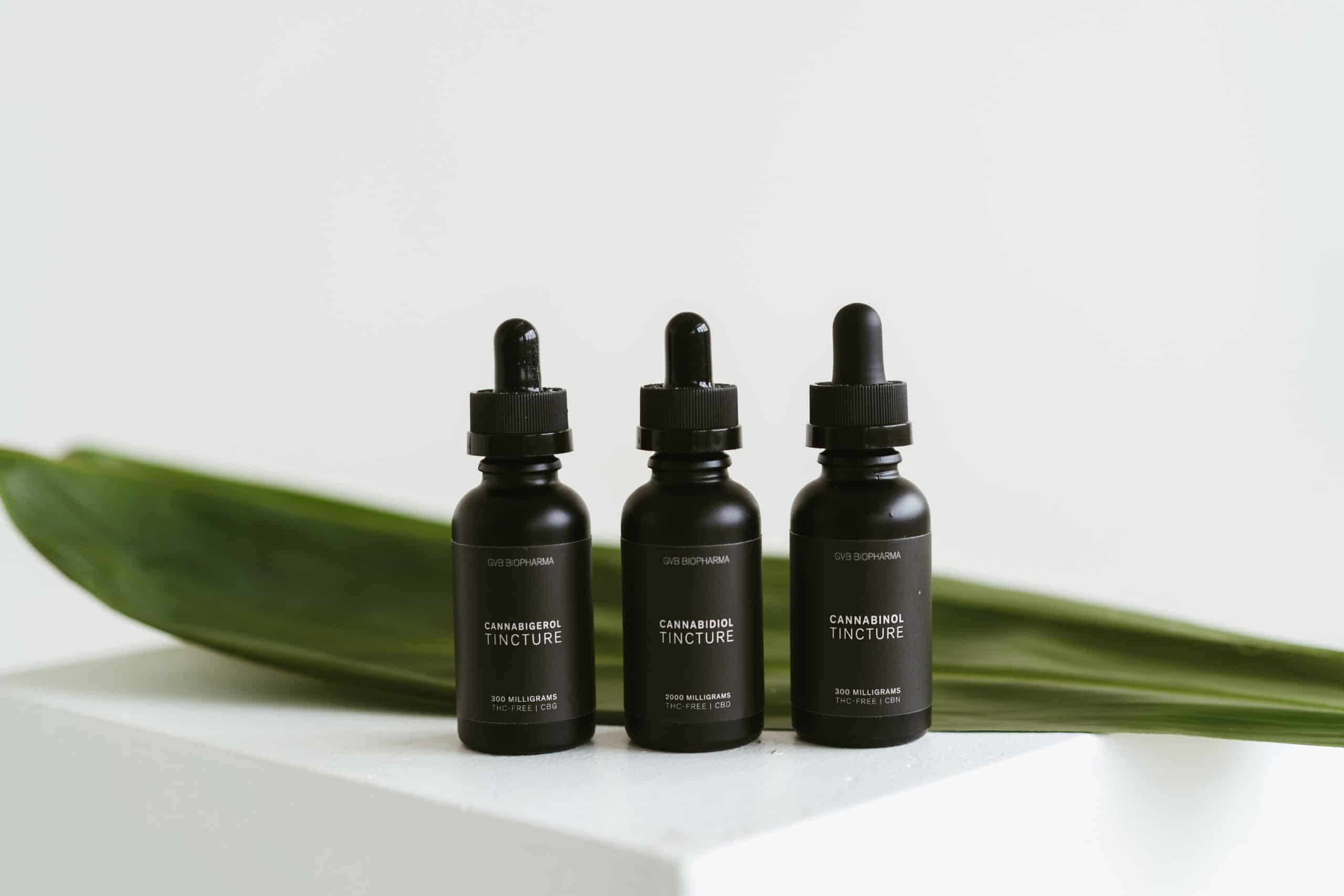
Unsurprisingly, 58% of Brits who had used CBD had tried tinctures, the most popular type of CBD product worldwide. Twenty-one percent had tried CBD vapes while 11% had used the cannabinoid topically. A further 10% had tried tablets or capsules with both CBD edibles and drinks also sitting at 10%. British men (28%) were twice as likely to have tried CBD vapes than women (14%), and CBD oils were most popular among the oldest Brits (74%) while vapes were the most popular among the youngest (51%).
Why do people in Great Britain use CBD?

Brits primarily use CBD for medicinal reasons. Out of the 1,650 respondents polled, 61% indicated that they had used CBD as an aid for some type of disease or condition while only 37% said they hadn’t used the cannabinoid for medical purposes. A further 1% didn’t know exactly why they had used CBD. Somewhat surprisingly, use of CBD for medical reasons was lowest among the oldest respondents (54%) and highest among the youngest (68%).

For which medical reasons do Brits use CBD?

It’s established that more residents of Great Britain use CBD for medical reasons than those who don’t, but what specific medicinal purposes do they use CBD for? This is the most important question as we unravel why Brits use CBD — let’s explore each major medical application for which British citizens have started relying on hemp:

1. Do British people use CBD for pain?

Yes, residents of Great Britain primarily use CBD for pain when they’re using this cannabinoid for medical purposes. Using CBD for pain is slightly more common among British women (75%) than it is for British men (68%), but at 71% overall, far more people in Britain use CBD for pain than use this cannabinoid for anything else. 

2. Do British people use CBD for anxiety and depression?

The next most popular medical purposes for CBD in Britain are anxiety and depression. Thirty-eight percent of Brits who turned to CBD for medical purposes sought help for these conditions with use of CBD for depression much more common among younger (50%) than older (15%) British citizens.

3. Do British people use CBD for sleep?

Using CBD for sleep is a practice shared by Brits of all ages (24%), but it’s most common in citizens of Great Britain between 25 and 49 years of age (30%). Both among younger (18-24) and older (50-64) adults, using CBD for sleep stands steady at 19%.

4. Do British people use CBD for arthritis?

It seems using CBD for arthritis hasn’t quite caught on yet in the UK — only 10% of Brits who use CBD rely on it for this painful inflammatory condition. The oldest British people (65+: 8%) remain unaware of the potential benefits of CBD for arthritis as the youngest (18-24 & 25-49: 7%). However, adults (50-64) are both most at risk of arthritis and most informed about hemp use it considerably more for this condition, 22% say they use CBD for arthritis.

5. Do British people use CBD for other reasons?

None of the Brits surveyed reported using CBD for chemotherapy-related purposes. Eight percent, though, did indicate that they had used CBD for a purpose other than those listed above. Using CBD for unconventional purposes was most common among the oldest respondents (17%), and it was least common among the youngest (6%).

How to market CBD to a British audience

Just learning why British people use CBD isn’t enough to know how to effectively market CBD products in Great Britain. While this country is historically pro-hemp, there are certain prevailing factors that make it distinct from the North American hemp markets. Let’s explore:

Understand market conditions

The UK allows CBD to be sold, but it doesn’t do so lightly. If you’re based in the UK, you have to grow and process your hemp exactly how the UK government dictates. If you want to import CBD from another country, it has to go through an extensive customs process. That’s why it’s usually better to work with an established producer that has already opened up access to the UK market.

Assess regional interest

It should come as no surprise that Brits living in London are more likely than average to have tried CBD (10%) or be willing to try it (30%). Citizens in more rural areas aren’t as willing to give hemp a shot yet, but don’t count Scotsmen out of the running. While only 7% of Scottish respondents had used CBD in 2019, 30% were willing to try it — the same as Londoners. Focus your efforts on Brits and Scots living in major cities.

Leverage consumer sentiment

People in Great Britain like CBD, but they still aren’t quite sure about it. While we speak the same language, people in the UK have different traditions and sentiments than their American counterparts. City denizens are more than happy to try new things, but the same can’t be said for residents of the English countryside. Using CBD for pain is very popular in the UK, though, creating a potential opening for reaching older audiences.

Prepare for the future

Traditionally, the UK has looked to the US when determining its hemp and cannabis policy. With recent efforts by the FSA to expand its catalog of approved CBD products and tamp down on the nation’s gray market, however, it’s becoming clear that Britain is no longer waiting for America to clarify matters regarding CBD.

Expect the British government to continue mainstreaming CBD over the next few years. Brands will still need to operate within the UK’s strict regulatory framework, but with CBD becoming an accepted substance in Great Britain, expect hemp sales to soar.

Why Brits use CBD: The bottom line

In some ways, the current British CBD market looks a lot like the American CBD market of five years ago. There are two key similarities — consumers in both markets are largely ignorant regarding the full benefits of CBD, and they almost always use CBD for pain.

In Great Britain, CBD hasn’t yet caught on as the general relaxation aid it has become in the United States. With record numbers of Brits showing openness toward CBD, however, the time has come to expand awareness of the width and depth of this non-intoxicating cannabinoid’s potential.

The UK is unlikely to make any major moves regarding overall cannabis regulation before the US, but the recent massive expansion of the FSA’s list of CBD products under approval indicates that the British government might be getting tired of waiting. Start offering your CBD products in the UK now to secure your spot within the fastest-growing hemp market on the Eastern side of the Atlantic.

*Please note that CBD is currently not an FDA-approved over-the-counter treatment for any medical conditions.*

Great Britain CBD FAQs

1. What are the rules for CBD in the UK?

For consumers, CBD rules in the UK are very similar to laws in other countries where CBD is legal. Producers, however, must abide by the UK’s strict import laws, and they must also ensure that their products contain less than 0.2% THC — not 0.3%. Follow these simple rules, though, and selling CBD in the UK shouldn’t pose many inherent challenges.

2. Is CBD a controlled substance in the UK?

No, CBD itself is not a controlled substance in the UK, but CBD may be considered a controlled substance when it is present in cannabis flower or other products containing more than 0.2% THC. Like the USA, the UK maintains the position that THC is an illegal drug. Contact the UK Home Office with any further inquiries.

3. Is smoking CBD illegal in the UK?

The legal status of smoking CBD flower is not clear in the UK, making it important to exercise an overabundance of caution. We would directly recommend that no one smoke CBD flower in the UK until the government has issued further clarification.

4. How many people take CBD in the UK?

According to the UK-based Centre for Medicinal Cannabis, over 6 million residents of the United Kingdom have now used CBD, marking an unprecedented level of popularity. CBD is only expected to get more popular in the UK and elsewhere around the world over the coming decades, making now the ideal time to start spreading access to CBD throughout the United Kingdom’s diverse population.

Sources

  1. 1. CBD products linked to novel food applications. (2022). FSA. https://data.food.gov.uk/cbd-products/products-list
  2. 2. Iffland, K., & Grotenhermen, F. (2017). An Update on Safety and Side Effects of Cannabidiol: A Review of Clinical Data and Relevant Animal Studies. Cannabis and Cannabinoid Research, 2(1), 139–154. https://doi.org/10.1089/can.2016.0034
  3. 3. Consumer cannabidiol (CBD) products report (accessible version). (2021, December 17). GOV.UK. https://www.gov.uk/government/publications/acmd-advice-on-consumer-cannabidiol-cbd-products/consumer-cannabidiol-cbd-products-report-accessible-version
  4. 4. Office of the Commissioner. (2020, July 31). FDA Approves New Indication for Drug Containing an Active Ingredient Derived from Cannabis to Treat Seizures in Rare Genetic Disease. U.S. Food and Drug Administration. https://www.fda.gov/news-events/press-announcements/fda-approves-new-indication-drug-containing-active-ingredient-derived-cannabis-treat-seizures-rare
Which UK Generation Uses the Most CBD Products?

It might be off to a slightly slower start than its US equivalent, but the UK CBD industry is growing rapidly due to massive consumer interest. CBD appears to resonate better with certain age groups than it does with others, therefore hemp brands should identify clear messaging objectives to reach UK audiences. 

Comprising more than 67 million people, the UK hemp market is massive and still relatively untapped. In this guide, learn everything you need to know about demographic trends within the UK CBD industry, powered by results from a recent YouGov survey.

CBD in the UK: an overview

In the UK, CBD products are not considered marijuana as long as they contain less than 0.2% delta-9 tetrahydrocannabinol (∆9-THC)¹. The UK government is relatively strict, however, regarding which types of CBD products may be produced, how they may be produced, and the types of hemp that can be used.

As a result, making CBD products in the UK or importing them into the country has traditionally been a hassle. Due to widespread public pushback², UK lawmakers have considered loosening the nation’s stance on hemp production, but no changes are expected in the near future.

UK residents generally do not have any issue acquiring or possessing CBD products. For entrepreneurs seeking to capitalize on the growing UK CBD market, however, making your way through all the red tape can be a hassle.

History of UK cannabis and hemp law

The UK has generally followed the United States’ lead with its stance toward cannabis. The UK’s 1971 Misuse of Drugs Act came hot on the heels of the 1970 Controlled Substances Act in the US, and both pieces of legislation placed cannabis in the worst-possible legal category.

There has been some time now, however, to reflect on these half-century-old facets of Western law, and in the United States at least, a much more permissive perspective toward cannabis has gradually taken hold nationwide. The UK, on the other hand, continues to make cannabis illegal for all but a select few.

CBD’s current status in the UK

With major names in UK law enforcement³ coming out in favor of outright cannabis decriminalization, it’s only a matter of time until significant changes come to the UK’s stance on CBD and other cannabinoids. Right now, however, CBD brands that want to offer products in the UK must abide by the nation’s strict hemp import and production policies. Failure to do so could result in your product being classified as cannabis, not hemp.

What does the data indicate?

A 2019 YouGov survey took a snapshot of current sentiment toward CBD in the UK. Altogether, 1,650 UK residents responded across all genders, age groups, and political affiliations. Positions toward cannabis may have changed in the interim, but this is the most recent information we have on how UK consumers feel about the effectiveness and safety of CBD.

Unsurprisingly, older UK residents are the most skeptical of CBD with younger adults being more willing to give hemp a shot. Traditional CBD oil tinctures remain the most popular products with most other product types only rarely used. The majority of UK residents who reported using CBD indicate that they used this cannabinoid for medical reasons. Let’s break down all this information in greater detail:

Which UK generation uses the most CBD?

Out of all UK adults surveyed, the age group that featured the greatest number of consumers who had used CBD was 25-49 at 11% closely followed by 18-24 at 10%. Only 8% of UK adults aged 50-64 had tried CBD in 2019, and this percentage dropped to 5% for adults aged 65+. In total, 9% of UK adults indicated that they had tried at least one kind of CBD product.

Which UK generation uses the least CBD?

In the UK, CBD is least-used among the oldest adults, coming in at 5% among individuals aged over 65. These results roughly reflect statistics from other countries. In the United States, for instance, 8% of adults aged over 65 had used CBD compared to 11% of adults aged 50-64.

How does gender affect CBD consumption in the UK?

Women in the UK are slightly more likely (29%) to consider trying CBD than men (27%). Male UK CBD consumers are considerably more likely to have tried CBD vapes (28% v. 14%) while women are bigger fans of CBD tablets (14% v. 5%). Both are equally likely to use CBD for medical purposes, but women are more likely to use CBD for pain (75% v. 68%), and men are more likely to rely on this cannabinoid for anxiety or depression (41% v. 35%).

How does political affiliation affect CBD consumption in the UK?

Members of the Labor Party (14%) are far more likely to have used CBD than UK Conservatives (6%). Unsurprisingly, Labor supporters (32%) are more likely to express willingness to use CBD in the future compared to their Conservative counterparts (23%). Members of the Labor Party (77%) are more likely than Conservative UK residents (54%) to have used CBD for medicinal purposes.

Which CBD products are the most popular in the UK?

By far, CBD tinctures (also known as CBD oils) are the most popular type of CBD product used in the UK with more than 58% of survey respondents who had used CBD indicating that at least one of the hemp products they’d tried had been a tincture. Next up was CBD vape products at 21%, CBD topicals at 11%, and CBD capsules and tablets at 10%. Eight percent of survey respondents indicated that they had used CBD edibles, and 4% said they’d tried CBD cosmetics.

Do UK residents use CBD for medical reasons?

In the UK, CBD is more commonly used for medical reasons than it is not. Out of survey respondents who had used CBD, 61% indicated that they had tried this cannabinoid in the hopes that it would improve their medical status compared to 37% who said they’d used CBD for other reasons. Interestingly, using CBD for medicinal reasons was least common among the oldest respondents who’d tried the cannabinoid (54%), and it was the greatest among the youngest (68%).

Which medical reasons do UK residents use CBD for?

Seventy-one percent of UK residents who had used CBD for medical reasons indicated that they had turned to this cannabinoid specifically for help with the pain. Thirty-eight percent reported that they’d tried CBD for depression or anxiety, and 24% said they’d used CBD for sleep. Arthritis was the trigger for trying CBD for 10% of respondents, and 3% had given the cannabinoid a shot for epilepsy.

What it all means

How do we make sense of the current status of CBD receptivity and use in the UK, and how can one use all this information for marketing purposes? Let’s take a closer look at the UK CBD market before moving on to the present situation and how to market products that match the times.

UK CBD receptivity dynamics

Even though we share a common language and a common stance toward many social issues, there are still major points of disagreement between UK and US culture, and cannabis use is one of them. Typified by the culture of London and other major cities, rural parts of the UK remain dominated by conservative ideologies that are slow to accept changes that can appear threatening like cannabis use.

Even though it’s widely understood that CBD doesn’t get you high, it’s still associated with marijuana, leading to a reticence to try CBD among older UK residents. As population dynamics continue to favor city dwellers from diverse backgrounds, the UK will become more receptive to CBD and cannabis in general.

Current status of the UK hemp market

Interest in CBD and cannabis, in general, has only swelled since the 2019 YouGov survey was conducted. As time goes by, older UK residents who are either misinformed or uninformed regarding CBD will stop making buying decisions, and they’ll be replaced with a younger generation swelling with curiosity about hemp.

While it sometimes struggles to do so on time, the UK does its best to keep up with the USA’s mercurial changes to cannabis policy. UK lawmakers are likely waiting on the US to federally legalize cannabis before they make any major moves on the CBD front, meaning the somewhat stifling status quo will likely be maintained for the foreseeable future.

Best CBD products to sell in the UK

Based on all available data, CBD tinctures remain the best product type to rely on when marketing hemp to UK audiences. While satisfying UK regulations for CBD cosmetics and food products can sometimes be arduous, CBD tinctures are simple and accepted products that usually don’t have to overcome many hurdles on their way to the hands of UK consumers.

CBD vapes are quite popular among younger hemp consumers in the UK, but the country’s government has made no effort to hide its overall disdain for vaping with e-cigarette regulations seeming to tighten by the day⁵. Aside from tinctures, hemp brands seeking to reach UK markets may also want to invest in topicals, capsules, or drinks.

UK CBD consumption demographics FAQs

1. How popular is CBD in the UK?

CBD is catching on in the UK at a rapid pace. The UK has long been one of the world’s main primary exporters of cannabis for medical and research purposes, and the average citizen of Britain is now able to access nearly any CBD product with less than 0.2% THC they could imagine.

There’s still lots of room for expansion within the UK CBD industry, though. Per capita, CBD has not yet reached the same level of popularity as is observed in the US. Now’s the time to help the UK CBD industry expand with well-differentiated and high-quality products.

2. How many people use CBD products in the UK?

Estimates have it that 3-6 million UK citizens use CBD regularly, though many more have likely tried it at some point. That’s only 5-10% of the population, far below the percentage of Americans who are estimated to now be regular CBD users. We only make comparisons to the States to demonstrate the ample room for growth within the UK CBD market.

3. Is the CBD market saturated in the UK?

It is very difficult to determine how saturated the CBD market is anywhere in the world since CBD is a very new industry. If other, more mature CBD markets are taken into consideration, however, it’s very likely that the CBD market in the UK is nowhere near its saturation point.

There is still plenty of opportunity for operators in the UK to expand the domestic CBD industry. Keep in mind that the overall CBD market has evolved to be more skeptical and sophisticated, though, punishing companies that push low-quality products in the hope of making a quick profit.

4. What is the projected growth of CBD in the UK?

Some estimates have it that the UK CBD market will swell at a rate of approximately 30% per year between now and 2025, resulting in a £1bn market by the end of that period. Estimates like these, however, can only become a reality with the help of intrepid brands willing to win hearts and minds with genuinely high-quality and reliable product options.

Summary: The evolving state of UK CBD

Many parts of the world are still hostile to CBD and hemp, so it’s comforting to come across another bastion of free-minded cannabis policy like the UK. 

In the US, the early growth of the CBD industry was spurred by a “Wild West” attitude in which anyone could make a website and start selling CBD — sometimes without even a business license. There’s a very different environment in the UK. To sell your CBD products to UK citizens, you must either grow your hemp in the UK while following a remarkably strict set of rules or subject your imported products to an even stricter set of testing procedures.

The UK government clearly doesn’t want to make any mistakes as it allows the sale of CBD within its borders. 

The best way to counter the prevailing headwinds within the UK CBD industry is to work with a trusted hemp white labeler that has already set up operations within the European regulatory sphere. Having received approval from the UK government, a Europe-based hemp supplier can make products in-region and get them onto UK shelves with a fraction of the headache and considerably higher margins.

*Please note that CBD is currently not an FDA-approved over-the-counter treatment for any medical conditions.*

Sources

  1. 1. Consumer cannabidiol (CBD) products report (accessible version). (2021, December 17). GOV.UK https://www.gov.uk/government/publications/acmd-advice-on-consumer-cannabidiol-cbd-products/consumer-cannabidiol-cbd-products-report-accessible-version
  2. 2. Herrington, A. J. (2022, May 30). UK Hemp Activists Launch Civil Disobedience Campaign. Forbes. https://www.forbes.com/sites/ajherrington/2022/05/27/uk-hemp-activists-launch-civil-disobedience-campaign/?sh=675dac206b25
  3. 3. Arnold, M. (2022, June 21). British Chief Constable Supports Cannabis Decriminalization. High Times. https://hightimes.com/news/british-chief-constable-supports-cannabis-decriminalization/
  4. 4. Brenan, B. M. (2021, November 20). 14% of Americans Say They Use CBD Products. Gallup.Com. https://news.gallup.com/poll/263147/americans-say-cbd-products.aspx
  5. 5. E-cigarettes: regulations for consumer products. (2022, February 7). GOV.UK. https://www.gov.uk/guidance/e-cigarettes-regulations-for-consumer-products
  6. 6. YouGov Survey Results (2019, August 30)

What Are Americans Using CBD For?

The US has served as the birthplace and remains the epicenter of the modern-day cannabis industry. Despite its northern neighbor, Canada, legalizing cannabis¹ outright, America still outsold the competition in 2021, selling $24.5 billion² in overall cannabis products compared to Canada’s $3.9 billion.

CBD has always composed an important component of the wider American cannabis market, and it will continue to do so despite ongoing regulatory stagnation. Some reports peg CBD as bringing in more than $5.3 billion in 2021³, contributing more than a fifth of the country’s overall cannabis revenue.

Why is CBD so popular? What is it about this simple, non-intoxicating compound that keeps driving up demand year after year? In this guide, learn what surveys can tell us about the top uses of CBD in the United States.

Benefits of CBD: an overview

As an essentially unregulated substance, producers and retailers cannot make any claims about the medicinal uses of CBD. Doing so would essentially assert that CBD is an approved drug, which is prohibited by the FDA.

By necessity, therefore, we have to learn about the most popular uses of CBD from consumer buying behavior instead of relying on scientifically proven benefits. While the research into CBD doesn’t prove anything yet, though, it can be insightful when exploring the benefits of CBD that drive consumer behavior.

Research into CBD

CBD has primarily been researched for its potential usefulness for neurological disorders and pain⁴. In the brain, CBD acts on the two primary neuroreceptors involved in pain⁵, and one of these receptors (5-HT1A) is also critically involved in depression and anxiety⁶.

The benefits of CBD have also been investigated as they pertain to sleep⁷. Of course, CBD remains in widespread use among individuals who rely on this cannabinoid for epilepsy.

The stories of American children with intractable, debilitating epilepsy experiencing relief after using CBD originally thrust this cannabinoid into the international spotlight. Nearly 10 years later, many US families continue to use CBD.

The FDA’s stance on CBD

In 2018, the new Farm Bill from Congress removed hemp-derived products including CBD from the DEA’s definition of marijuana thus giving regulatory oversight for this cannabinoid to the FDA. Despite initial expectations of fast movement, however, the FDA hasn’t done much to nudge the status quo of CBD forward.

Occasional warning letters continue to be sent out to CBD companies that blatantly disregard already-established rules. Otherwise, the FDA hasn’t said much about what CBD products are right now and what they will be in the future from a regulatory perspective.

What do surveys indicate?

In America, citizens aren’t waiting on official government notice to use and sell CBD products. Information from a recent survey commissioned by Quartz⁸ indicates that not only are Americans using CBD, but they’re also using it for a wide variety of different conditions and in perhaps unlikely settings.

Let’s unpack some of the key revelations this Harris poll of 2,000 participants delivered regarding the reasons people use CBD in the US:

1. Do Americans use CBD for relaxation?

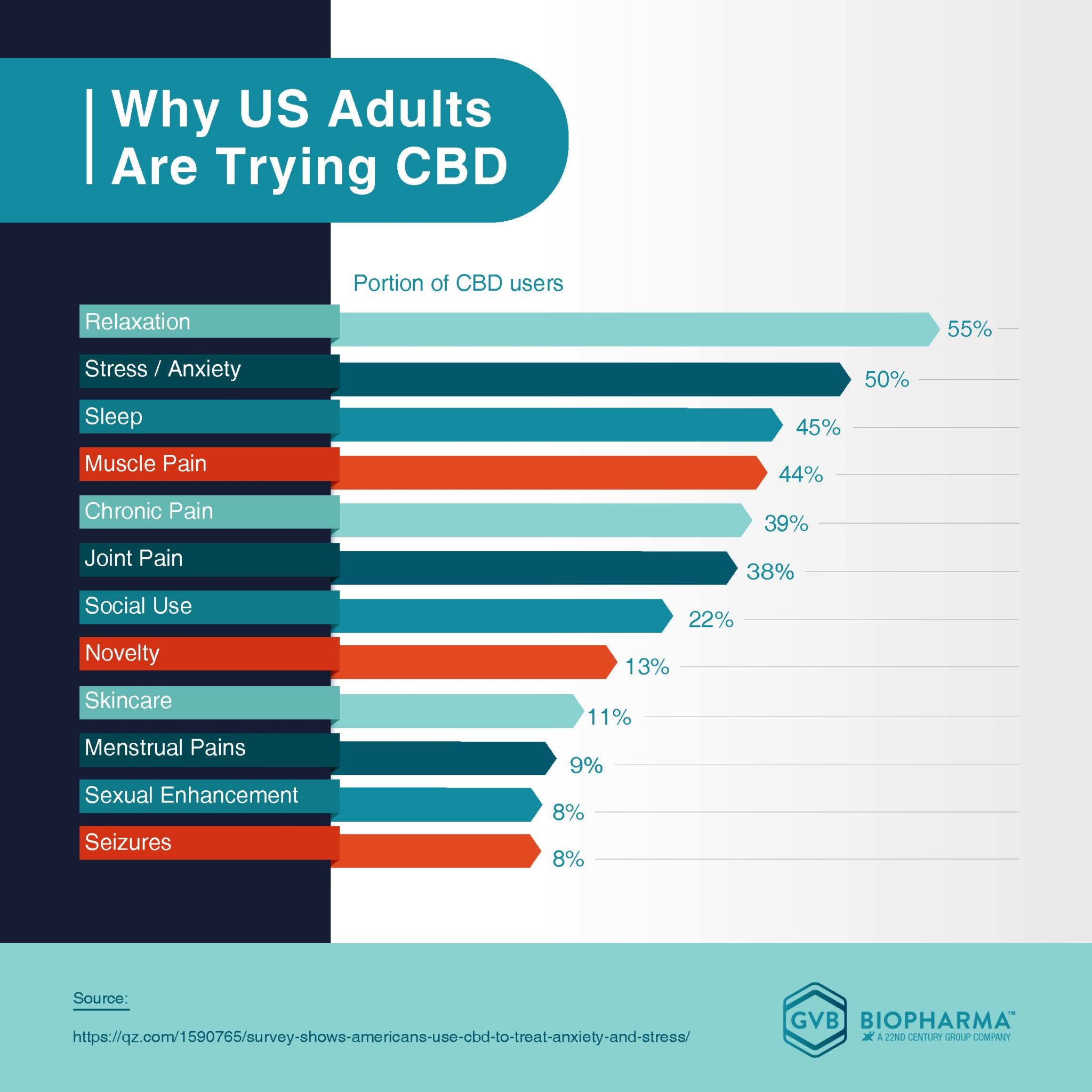
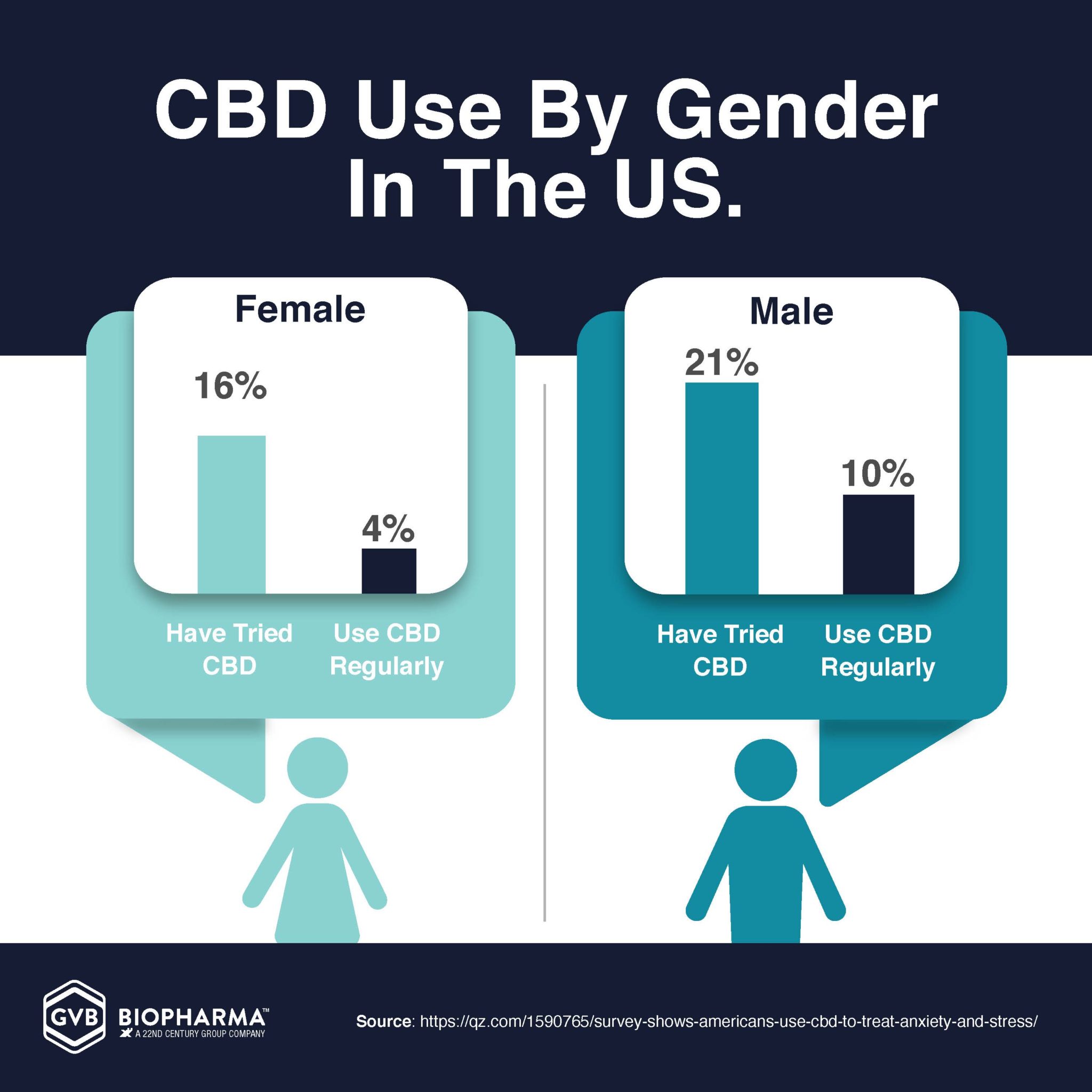
According to the Quartz survey, 56% of women and 53% of men who had used CBD indicated they had used this cannabinoid to relax. At around 55% overall, it seems to be that the majority of CBD-consuming Americans consider this cannabinoid to be relaxing, and seeking relaxation is (by a slight margin) the most common reason people in the United States use CBD.

2. Do Americans use CBD for stress and anxiety?

The second most common reason Americans use CBD is to cope with stress and anxiety. As of 2019, 50% of overall individuals (47% of women, 53% of men) who had used CBD indicated they had tried this substance specifically for anxiety or stress relief. With use of CBD for stress rising dramatically during the pandemic⁹, it’s likely that the percentage of Americans who continue to use CBD for relief from stress or anxiety has stabilized somewhat higher than 50%.

3. Do Americans use CBD for sleep?

There’s a widespread belief that CBD helps you get to sleep at night. Research into the benefits of CBD for sleep remains relatively limited, but the anecdotal evidence on the subject is quite convincing. The 2019 Quartz survey found that 45% of Americans had used CBD for help with sleep, a figure borne out by a more recent 2021 academically conducted survey¹⁰ (albeit primarily of UK adults).

4. Do Americans use CBD for pain?

Using CBD for pain took a larger slice of the pie back when we knew less about this cannabinoid. Already by 2019, the Quartz survey reveals that only 39% of CBD users in the United States relied on this cannabinoid for pain. CBD definitely remains popular as a natural pain remedy, but its potential benefits for other purposes have gained traction as well.

5. Do Americans use CBD with friends?

The Quartz survey found that a remarkable disparity of 28% of men and only 15% of women had used CBD in a social setting, representing the widest gender gap in the survey’s results. American men, it seems, are far more predisposed than American women to try CBD at a friend’s house or during a backyard barbecue. This is definitely worth taking into consideration when developing CBD products targeted toward men.

What are some other reasons Americans use CBD?

According to the Quartz survey, around 21% of 2019’s American CBD users had tried this cannabinoid for migraines while 17% had used it for nausea. Intriguingly, around 13% of respondents reported trying CBD for “spiritual use” with this response coming considerably more commonly from men. For Americans, it seems taking CBD isn’t always just a practical concern.

What the data mean for American CBD brands

This can be a lot to take in for CBD brands seeking to make the right product for the moment and target it toward the most ideal subset of consumers. To fully wrap our heads around the situation, we’ll need to take a look at how Americans are starting to view cannabis in general and how CBD will likely fit into the nation’s future stance on the plant and its derivatives:

The evolving story of US cannabis

Enduring stagnation on the federal level, cannabis legislation continues to advance state-by-state. Recreational cannabis is now legal in 19 American states, and many more states have medical marijuana programs of varying scope.

Despite being a major platform of the Democrat Party entering the 2020 elections, Congress has not enacted any significant changes on this front. Attempts to push the issue along¹¹ have so far been met with a lack of widespread support and seeming acceptance of the obviously less-than-ideal status quo.

It’s a status quo that’s getting things done, though. You can’t argue with the success of a nearly $25 billion-per-year industry, and states that have legalized cannabis aren’t going back. Even without federal support, there is now widespread acceptance of cannabis in America that is bringing along with it awareness of and demand for CBD.

What’s happening with CBD right now?

In June of 2022, hopes briefly surged that the stagnant situation surrounding CBD might be alleviated when the FDA’s Science Board indicated that it would be discussing the challenges surrounding regulating cannabinoids¹² as “dietary supplement and food ingredients.”

The 2018 Farm Bill preserved the FDA’s authority over hemp products like CBD. However, citing the lack of definitive safety information and the existence of the CBD-based pharmaceutical drug Epidiolex¹³, the FDA has delayed making any decisions regarding the non-intoxicating cannabinoid’s regulatory status.

Due to long-standing precedent, the FDA has a hard time regulating substances that are also prescription drugs as over-the-counter supplements. While it continues to send warning letters to non-compliant CBD companies, the FDA has rejected multiple recent applications to market CBD as a dietary ingredient¹⁴.

Which conditions do Americans use CBD for the most?

Ongoing regulatory ambivalence doesn’t seem to be considerably affecting consumer sentiment toward CBD. As early as 2019, a Gallup survey found that 1 in 7 Americans commonly used CBD products, and the continued growth of the CBD industry¹⁵ indicates that an even greater share of US residents now use this non-intoxicating cannabinoid.

The top uses of CBD in the United States have remained largely the same since this hemp extract first rose to popularity. Over the years, however, a subtle trend has emerged involving the evolution of consumer perception of CBD from a strictly medical substance to a product with lifestyle benefits as well.

When CBD first became available online, it was almost universally used for pain. As of 2019, however, only 39% of American CBD users reported using this cannabinoid for pain while 55% reported using it for relaxation. With 50% of American hemp users relying on CBD for stress, it’s clear that awareness of CBD’s potential to improve your overall quality of life has spread considerably.

As such, brands should be cautious of marketing CBD as a substance solely designed to help with sleep, pain, or medical conditions. Many Americans now use CBD “just because,” rewarding a more generalized approach to conveying the benefits of CBD products.

Summary: Top uses of CBD in the USA

At this point, the American CBD industry might be more disrupted if the FDA were to actually take action on hemp than it is harmed by the current state of affairs. While the 2018 Farm Bill didn’t accomplish everything necessary to make CBD a legitimately mainstream product, time has shown that it legitimized the CBD industry enough to assuage consumer skepticism and allow hemp to firmly take root in the United States economy once more.

With the pressure to address an unregulated and rapidly growing market relieved, the US federal government doesn’t seem particularly incentivized to overcome the obstacles between CBD and official regulation as a dietary supplement. What’s important, though, is that the FDA also hasn’t made any moves to make CBD harder to get.

At this point, it’s practically an inevitability that massive federal cannabis reform will be enacted in the United States within our generation. The only remaining question is how and when this reform will occur, and American hemp brands can receive assurance from the fact that consumers have lost their ability to be spooked by cannabinoids as new, unknown substances.

CBD is a household name now, and it’s popularizing a whole host of other cannabinoids like CBG, CBN, and CBC. The reasons people in the United States use cannabinoids might shift over time, but American consumers will continue to use CBD while also exploring new approaches toward experiencing hemp.

American CBD use habits FAQ

Learn more about how and why Americans use CBD below:

1. Who buys CBD products?

CBD shopper demographics have recently changed to embrace a much wider cohort of lifestyles and generations. Up until quite recently, CBD had primarily been used by the very ill or those who suffer from chronic pain on a daily basis. Over the last few years, though, social media and other sources of information have helped shoppers recognize that CBD is a low side effect substance that seems to help people relax.

2. How many CBD products are there?

It is very difficult to accurately estimate the total number of CBD products that are now available on the market. It used to be the case that CBD was only competently produced by a handful of brands, but nowadays, high-quality and effective CBD products are abundant and reasonably priced, causing the cannabinoid to take on ever greater popularity in the United States. The number of unique CBD products now available online and in retail stores surely numbers in the thousands and may even reach the tens or hundreds of thousands.

3. Is relaxation the most popular use of CBD?

Yes, relaxation is now unequivocally the most popular reason people use CBD. That’s not to say people have stopped using CBD for other purposes. It’s just that so many shoppers have started using CBD specifically for relaxation that the market has skewed in their direction. Given the fact that CBD appears to offer all the relaxing properties of marijuana with none of the intoxication, it’s unsurprising that this cannabinoid has accumulated such widespread appeal.

4. Is pain the most popular use of CBD?

No, pain is no longer the most popular use of CBD in terms of sheer numbers. It’s unlikely that the number of people who use CBD for pain has gone down, but such a vast number of people have recently started using CBD for other purposes that the relative portion of shoppers who use CBD for pain has shrunk. If further uses of CBD are uncovered in the future, it’s possible that both of these popular reasons to use cannabidiol will, in their turn, be displaced as well.

Sources

  1. 1. Lange, T. (2022, February 24). Canada Eclipses CA$3.9 Billion in Cannabis Sales for 2021. Cannabis Business Times. https://www.cannabisbusinesstimes.com/article/canada-eclipses-3-point-9-billion-in-2021-sales/
  2. 2. Gelsi, S. (2022, May 4). Legal cannabis sales exceed Starbucks N. America sales in 2021: Report. MarketWatch. https://www.marketwatch.com/story/legal-cannabis-sales-exceed-starbucks-n-america-sales-in-2021-report-2022-05-04
  3. 3. FinancialNewsMedia.com. (2022, February 2). Consumer Interest Continues to Rise as CBD Sales Expected to Reach $16 Billion By 2026. https://www.prnewswire.com/news-releases/consumer-interest-continues-to-rise-as-cbd-sales-expected-to-reach-16-billion-by-2026-301473433.html
  4. 4. Argueta, D. A., Ventura, C. M., Kiven, S., Sagi, V., & Gupta, K. (2020). A Balanced Approach for Cannabidiol Use in Chronic Pain. Frontiers in Pharmacology, 11. https://doi.org/10.3389/fphar.2020.00561
  5. 5. Muller, C., Morales, P., & Reggio, P. H. (2019). Cannabinoid Ligands Targeting TRP Channels. Frontiers in Molecular Neuroscience, 11. https://doi.org/10.3389/fnmol.2018.00487
  6. 6. Linge, R., Jiménez-Sánchez, L., Campa, L., Pilar-Cuéllar, F., Vidal, R., Pazos, A., Adell, A., & Díaz, L. (2016). Cannabidiol induces rapid-acting antidepressant-like effects and enhances cortical 5-HT/glutamate neurotransmission: role of 5-HT1A receptors. Neuropharmacology, 103, 16–26. https://doi.org/10.1016/j.neuropharm.2015.12.017
  7. 7. Shannon, S. (2019). Cannabidiol in Anxiety and Sleep: A Large Case Series. The Permanente Journal, 23. https://doi.org/10.7812/tpp/18-041
  8. 8. Kopf, D., & Avins, J. (2020, February 23). Survey shows Americans use CBD to treat anxiety and stress. Quartz. https://qz.com/1590765/survey-shows-americans-use-cbd-to-treat-anxiety-and-stress/
  9. 9. Khalsa, J. H., Bunt, G., Maggirwar, S. B., & Kottilil, S. (2020). COVID-19 and Cannabidiol (CBD). Journal of Addiction Medicine, 15(5), 355–356. https://doi.org/10.1097/adm.0000000000000771
  10. 10. Moltke, J., & Hindocha, C. (2021). Reasons for cannabidiol use: a cross-sectional study of CBD users, focusing on self-perceived stress, anxiety, and sleep problems. Journal of Cannabis Research, 3(1). https://doi.org/10.1186/s42238-021-00061-5
  11. 11. Sibbald, K. (2022, May 23). US House of Representatives Again Passes Marijuana Reform Bill. Human Rights Watch. https://www.hrw.org/news/2022/05/23/us-house-representatives-again-passes-marijuana-reform-bill
  12. 12. Nichols, K. (2022, June 14). FDA takes another look at CBD, but insiders are skeptical much will change. MJBizDaily. https://mjbizdaily.com/fda-takes-another-look-at-cbd-but-insiders-are-skeptical-much-will-change/
  13. 13. Drotleff, L. (2022, June 2). Federal cannabis legalization may affect FDA’s approach to CBD regulation, experts say. Hemp Industry Daily. https://hempindustrydaily.com/federal-cannabis-legalization-may-affect-fdas-approach-to-cbd-regulation-experts-say/
  14. 14. Hemp Industry Daily. (2021, August 12). FDA rebuffs full-spectrum CBD as a dietary supplement. https://hempindustrydaily.com/fda-rebuffs-full-spectrum-cbd-as-a-dietary-supplement/
  15. 15. Conway, J. (2022, February 22). CBD retail in the United States – Statistics and Facts. Statista. https://www.statista.com/topics/6262/cbd-retail-in-the-united-states/#dossierContents__outerWrapper

Comprehensive Guide to Hemp Extraction in Massachusetts

Massachusetts’ hemp and cannabis market is soaring. In 2022, Massachusetts cannabis is expected to generate more than $1.4 billion, and with recent measures streamlining the state’s hemp industry into its recreational and medical cannabis programs, industrial hemp is set to compose an increasingly significant portion of this annual revenue.

Compared to the $475 million per year Massachusetts adds to its economy from the sale of farm products, hemp and cannabis production eclipses all other agricultural operations in the state by a wide margin. Increased revenue means increased competition, however, leaving many Massachusetts do-it-yourself hemp producers high and dry.

Is it worth it to grow and extract your own hemp in Massachusetts, or is it better to work with a major extractor? If you decide to work with an extractor, how do you choose the right company? Read on to learn everything you need to know about extracting hemp in Massachusetts in 2022 and beyond.

Is hemp legal in Massachusetts?

Yes, hemp products containing less than 0.3% THC are considered by the federal government to be industrial hemp, and legal nationwide. The state of Massachusetts has reinforced this federal position by folding hemp production into its Massachusetts Department of Agricultural Resources (MDAR) regulation program.

Massachusetts actually legalized hemp and started issuing production licenses before the federal government officially recognized its permissibility. And because of the state’s progressive outlook and infrastructure, some hemp producers in Massachusetts have been legally operating for more than half a decade.

Despite now providing hemp producers with access to its rapidly growing recreational cannabis market, Massachusetts reaffirmed that hemp itself “has no use as a recreational drug.” As a result, hemp products can be sold and purchased almost anywhere in the state—not just dispensaries.

Massachusetts CBD regulations overview

Consistent with federal regulations, CBD products for sale in Massachusetts containing less than 0.3% THC are legal so long as they are not included in food or drink products and are not accompanied by any therapeutic claims. There is no age limit for purchasing CBD products in Massachusetts, but an age limit of 21 years is imposed for those intending to purchase CBD products from a Massachusetts recreational dispensary. Lack of access to CBD-infused food and drink products has significantly limited the revenue opportunities of Massachusetts producers intending to sell their hemp products exclusively within the state’s borders.

How big is the Massachusetts hemp market?

With hemp producers now provided with access to the state’s rapidly growing recreational and medical cannabis industries, the Massachusetts hemp market is one of the nation’s largest. Hemp producers seeking to offer their products exclusively within the state’s tightly regulated cannabis and hemp market, however, may feel stifled by onerous cultivation and processing application requirements.

What are Massachusetts’ hemp cultivation license requirements?

Despite allowing the cultivation and processing of industrial hemp within its borders, Massachusetts nonetheless enforces some of the strictest hemp production regulations in the country. Some of the requirements to become a CBD producer in Massachusetts include:

There’s a lot that can go wrong in the process. If your map does not meet MDAR’s standards, your hemp processing application could be rejected. Additionally, it is necessary to renew your application every year and notify state authorities of any changes that have been made to your hemp cultivation or processing operation in the interim.

Selling CBD products in Massachusetts: Factors to consider

In deciding whether it’s worth it to cultivate and process your own hemp in Massachusetts, there are a few important factors to consider:

1. How much is an acre of hemp flower worth?

An acre of hemp flower varies considerably depending on its quality and the market dynamics in the area where you intend to sell your hemp.

2. Where can I sell hemp-derived CBD products in Massachusetts?

With proper licensing, you can sell CBD products in Massachusetts recreational and medical cannabis dispensaries as well as general goods retailers throughout the state. Due to unprecedented access to eligible retailers, however, competition within Massachusetts’ CBD industry is greater than ever.

Should I grow & extract my own hemp in Massachusetts?

Given prevailing factors such as high competition and questionable profitability, it is not necessarily a wise decision to venture out on your own as a producer and extractor of hemp in Massachusetts. In the wake of the 2018 Farm Bill, thousands of farmers across the nation scrambled to start producing and selling hemp, leading to a glut of supply that thoroughly surpassed demand.

Since then, the domestic hemp market has stabilized and largely consolidated into the hands of a dozen or so major producers. Delivering greater production efficiency at reduced cost, large-scale hemp producers offer more value than small producers just starting out in the industry can reasonably hope to provide.

What are the benefits of working with a Massachusetts hemp extractor?

Working with an established hemp producer and extractor in Massachusetts is the more desirable option for a variety of reasons. Some of the most impressive benefits include:

Administrative familiarity

Eliminating rookie mistakes and leveraging advanced equipment, larger hemp producers are able to reduce production costs and increase the value of their end products, increasing customer satisfaction and brand loyalty.

Reduced raw materials costs

If you want to formulate your own CBD products, purchasing raw materials from an established producer is considerably less expensive than cultivating and processing your own hemp. The quality of your raw materials is also increased when you work with a large hemp producer.

Processing equipment unnecessary

The equipment required to harvest hemp, process it, and formulate it into consumable products is more costly than many first-time producers account for. Working with a major CBD oil manufacturer in Massachusetts eliminates the need to purchase this equipment, increasing your profit margins.

Improved results

Especially with competition both at the state and national level reaching unprecedented heights, offering CBD products that provide unbeatable value is a top priority. The larger scale and increased level of experience established hemp producers provide guarantee a baseline of quality and consistency that simply cannot be matched by small-scale cultivation-production operations.

What to look for in a Massachusetts hemp extractor

Now that you know the benefits of working with an established hemp extractor in Massachusetts, it’s time to learn how to select the right supplier for your needs:

Full vertical integration

Vertical integration is the practice of handling every step of the production process in-house. In the hemp industry, full vertical integration minimizes opportunities for contamination and processing errors that can reduce the value of a finished product, ensuring a steady standard of quality.

Emphasis on compliance

Acquiring necessary licensing and certification can be arduous for small-time hemp producers, but large-scale cannabinoid suppliers have the resources to actively seek out every available opportunity for compliance. Judge potential suppliers based on their willingness to go the extra mile in regards to certification and licensing.

Multi-stage lab testing

Small-scale producers may only send their crops to labs once or twice during the production process to reduce costs. Not only should larger CBD private label manufacturers have their own in-house testing facilities in-house, they should also test their products at every relevant stage during production.

Comprehensive product variety

Eligible hemp producers should have a wide variety of pre-made product options on hand and also have the capability to produce custom formulations upon request. The depth and breadth of a company’s product options speaks to their overall capabilities as a hemp producer.

Excellent customer service

To the right white-label CBD manufacturer, your brand is the center of the story. Any questions that come up should be answered promptly, and you should be assigned a dedicated customer service agent as a steady point of contact throughout your working relationship. 

Massachusetts hemp extraction business FAQs

1. Do you need a license to sell hemp in Massachusetts?

No, licensing is not required to sell hemp products in the state of Massachusetts. If you intend to cultivate hemp within the borders of this New England state, however, you will need to receive licensing. This sort of oversight is not required for shop owners who simply want to sell a few CBD products — you may sell hemp products in Massachusetts at liberty as long as you did not cultivate and produce them within the state.

2. How much is a hemp cultivation license in Massachusetts?

According to the Massachusetts state department established to govern hemp horticulture, it costs $100 to apply for a hemp cultivation license. Applying for a license is no guarantee that your application will be accepted, however, and the Massachusetts state government will not refund your application fee if it is denied.

3. Can I grow hemp in my backyard in Massachusetts?

It is very unlikely that the state of Massachusetts will approve of your plan to grow hemp in your small plot of residential land. If you are a rural farmer or landowner, however, your definition of “backyard” might be very different from a Bostonite’s. Always consult with the Massachusetts state government before proceeding with any hemp cultivation plans you may have.

4. Can you sell hemp seeds in Massachusetts?

There do not appear to be any laws specifically prohibiting or controlling the sale of hemp seeds or other hemp products in Massachusetts. Since hemp seeds do not even contain any cannabinoids, it is highly unlikely that state authorities will take offense to any plans you may have to sell these nutritionally beneficial seeds in your retail establishment.

Extracting hemp in Massachusetts: The bottom line

Is it worth it to become a hemp manufacturer in Massachusetts in 2022? Unless you’re absolutely sure you have everything you need to succeed and can afford to absorb some losses along the way, probably not. Massachusetts may be an ideal market for selling hemp at the moment, but your profitability will take a hit if you decide to pursue this venture alone.

Working with a white label CBD product manufacturer costs less than growing and processing your own hemp, and taking this approach results in higher-quality products your customers will appreciate. Offering a wide range of raw materials and finished product formulations with endless opportunities for customization, GVB Biopharma is the ideal solution for any Massachusetts hemp brands searching for a supplier. Contact GVB Biopharma today to get started.

How to Start a Hemp Business in Florida

Florida’s farming industry, traditionally a major epicenter of agriculture in the United States, has recently been hit with major setbacks that have caused many landowners to switch from conventional crops to hemp. At the same time, Florida’s CBD oil market has boomed in the wake of both state and federal laws giving the green light to hemp producers and consumers.

There are many ways to start a hemp business in Florida, and not all of them involve growing or even processing your own hemp. What’s the best way to make money with hemp in 2022, and why should you choose GVB Biopharma as your supplier of cannabinoid products in Florida? Find the answers in this guide.

When did hemp become legal in Florida?

Hemp became federally legal with the passage of the 2018 Farm Bill, and Florida echoed this position with a state bill that was signed into law in 2020. Ever since, Florida farmers have been free to grow and process hemp, and consumers in the Sunshine State have been given the go-ahead to consume hemp products containing less than 0.3% THC. For Florida hemp cultivators, though, prospects aren’t necessarily all sunshine and roses as the state motto would have you think.

Florida CBD regulations overview

In Florida, you’re free to purchase and consume CBD products as long as you’re over the age of 18 and the products in question contain less than 0.3% THC. While Florida has a thriving medical cannabis program, you don’t need a medical card to buy CBD products in the Sunshine State. If you want to grow hemp or produce CBD products in Florida, however, you’ll need to acquire appropriate licensing from the state government.

How much is the Florida hemp market worth?

According to Florida Department of Agriculture and Consumer Services (FDACS) commissioner Nikki Freid, the state’s hemp industry contributed $370 million to the Florida economy in 2020 with further growth expected in subsequent years. These numbers make two points abundantly clear: Floridians are interested in using hemp products, and there’s still plenty of room to capitalize on those consumer needs.

Selling hemp in Florida: Requirements & factors to consider

There are a lot of questions you need to ask before you start selling hemp in Florida. Some of the most important factors to keep in mind include:

Do you need a license to sell hemp in Florida?

Yes, you will need to be properly licensed if you want to produce or sell hemp products in Florida. Unlike many other states, Florida allows CBD to be included in food and drink products, but as a result, all hemp producers in the state must apply for a Hemp Food Establishment Permit—whether they intend to add CBD to food and drinks or not.

As part of the qualification process of receiving this permit, you must prove that your facility meets the sanitation requirements the state sets in place for all food industry businesses. If you intend to add CBD to dairy products, you must apply for further licensing.

How much is a hemp permit in Florida?

The state of Florida charges $650 per Hemp Food Establishment Permit, which is required for all businesses producing hemp products intended for human consumption. This permit must be renewed every year, and an additional $650 fee is applied with each renewal.

What do you need to get a hemp permit in Florida?

The requirements for receiving a Hemp Food Establishment Permit in Florida are quite strenuous. Applicants must familiarize themselves with the guidelines provided in Florida Statute Section 581.217 and Florida Administrative Code Rule 5K-4.034, and they must adhere to the state’s standards for all facilities producing goods for human consumption.

Furthermore, you must apply for the correct type of licensing for your particular business. There are three options: a Wholesale/Manufactured Food Establishment Permit, a Retail Food Establishment Permit, or a Medical Marijuana Treatment Center Edibles Food Establishment Permit. Then, it is also necessary to apply for a general Florida food permit.

The state of Florida sends officials to personally inspect every new hemp business before operations commence. In addition to these state requirements, counties and municipalities in Florida may also have their own regulations for hemp businesses operating in their jurisdictions.

Is hemp hard to farm in Florida?

Florida is an ideal environment for growing many crops. Hemp, however, only thrives in well-drained soil, so the marshy boglands of Florida’s southern expanses are not particularly ideal for hemp agriculture. Northern Florida, on the other hand, is a near-perfect climate for hemp cultivation. Experienced farmers and long-standing operations are able to navigate the variable terrain which can potentially threaten crops due to natural diseases or susceptibility to pests.

Is growing hemp profitable in Florida?

Depending upon one’s experience, growing hemp in Florida can certainly be profitable. A combination of onerous state regulations, plentiful plant diseases, and less-than-ideal environmental conditions in the southern half of the state may stymie would-be hemp entrepreneurs.

How to start a CBD business in Florida: Step-by-step

If you want to sell CBD in Florida, there are a few steps you’ll need to take:

1. Acquire all relevant licensing

Make sure to acquire all licensing you may need before you take any other steps in establishing your Florida hemp business. We recommend contacting the Florida Department of Agriculture and Consumer Services if you are not sure which types of permitting are required for your venture.

2. Come up with a business plan

How will you acquire your products, where will you sell them, and how will you market them? Answer these questions by creating a detailed business plan.

3. Find a source of CBD

Determine where you will source your CBD bulk ingredients or finished CBD products. Will you face down Florida’s strict regulations and produce your own CBD, or will you purchase pre-formulated products in bulk from an out-of-state producer—bypassing many licensing requirements?

4. Formulate your products

Start producing the products you listed in your business plan. Either come up with formulations on your own or enlist the help of an established white label producer like GVB Biopharma

5. Market your brand

Determine how you will spread awareness of your brand among Florida hemp consumers. A qualified CBD private labeler will be able to help you with marketing concerns.

6. Adapt to evolving market dynamics

As a hemp brand, never rest on your laurels. The CBD industry is evolving rapidly nationwide, and nowhere are these changes more apparent than in Florida, one of the nation’s largest and most politically tumultuous states.

Benefits of working with a Florida white label CBD manufacturer

There are quite a few reasons it’s better to work with a white label CBD oil producer when you’re starting a hemp business in Florida. Some of the most compelling benefits include:

Better products

Professionally made products are simply better than the types of formulations you can come up with on a start-up budget. Not only is product quality improved when you work with an established white labeler, but the products you purchase will likely cost less per cannabinoid.

Reduced legwork

In some states, acquiring the permits necessary to cultivate and process hemp does not constitute a significant barrier of entry for aspiring CBD businesses. By lumping hemp cultivation in with food production however, Florida makes it both difficult and expensive for new hemp producers to start out.

Florida still requires that you be licensed even if you sell completely preformulated hemp products. Acquiring licensing as a company selling white label CBD products is, however, considerably simpler than becoming licensed as a Florida hemp cultivator and processor.

Increased profitability

By cultivating and processing hemp on an industrial scale in states where licensing requirements are more agreeable, white label CBD producers are able to offer better products at a lower price point. Paying less per milligram of CBD you acquire allows you to make more profit when selling hemp products in Florida.

How to choose a Florida private label CBD manufacturer

The benefits of working with a private label CBD oil manufacturer are clear. How do you choose the right white labeler for your needs, though?

Prioritize full vertical integration

Splitting up the processes necessary to create a finished CBD product only leaves more room for error. Companies that control every aspect of the hemp production process, viafull vertical integration are able to offer better products at lower prices.

Demand comprehensive compliance

Companies must contend with licensing and certification requirements wherever they produce hemp in the United States. Qualified white label hemp producers actively seek out any available opportunities for compliance and offer full transparency regarding the certifications they have received.

Check for lab testing

For larger hemp producers, third-party testing is not always prioritized. However, the right hemp white labeler will, test its products with an accredited third party laboratory as well as using in-house resources throughout the formulation process in order to provide customers with comprehensive and detailed lab reports.

Ask about customization

One size certainly does not fit all when you need to stand out in an increasingly competitive hemp industry. The best white label CBD manufacturers provide a wide range of options for creating customized finished products.

Evaluate customer service capability

Ideally, you’ll be working with the wholesale CBD manufacturer you choose for a long time. Seek out a company that goes out of its way to listen to each client’s particular needs and business desires.

The bottom line: Starting a CBD business in Florida

The Sunshine State may be a land of golden opportunity for shrewd hemp entrepreneurs, but it’s also an industry rife with landmines for CBD businesses that are less than diligent in the many facets of business formation and legal compliance. With unsurpassed production capability, utilization of organic and non-GMO ingredients, and particularized attention to licensing and certification processes, GVB Biopharma is the ideal partner for aspiring hemp businesses in Florida and elsewhere across the country.

Providing some of the nation’s best cannabinoid products at the most reasonable prices, GVB Biopharma serves as a trusted advisor for Florida CBD entrepreneurs seeking to make the most out of their state’s unique circumstances. Contact GVB Biopharma today to bring your Florida hemp business dreams to life.

Florida hemp business FAQ

Want to learn more about growing hemp in the Sunshine State? Check below for answers to frequently asked questions:

How do I become a hemp grower in Florida?

To become a hemp grower in the state of Florida, you will need to begin by acquiring licensing from the Florida Department of Agriculture and Consumer Services. A representative will provide you with the necessary paperwork you need to file to grow hemp legally in Florida.

From there, it will be necessary to come up with an effective business plan, acquire sufficient agricultural property, hire employees, purchase equipment, and complete a variety of other tasks involved in running an agricultural business. Due to the extreme difficulty of starting and managing a sizable hemp cultivation operation, many CBD entrepreneurs in Florida decide to buy their hemp products white-label instead.

How much do hemp farmers make per year?

The amount of profit individual hemp farmers can hope to see has decreased every year since the hemp boom of 2019. These days, hemp is not considered to be a particularly lucrative crop unless you have the infrastructure in place to grow it efficiently in a large-scale operation.

Is there big demand for hemp?

There is still considerable demand for hemp, but this demand is increasingly being fulfilled by a smaller and smaller group of large companies that have learned how to grow hemp efficiently and profitably. Demand for hemp will continue to increase gradually as the years go by.

Is CBG hemp popular for farming?

As the CBD market has gradually become tighter, many farmers have turned to growing CBG-rich hemp instead. Over time, expect CBG and a variety of other hemp cannabinoids to become popular targets for agriculture since hemp is only getting more popular.

Choosing the Best Water Soluble CBD Manufacturer

Water-soluble CBD is one of the latest and greatest additions to the vast assortment of wholesale CBD products available on the internet. This type of CBD extract can do things that other extracts can’t, and it’s ideal for a variety of products that were previously difficult to produce. Learn more about what water-soluble CBD is and does, and find out how to select the best water-soluble CBD manufacturer to power up your products.

What is water-soluble CBD?

As its name suggests, water-soluble CBD is a type of CBD extract that dissolves in water—something other types of CBD can’t do. By binding CBD with a special hydrophilic carrier, this naturally lipid-soluble cannabinoid becomes dissolvable in water-based substances.

The benefits of water-soluble CBD don’t end there, though. As an indirect consequence of making CBD soluble in water, this cannabinoid can kick in faster and might absorb more fully before it’s excreted. As a result, water-soluble CBD is now in high demand for all types of CBD products, not just drinks.

Is water-soluble CBD full-spectrum?

Yes, it’s certainly possible for water-soluble CBD to be full-spectrum, which is a type of CBD extract that contains up to 0.3% THC. Water-soluble CBD can also be broad-spectrum (the same as full-spectrum but with no THC) or isolate (consisting only of the CBD molecule)

Which is better: CBD oil or water-soluble CBD?

Oil-based CBD extracts certainly have their place. Due to their increased versatility and enhanced bioavailability, however, water-soluble CBD extracts are becoming increasingly popular for products that are designed to offer quick and potent benefits.

Is water-soluble CBD the best extract type?

Some people would consider water-soluble CBD to be the best type of CBD extract available since it offers increased benefits without many considerable downsides. It remains a fact, though, that oil-based CBD extracts are still easier to use with certain product formulations, and water-soluble CBD can cost more than oil-soluble CBD concentrates.

What are the benefits of water-soluble CBD?

The three primary assets of water-soluble CBD are enhanced bioavailability, faster activation, and compatibility with a wider array of product types. Let’s take a look at each asset in a bit more detail:

Offers enhanced bioavailability

Due to its hydrophilic properties, water-soluble CBD absorbs into bodily tissues more easily, resulting in higher bioavailability. As the measurement of how much of a substance your body can use before it is excreted, bioavailability is a key determiner of both the value and effectiveness of a CBD product.

Activates faster

Since they are hydrophobic, oil-based CBD extracts take longer to absorb into your bloodstream. The same hydrophilic properties that make this type of CBD extract more bioavailable, on the other hand, also cause water-soluble CBD to deliver its desired effects more quickly.

Compatible with a wider array of product types

Water-based products like drinks and facial serums simply aren’t compatible with lipid CBD extracts. CBD oil separates in water, defeating the purpose of infusing it in the first place. Water-soluble CBD, however, remains dispersed throughout liquid volumes for months at a time.

Water-soluble CBD: Pros and cons

Let’s quickly summarize the pros and cons of water-soluble CBD before moving on:

Pros

  • Improved bioavailability and activation times
  • Compatible with water-based products
  • Currently a hot topic among CBD consumers

Cons

  • Expires faster than oil-based CBD extracts
  • Usually more expensive than conventional CBD

Best product types for water-soluble CBD

Using water-soluble CBD is more advantageous than relying on lipid-based CBD extracts in a surprisingly wide range of situations. Certain types of products, however, are better suited for water-soluble CBD than others. Let’s explore the product categories that will benefit the most from featuring water-based instead of oil-based CBD:

Premade drinks

Pre-mixed drinks like bottled water, sports drinks, and soda are ideal targets for water-soluble CBD. Water-based beverages simply aren’t compatible with oil-based CBD extracts unless heated, which has resulted in water-soluble CBD opening up entirely untapped segments of the hemp market.

Drink mixes

Dried drink mixes are just as ideally suited for water-soluble CBD as pre-mixed drinks. Due to the cost of shipping, developing drink powders that consumers mix at home often offers higher profit margins.

Tinctures

Water-soluble CBD isn’t just for water-based products. The improved bioavailability and absorption times of water-soluble CBD also make this type of extract desirable in more conventional products like tinctures. 

Softgels

Just like tinctures, softgels can also benefit from containing water-based instead of oil-based CBD. Consumers won’t even know the difference until their CBD gel caps kick in faster and more potently than they’re used to with conventional options.

Gummies

Water-soluble CBD is now even a popular option in gummies. As awareness of the enhanced benefits of water-soluble CBD grows, expect it to become the default type of extract in high-end, extra-potency CBD products.

How do I find a reputable water-soluble CBD supplier?

There are now lots of companies that sell water-soluble CBD, but only one wholesale water-based manufacturer will be the right choice for your brand’s needs. In general, look for a professionally run company that produces its own products from start to finish and answers all your questions in a timely manner. It’s also very important for bulk CBD companies to be fully certified.

Hallmarks of the best water-soluble CBD manufacturer

Some of the features you should look out for in a water-soluble CBD private label manufacturer include:

Full vertical integration

In the CBD industry, full vertical integration is when a CBD contract manufacturer has total control over its production process from seed to sale. Vertical integration ensures a reliable standard of quality that can be missing when products are handed off to subcontractors as they are manufactured.

Abundant certifications

Reputable CBD white-label manufacturers actively seek out all relevant certifications. Any water-soluble CBD manufacturer you’re considering working with should clearly post its certifications and be available to answer any questions regarding its certification efforts.

Product customization

Reliable private-label CBD manufacturers do not take a one-size-fits-all approach. While plenty of pre-made products should be available, the manufacturer you choose should also be able to work with you to produce custom products tailored to your specific needs.

Impeccable communication

From your first interaction onward, the water-soluble CBD producer you select should be consistently available to answer questions and provide all the information you need to know. You should be provided with a dedicated business development representative who is knowledgeable regarding all product options and committed to providing you with an ideal solution.

Selecting a water-soluble CBD manufacturer: The bottom line

Water-soluble CBD may currently represent the pinnacle of hemp extracts, but that doesn’t mean every manufacturer takes the same amount of care when producing their water-soluble CBD products. Take your time to shop around, and don’t settle until you’ve found a partner company that truly understands and can act upon your specific needs.

At GVB Biopharma, we go out of our way to acquire every possible certification and offer total transparency. Whether it’s to regulators or potential customers, we open our doors to anyone who wants to verify the quality of our work, and we take pride in our total dedication to customer satisfaction. To learn more about how GVB Biopharma is leading the way in water-based CBD manufacturing, contact us today.

Water-soluble CBD FAQ

If you have any lingering questions regarding the benefits of water-soluble CBD, check below for answers:

1. Where can I find water-soluble CBD powder for sale?

Water-soluble CBD powder is now widely available on the internet in both bulk and consumer quantities. If you want to harness the benefits of water-soluble CBD in the products you offer your customers, GVB Biopharma is one of the world’s premier providers of this innovative and versatile type of hemp extract.

2. Can you drink water-soluble CBD?

The short answer is yes. Water-soluble CBD drink mixes or pre-mixed beverages are drinkable. Please note that Water-soluble CBD drink mixes should be combined with an appropriate liquid prior to ingestion. There are some water-soluble CBD products that are not drinkable. Water-soluble CBD is extremely versatile and is used in gummies and capsules, which are solid objects that cannot be drunk. 

3. What are the best water-soluble CBD gummies?

Many premium water-soluble CBD gummies available online contain either full-spectrum or broad-spectrum water-soluble CBD extract and feature natural or organic ingredients. While they might offer better bioavailability and activation times than gummies containing oil-based CBD extracts, that doesn’t make water-soluble CBD gummies immune to the dangers posed by low-quality or contaminated CBD extracts. Always choose a reliable white-label manufacturer to ensure you are providing your customers with safe, high-quality products.

4. How long does it take for water-soluble CBD to kick in?

Compared to oil-based CBD extracts, which take around 30 minutes to activate when ingested orally, you should feel the effects of water-soluble CBD within 15-20 minutes. Some users report feeling the effects of water-soluble CBD even faster.

5. How long do the effects of water-soluble CBD last?

The effects of water-soluble CBD usually last the same amount of time as the effects of oil-based CBD extracts. When taken orally, for instance, you should feel the effects of water-soluble CBD for around 3-5 hours.

6. Is CBG water-soluble?

Like CBD, the cannabinoid cannabigerol (CBG) can also be formulated into water-soluble extracts. Whether it’s CBD, CBG, or CBN, GVB Biopharma is one of the world’s premier suppliers of water-soluble CBD extracts featuring each of the internet’s most popular cannabinoids.

7. How much does water-soluble CBD cost?

Under most circumstances, water-soluble CBD should not cost considerably more than other types of CBD extracts. This is especially the case for bulk water-soluble CBD, which is usually offered at approximately the same rate as conventional CBD distillates or powders of similar quality.

If water-soluble CBD is being sold for a price that’s considerably higher than the price charged for similar extracts, it’s possible the brand selling the extract could be disreputable. It’s not a crime to profit from a trend, but companies that take unethical approaches to business also usually produce lower-quality goods.

8. Is water-soluble CBD the best?

Water-soluble CBD is the best for what it’s designed to do — dissolving and staying suspended in water-based product formulations. It’s also considered to be one of the best types of CBD when it comes to bioavailability, though it’s unclear to exactly what degree.

There’s no single type of CBD product that can be considered the best, however. Water-soluble CBD extracts are not best, for instance, for vape cartridges, and they’re also unsuitable for conventional oil-based tinctures. Instead of focusing on which cannabinoid extract is “best,” try to understand the strengths and weaknesses of each extract type.

9. Is there broad-spectrum water-soluble CBD powder?

Yes, water-soluble CBD powder is often offered in broad-spectrum form. It’s just about as common to find broad-spectrum water-soluble CBD powder as it is to come across water-soluble CBD isolate.

The process of making cannabinoids water-soluble does not necessarily involve removing all other naturally occurring hemp substances. As a result, water-soluble CBD powders and liquids often contain reasonable concentrations of terpenes and minor cannabinoids.

10. Can I buy water-soluble CBD powder in bulk?

Yes, water-soluble CBD is commonly available online in bulk quantities. Consumers should be cautioned, however, that water-soluble CBD extracts are not generally suitable for consumption without being mixed with a proper product formulation.

Water-soluble CBD should, therefore, only be bought in bulk by businesses seeking to make it into consumer-grade products. A variety of product types are at your disposal, including CBD drinks and dry drink mixes, which have recently become massively popular in grocery stores around the country. When properly formulated into consumable products, water-soluble CBD has the potential to provide for shopper needs in ways no other extract can.

How to Find the Best Hemp Manufacturers Near Me

As the hemp industry continues to expand at an unprecedented rate, CBD brands everywhere need hemp manufacturers they can trust to provide excellent bulk products at reasonable prices. Accountability is more important in the CBD industry than ever, requiring many brands to choose a reliable international CBD manufacturer. In this guide, learn how to find the best hemp manufacturers that supply products in your area, and discover if it’s as important as it seems to partner with an industry-leading manufacturer.

The importance of finding a reliable CBD manufacturer

The CBD industry has reached previously undreamed-of levels of annual sales volume and global legitimacy. Along with any successful venture, comes those seeking to prey on new or inexperienced companies trying to make their way within a rapidly shifting landscape.

While the newfound size and scope of the global CBD industry might lead some to believe the market’s wild west days are over, there are still plenty of hemp manufacturers out there that will try to supply you with sub-par products at sky-high prices. As a result, it’s more important than ever that you find a CBD producer you can hold accountable—whether it’s by maintaining a constant channel of communication or touring the manufacturer’s production facilities in person.

Factors to consider when selecting a hemp manufacturer near me

Before you start searching for the right CBD manufacturer supplying your area, it’s important to know what to look for. Here are a few of the most critical factors you should consider when determining if a hemp white-label supplier is a good fit: 

Vertical integration

If a hemp company offers vertical integration, that means they control every aspect of the production process from seed to sale. Vertical integration eliminates quality-reducing mistakes that can occur when products are handed off between companies during manufacturing, and it proves a hemp manufacturer has the capability to handle all of its own processes.

Extraction method

Some hemp extraction methods are acceptable while others aren’t. While both CO2 and ethanol extraction can produce 100% clean and solvent-free end products, BHO and similar extraction methods invariably result in inferior or even dangerous concentrates.

Certifications

The hemp industry no longer exists in a vacuum—CBD manufacturers must now abide by the same standards of certification that ensure product quality in other consumer goods industries. Reliable hemp manufacturers actively seek out opportunities for certification instead of complying only when regulators come knocking.

How do I find a hemp supplier? 7 simple steps

Now that you know what to look for, let’s cover the method you should use as you select an ideal hemp supplier that provides bulk products in your local area:

1. Perform a web search

It might not be glamorous, but the best way to start the process of finding your ideal hemp supplier is to simply perform a few Google searches. Not only will this help you start building out your list of potential companies to work with, but it will also show which companies have enough search authority to show up for relevant queries.

2. Evaluate the capabilities and reliability of various companies

As you scroll through search results, evaluate potential companies based on the criteria we listed above. Which hemp manufacturers that service your area are vertically integrated? Which ones are properly certified, and which extraction methods do they use?

3. Make a list of potential options

By this point, you should have come across 5-10 bulk hemp suppliers that at least somewhat match your criteria. Note the names of every company that might be a good fit, and find the contact information for each.

4. Reach out to the companies on your list

By phone, email, or contact form, reach out to each CBD private labeler that shows promise. You may be able to start weeding out ineligible companies at this point based on how easy each manufacturer makes this step.

5. Narrow down your options based on the responses you receive

You can learn a lot based on how hemp producers respond to business inquiries. Cross off any companies on your list that don’t courteously respond to your inquiry in a timely manner.

6. Follow up with companies on your shortlist

For those companies that do respond quickly and informatively, continue the interaction to narrow down your options to a single manufacturer. In the end, only one company will offer the right combination of customer communication, relevant certification, product customization, and pricing you are looking for.

7. Pick a winner

Based on what you’ve learned so far about each company on your shortlist, you now have everything you need to pick the right hemp supplier for your needs. Discard all other options, and start negotiating seriously with a single lucky company.

Which CBD manufacturing company is the most reliable?

As you get to know us from your initial discovery call onward, you’ll come to recognize that GVB Biopharma is one of the most reliable, responsible, and client-centered international white-label and bulk ingredient manufacturers in the industry. Offering a unique trifecta of abundant certifications, vertical integration, and endless customizability, GVB services multiple continents and ships bulk cannabinoid products to addresses in all 50 states. Some of the unique benefits of working with GVB include:

– Full vertical integration

CCOF organic certification

– Water-soluble & rare cannabinoid products

– Rigorous, multi-stage lab testing

– Total transparency (tours provided)

– Competitive Pricing

– Impeccable communication

The bottom line: Is it important for your hemp manufacturer to be local?

In reality, you don’t need your hemp supplier to be headquartered in your area to offer all the benefits of a local company. With the wonders of modern-day eCommerce, it’s possible to receive just as much assurance regarding a hemp producer’s reliability whether they’re headquartered in your own backyard or halfway across the country.

By limiting your options to companies based in your local area, you might miss out on the enhanced benefits a larger and more-qualified hemp producer could offer. Wherever you might be located, GVB Biopharma will go above and beyond to make you feel like you’re only minutes away. Our business development representatives are available to answer any questions that come up.

CBD manufacturers near me FAQ

Still, need some help finding the right CBD manufacturer that supplies your area? Check below for answers to common related questions:

Do private-label CBD manufacturers near me always offer the best value?

No, limiting your options to white-label CBD producers in your local area will actually reduce the potential value you can get out of a bulk hemp business deal. There’s no guarantee that a hemp producer runs its business efficiently and offers high-quality products just because it happens to be located near you. To get the most value possible, expand your pool to companies that service the entire nation.

Which questions should I ask a CBD manufacturer near me?

To make sure that a bulk CBD manufacturer servicing your area offers the most value and best products, start by asking if they practice vertical integration and seek out every available certification. From there, inquire about available product types and opportunities for customization. It’s also important to discuss shipping times, finished product formulations, and any other factors that might impact the manufacturing and fulfillment of your products.

What is the best hemp product on the market?

CBD tinctures continue to reign supreme as the most popular types of hemp products available online. Tinctures have evolved considerably in recent years, though, and they now often include abundant minor cannabinoids and niche types of hemp extract like THC-Free CBN Distillate.

What are the top-selling CBD products in 2022?

If you want to make sure your CBD products sell-through at rapid rates, it’s important to offer industry stand-bys like CBD tinctures. According to Statista, however, CBD topicals have shown the most rapid growth over recent years, and consumers are also keenly interested in the potential benefits of CBD capsules and gummies.

How do I find the best CBD products?

One of the best ways to find out which company makes the best CBD products is to check customer reviews. Customers leave reviews online for both CBD brands and bulk CBD producers—to find reviews for a brand, check the brand’s website, and for bulk CBD producer reviews, take a look at the company’s Google Maps profile.

How much does wholesale CBD cost?

The price of wholesale CBD can vary considerably depending on the type of CBD in question, the quantity you order, and the company you choose to work with. To learn more about our bulk pricing, contact us here.

How do I start selling CBD products?

To start selling CBD products, you’ll need to begin by finding the right bulk CBD supplier. Brands that work with bulk suppliers have the considerable advantage of not needing to invest in expensive extraction equipment or source raw materials. The right supplier can also serve as a trusted source of information on how to succeed in the rapidly changing hemp industry.

What are the top hemp companies?

Over the last few years, the names of the world’s top hemp companies have shifted from name brands to bulk suppliers, which now control the largest share of the CBD and wider cannabinoid market. These companies have proven to brands and consumers alike that their superior production processes result in reliable, high-quality products that are nonetheless offered for lower prices due to vastly improved efficiency.

What is the most profitable CBD company?

Perhaps counterintuitively, the most profitable CBD companies are not usually those that make the most money in the short term. Dozens of CBD companies emerged in the wake of the 2018 Farm Bill, for instance, that made enormous profits amid a chaotic industry environment. Those companies are no longer around, though, while the CBD companies that took the slow but sure route have now raked in quarter after quarter of recurring profits.

What is the most profitable form of hemp?

If you want to exchange each acre of hemp for the most cash possible, you’ll want to make sure it’s smokable grade. Buds that are smokable-grade often net two or three times the price per pound of non-smokable hemp, but they’re also a lot harder to grow. Ultimately, there isn’t a lot of profit to be made in hemp for small-time operators, making it prudent to work with larger companies that have already cornered the market.

Are hemp stores profitable?

Hemp specialty stores can be profitable in certain regional markets, but they’re inevitably outperformed by online competitors. The best way to launch a successful online hemp store these days is to begin by making a relationship with a qualified CBD white labeler.

CBD Isolate Manufacturer Guide

CBD (cannabidiol) isolate is one of the simplest types of hemp cannabinoid extracts—but it’s also one of the most versatile raw materials at your disposal. Despite being rendered down to 99%+ pure CBD molecules, quality varies significantly among different manufacturers of bulk CBD isolate products, making it necessary to learn as much as possible about this type of extract before you choose a bulk supplier.

In this guide, learn how CBD isolate is made, and discover the factors that separate reliable, trustworthy CBD isolate manufacturers from companies that are not worthy of your business. Along the way, you’ll find answers to other questions you might (and should) be asking as you find the best CBD isolate manufacturer for your brand’s needs.

What is CBD Isolate?

CBD isolate is a powdered substance that consists almost entirely of pure cannabidiol molecules. All other natural components (such as terpenes, THC, or flavonoids) of hemp extract have been removed, leaving only CBD behind. As a result, CBD isolate naturally takes on a purified crystalline form, making it very different in appearance compared to less-processed forms of hemp concentrate. CBD isolate is one of the easiest types of CBD extracts to produce, but an expert touch is nonetheless required to achieve desirable results.

What is CBD isolate made out of?

CBD isolate consists almost entirely of pure CBD molecules. Any other components left behind are only present in trace amounts and usually cannot be detected without comprehensive lab testing. What this means for your brand is that CBD isolate does not contain any added components. It is simply the purest form of cannabidiol available on the market.

What are the benefits of CBD isolate?

CBD isolate captures the acclaimed benefits of this non-intoxicating cannabinoid in a convenient, easy-to-use form.¹ The powder does not contain any traces of THC or other hemp substances aside from CBD. Yes, other forms of CBD extract can also be THC-free seemingly causing CBD isolate to lose its monopoly on this particular benefit.

The fact remains, though, that CBD isolate is remarkably easy to work with, making this type of extract an excellent choice for newbies and veteran CBD brands alike. CBD isolate’s powdered form eliminates messes on the production line, and simplifies measuring exact doses of CBD.

What are the features of CBD isolate?

CBD isolate has roughly standard features regardless of the manufacturer. The main differentiator between bulk CBD isolate options is quality instead of potency. As long as it was manufactured correctly, CBD isolate should be a white, powdery substance that contains more than 99% cannabinoids.

How is CBD Isolate manufactured?

CBD isolate is produced by extracting the oils from mature hemp flowers and then removing all components aside from CBD molecules².

The process used to isolate CBD from the other hemp flower components varies depending on the manufacturer. Keep in mind that GVB utilizes a highly refined forced crystallization process. Whichever process is used, the end result should be high-potency CBD extract consisting of 99%+ pure cannabidiol.

Can I buy CBD isolate in bulk?

Yes, bulk CBD isolate is widely available on the internet, and it’s one of the most cost-efficient and versatile types of CBD extract you can buy. Compared to other types of CBD extracts, CBD isolate often costs less and, due to its dry, powdered form is easier to package and ship. As you make your selection, prioritize CBD isolate manufacturers with an overabundance of certifications and a focus on total transparency.

What is a CBD isolate powder manufacturer?

A CBD isolate manufacturer is a company that uses CBD-rich hemp flowers to produce CBD isolate in bulk. As it is one of the easiest forms of CBD extract to make, the bar to entry for CBD isolate manufacturing is lower than it is for other extracts. Resultantly, there’s a significant gulf between the best CBD isolate manufacturer on the internet and the worst.

Qualities of a reliable CBD isolate manufacturing company

How do you tell a good CBD isolate manufacturer from a bad one? You’ll probably need to get on the phone and talk with a sales representative to get the full story. Remember that there are a few categories in which a CBD isolate manufacturer absolutely must get high marks in order to be qualified as your supplier:

High-tech processes

The processes you use to make CBD isolate can have a profound impact on the end result. Using inferior production processes can result in contaminants remaining in CBD³ isolate after the refinement process is complete. Even if concentrations under 1%, any presence of contaminants in CBD isolate can pose health and safety concerns.

Multiple cannabinoids available

If a CBD isolate manufacturer also offers other cannabinoids in isolated form, that’s a sign they’ve achieved enough success to branch out into additional ventures. Beware of companies that only offer CBD isolate—that may be an indication a company is small and uses inferior processes, not that they’ve chosen to focus on one type of extract.

Comprehensive lab testing

It isn’t enough to simply test CBD isolate once the finished product is ready for sale. A skilled CBD manufacturer will test the materials that can be refined to CBD isolate at every stage of the production process as opposed once the process is finished.

Across-the-board certifications

For too long, hemp producers operated in the dark. Nowadays, there’s no reason to run a hemp production business as an illicit venture. The right CBD isolate manufacturer will be certified just as much as any other producer of fine products. GVB Biopharma proactively seeks out every available opportunity for certification to provide our customers with utmost peace of mind.

How do you find the best CBD isolate manufacturers?

Finding a CBD isolate manufacturer isn’t like buying a consumer product on the internet. The product description is only the beginning of the conversation—asking questions is essential and should be encouraged by the manufacturer you’re questioning. Even if you think you’ve found a good match, keep asking questions until you know for sure that the manufacturer you’ve contacted will be able to fulfill your exact needs.

How do I get started with CBD isolate?

To start offering premium hemp products containing CBD isolate, contact GVB Biopharma customer care today. A representative will walk you through the process and ask questions to ensure they understand your goals.

If you find that you’re ready to proceed, it’s possible to place your first order the very same day. Otherwise, we’ll keep communications open and provide you with all the time you need to make a final decision you’re comfortable with.

CBD isolate manufacturer FAQ

To finish up, we’ll answer some common questions regarding CBD isolate manufacturers and what they do:

1. Do CBD isolate manufacturers also make other products?

Yes, most CBD isolate manufacturers also make other hemp extracts, and in fact, offering multiple types of extracts is one of the hallmarks of a reliable and trustworthy CBD isolate manufacturer. The right CBD isolate producer doesn’t necessarily have to produce the most extracts of any company on the internet, but offering more than just a handful of products indicates that a company has the production facilities necessary to produce high-quality extracts.

2. How much is a kilo of CBD isolate?

Prices for a kilo of CBD isolate vary considerably depending on the quality of the extract and the manufacturer in question. In addition, pricing generally goes down quite a bit when you order multiple kilos of CBD isolate at a time. As you select the right CBD manufacturer, try to find a reasonable bulk price that is somewhere in the middle of the range listed above.

3. How much is CBD isolate per gram?

Purchased on a per-gram basis, CBD isolate cost can be relatively costly. Purchased in bulk, the price point drops astronomically—if you get the right deal. Keep in mind, though, that the cheapest CBD isolate may not be the best CBD isolate for your brand. While you shouldn’t overpay for this abundant and simple type of CBD extract, it’s just as important to avoid purchasing contaminated or low-quality isolate.

4. Which is better: CBD isolate or full-spectrum?

When it comes to the differences between isolated and full-spectrum CBD extracts, it isn’t a question of better or worse. These two types of concentrated CBD are simply different, and they may be applicable and widely different situations.

CBD isolate, for instance, is ideal for simple products that are designed to offer the benefits of CBD and nothing more. Full spectrum CBD, on the other hand, is more suited for organic or all-natural products that capture the potential of the entourage effect⁴.

What’s more, you can even add CBD isolate to other types of hemp extracts to formulate products that contain plenty of CBD but also other cannabinoids and beneficial compounds. The sky’s the limit when it comes to the potential applications of CBD extracts.

5. How pure is CBD isolate?

CBD isolate is generally at least 99% pure. Some CBD isolate manufacturers can boost this purity to upwards of 99.8%, but achieving the highest-possible CBD purity levels is not the primary concern of most hemp extract producers. Instead, it’s far more important to ensure that the remaining tiny percentage of the extract that is not CBD is not composed of contaminants or dangerous substances.

6. What are CBD isolate machine manufacturers?

The term “CBD isolate machine manufacturer” refers to a company that manufactures machines used to produce CBD isolate. Some CBD isolate manufacturers purchase their processing equipment from other companies while others develop their own CBD isolate extraction and purification processes in-house. As you move through the process of finding a CBD isolate manufacturer, make sure you aren’t buying a machine used to make CBD isolate instead.

7. What is the ICNI name for CBD isolate?

Within the system of categorization known as the International Nomenclature of Cosmetic Ingredients (ICNI), isolated cannabidiol extract is known as “Cannabidiol.” Technically, this name only applies to isolated CBD, and products containing more than just homogenous cannabidiol should be labeled as such.

It may occasionally have practical utility, but the ICNI is mainly used to help regulators keep track of ingredients commonly used in cosmetics. Outside the world of topically applied substances, ICNI definitions are entirely irrelevant.

8. At what temperature does CBD isolate degrade?

Studies show that CBD begins to degrade when exposed to heat exceeding 40° F and fully degrades at temperatures exceeding 160° F. CBD isolate products should be kept in conditions where temperatures are lower than 40° C (100° F) to prevent premature degradation. In fact, cannabinoid extracts (even isolates) tend to do best in cool, dry conditions not exceeding 25° C (75° F) for ideal preservation.

9. Does CBD isolate need to be heat-activated?

No, CBD isolate products do not generally need to be heat-activated (decarboxylated) prior to use. The vast majority of CBD isolate products are provided in a pre-decarboxylated state, which means they are ready to be added to product formulations with no need for heat activation.

If this is not the case, the product will be labeled as CBDa instead of CBD to indicate that it contains the carboxylic acid precursor to CBD rather than the cannabinoid’s decarboxylated form. Compared to CBD, CBDa products are few and far between, so it is very unlikely that any CBD isolate product you come across needs to be heat-activated before use.

10. Why is CBD isolate white?

CBD isolate is white since CBD naturally takes on a colorless, crystalline form when purified and separated from all other substances. The presence of any hues other than pure white, in fact, can indicate that CBD isolate contains contaminants. It is ideal for CBD isolate to be as white as snow, and a white appearance does not indicate that there is anything wrong with your CBD isolate.

References

  1. 1. Cather, J. C., & Cather, J. C. (2020, July). Cannabidiol primer for healthcare professionals. In Baylor University Medical Center Proceedings (Vol. 33, No. 3, pp. 376-379). Taylor & Francis. Retrieved from https://www.ncbi.nlm.nih.gov/pmc/articles/PMC7340472/
  2. 2. Teräsvalli, H. (2020). Extraction and purification of cannabidiol. Retrieved from https://lutpub.lut.fi/bitstream/handle/10024/161311/Kandidaatintyo_Heini_Terasvalli.pdf?sequence=1&isAllowed=y
  3. 3. Evans, D. G. (2020). Medical fraud, mislabeling, contamination: all common in CBD products. Missouri Medicine117(5), 394. Retrieved from https://www.ncbi.nlm.nih.gov/pmc/articles/PMC7723146/
  4. 4. Ferber, S. G., Namdar, D., Hen-Shoval, D., Eger, G., Koltai, H., Shoval, G., … & Weller, A. (2020). The “entourage effect”: terpenes coupled with cannabinoids for the treatment of mood disorders and anxiety disorders. Current Neuropharmacology18(2), 87-96. Retrieved from https://www.ncbi.nlm.nih.gov/pmc/articles/PMC7324885/

CBD Gummy Manufacturer Guide

Looking for a reliable CBD gummy manufacturer? With so many options available, it can be helpful to learn more about your options before you narrow down on a final choice.

Offering full vertical integration, above-and-beyond compliance, end-to-end lab testing, and more, GVB Biopharma is the world’s preferred manufacturer of bulk CBD gummies. In this guide, find out what CBD gummies are, why consumers want them, and how to find the best bulk supplier for your CBD gummy needs.

What are CBD gummies?

A CBD gummy is a sweet, sometimes sour, chewy, fruit-flavored edible product that contains high concentrations of cannabidiol (CBD). Non-intoxicating yet highly beneficial, CBD has gained massive popularity worldwide over the last decade, and gummies are among the most popular types of CBD products.

What are CBD gummies made out of?

CBD gummies generally consist of a thickener, like pectin, and a sweetener along with various ingredients added for coloring or flavoring. The right bulk CBD gummy manufacturer will be happy to work with you to develop the exact type of custom CBD gummy formulation that’s right for your needs.

What are the benefits of CBD gummies?

Consumers like CBD gummies because they’re tasty and convenient while still potently providing the benefits of CBD. Popular among individuals who dislike the inherently bitter taste of hemp, CBD gummies cover up any unwanted flavors while adding a layer of carefree fun to the CBD experience.

GVB-Biopharma-Gummies

How are CBD gummies manufactured?

Compared to some bulk CBD products, the CBD gummy manufacturing process is relatively simple. First, a formulation is decided upon that will fulfill all the client’s needs. Then, the formulation is created in a heated, liquid state.

Next, the liquid CBD gummy formulation is poured into molds, where it then cools and solidifies into a stable shape. Finally, the hardened gummies are placed inside airtight containers, and labels are applied prior to shipment.

What are the features of CBD gummies?

CBD gummies vary considerably based on a few categories. They can contain a variety of different concentrations of CBD, for instance, and they can include full-spectrum, broad-spectrum, or even isolate CBD.

In addition, the flavor, sugar content, and types of flavoring and sweetening ingredients used can fluctuate wildly among bulk CBD gummy options. Some companies focus on all-natural, organic ingredients, but don’t assume that all CBD gummy companies treat the health and safety of your customers with the same degree of seriousness.

Can I buy CBD gummies in bulk?

Yes, CBD gummies are available to purchase in bulk online. Worthwhile CBD white labellers will be able to supply either pre-formulated CBD gummies in a variety of options or offer to work with you to develop custom formulations. Do your research to make sure you’re getting the highest-quality white label CBD gummies for the lowest price.

What is a CBD private label gummy manufacturer?

A private label CBD gummy manufacturer is a company that produces CBD gummies in bulk and then puts your brand’s label on the bottle. For many CBD companies, white labeling is the easiest and most cost-effective option while also ensuring a higher caliber of quality than small companies can usually offer on their own. As a result, working with a CBD gummy private labeler is quickly becoming the default option for CBD brands around the world.

Hallmarks of a reliable CBD gummy manufacturer

What sets trustworthy CBD gummy manufacturers apart from the crowd? There are five features you should look for in prospective CBD private labelers above all others, and we’ll discuss each of these decision-making variables below:

Full vertical integration

Offering full vertical integration means a CBD gummy manufacturer controls every aspect of the production process from beginning to end. Full vertical integration is a sign that a company has achieved a level of self-sufficiency that prevents products from becoming cobbled-together messes.

High-quality ingredients

Even if consumers won’t know the difference, ingredient quality matters. If a CBD gummy manufacturer cuts corners in its ingredients, that means they probably aren’t being entirely honest with their clients, either.

Custom formulations available

You might not want to be stuck with the products everyone else is offering, which is why offering customized formulations is so important when you’re selecting the right CBD gummy manufacturer. If a hemp white labeller refuses to accommodate your customization requests, try a different company.

Comprehensive lab testing

It’s normal for hemp white labelers to do their own lab testing—that’s part of full vertical integration. If this testing isn’t rigorous or consistent, however, problems are bound to emerge. As a general rule, CBD private labellers should test their products at every stage of production: seed, harvest, extraction, and final formulation.

Across-the-board certification

There’s nothing shady about the hemp industry anymore, and responsible CBD gummy white labelers go out of their way to offer full transparency by acquiring as many relevant certifications as possible. The more certifications a CBD bulk producer has, the more reliable they are likely to be.

How do you choose the right private label CBD gummy manufacturer?

When you’re choosing the right manufacturer to help your CBD gummy dreams take flight, there’s no reason to rush into things. Take the time necessary to fully vet the company before you make a final decision—write down a list of questions to ask your sales rep, research the company’s reputation online, and don’t be afraid to ask some tough questions as you make absolutely sure you’ve found a good match. In the end, making a decision that results in a mutually beneficial, long-term business relationship is more important than getting your new CBD gummies in your hands as soon as possible.

How do I get started with CBD gummies?

To get started with your very own line of high-quality CBD gummies, contact GVB Biopharma customer care today. A representative will walk you through our process and answer any initial questions you may have.

Depending on the circumstances, you could arrive at an agreement and begin production the next day. If you’d prefer to take your time, though, that’s certainly an option as well. Your customer care representative will provide you with everything you need to approach the process at your own pace.

CBD gummy manufacturer FAQ

To finish up, let’s answer a few common questions related to white labeling CBD gummies:

1. What is a CBD gummy contract manufacturer?

“CBD gummy contract manufacturer” means the same thing as “CBD gummy white labeler” or “CBD gummy private labeller.” In the world of bulk product sales, the term “contract manufacturer” is sometimes used to describe a company that produces products for another business. The right CBD gummy contract manufacturer will listen carefully to your needs and deliver a product that fully exceeds your expectations.

2. Is small-scale gummy-making equipment worth it?

Usually, it’s not worth it for a small-or-medium business to invest in its own gummy-manufacturing equipment. The types of gummy machines that fit within the budget of a small business don’t provide the high-quality results today’s competitive market demands, and investing in high-end equipment is not economically feasible. As a result, it’s best to rely on a private labeller to make your gummies for you.

3. How do I find a CBD gummy manufacturer in California?

GVB Biopharma services CBD brands based in California, the rest of the United States, and various locations around the world. As a California-based business, it is not necessary to purchase bulk CBD gummies from a company that is also based in the Golden State, and expanding your options to the rest of the country results in a wider pool of potential suppliers.

Competition is one of the main drivers of quality regardless of the industry in question. Limiting yourself to CBD gummy manufacturers based in your home state will lead to reduced quality and diminished customer satisfaction.

4. How do I find a CBD gummy manufacturer in Colorado?

Despite being one of the biggest hemp-producing states in the nation, Colorado is home to surprisingly few reliable CBD gummy manufacturers. Thankfully, neither state nor federal law prohibit Colorado businesses from buying bulk CBD gummies from producers in other states, allowing Colorado CBD companies to choose from among the wide variety of hemp white labellers present on the internet.

5. Where do I buy organic CBD gummies private label?

GVB Biopharma can work with you to ensure your CBD gummies meet any safety or sustainability requirements you may require. Despite increased consumer interest in all-natural and organic products, surprisingly few CBD white labellers offer hemp gummies that contain only organic ingredients. GVB Biopharma, however, offers complete customization throughout the CBD gummy development and formulation process.

If there’s an ingredient you’d like replaced or upgraded, all it takes is a single phone call. With a wider selection of ingredients and more reliable processes than any competitors have to offer, GVB Biopharma is the be-all, end-all of customized CBD gummy white label solutions.

6. Are CBD gummies FDA-approved?

No, as of April 2022, the FDA has not approved any CBD gummy products. Keep in mind that the FDA approves products, not substances. At present, the only FDA-approved CBD product is Epidiolex, a prescription drug intended to treat epilepsy and a small group of related conditions.

Revision of the federal government’s stance on CBD products has been long-expected but may take even longer to fully materialize. In the interim, the 2018 Farm Bill provides all the legal protection necessary for CBD white labelers to produce gummy products and for hemp brands to sell them to consumers.

7. Are CBD gummies legal in all states?

The 2018 Farm Bill stipulates that natural Cannabis sativa products containing less than 0.3% THC are industrial hemp, not marijuana. As a result, interstate CBD commerce is common, and operators generally only raise the ire of the federal government when they make illegal medical claims.

Certain states or municipalities may have established local rules related to CBD commerce, however. Make sure to check in with relevant authorities in your area to determine the precise legality of CBD gummies and related hemp products.

8. How do you manufacture CBD gummies?

CBD gummies are usually manufactured very similarly to the way that other types of gummies are manufactured. The main difference, of course, is the inclusion of CBD — and sometimes other cannabinoids, as in the case of full-spectrum and broad-spectrum extracts.

Also, since CBD is generally considered to be a natural health product, it’s somewhat more common for CBD gummies to be organic and all-natural than is the case for gummies that do not contain CBD. There’s no guarantee that a gummy will be all-natural, though, just because it contains CBD.

9. What are the different types of CBD gummies?

The two major kinds of CBD gummies are full-spectrum CBD gummies and THC-free CBD gummies. There are two different kinds of THC-free CBD gummies, though — those that contain isolate CBD, and those that contain broad-spectrum CBD.

It’s also important to take into consideration the immense differences that can exist between individual CBD gummy products. You could say, for instance, that there is a “conventional type” of CBD gummy that might contain artificial sweeteners, colorings, etc., as well as a “natural type” that only contains all-natural or organic ingredients.

10. What should I look for in CBD gummies?

CBD gummies should, ideally, contain all-natural ingredients and come with lab tests proving their safety and purity. Manufacturers of CBD gummies should operate fully certified facilities complete with state-of-the-art equipment, and their customer service representatives should be knowledgeable about their gummy offerings.

11. Which CBD gummies are the strongest?

The strongest CBD gummies contain full-spectrum extract and at least 25mg CBD per gummy. The maximum amount of CBD that is usually desirable in a gummy is 50mg, but full-spectrum extract boosts the benefits of CBD, making less count for more.

What is Cannabicyclol (CBL)?

The list of cannabinoids catching the eye of the international scientific community grows every day. Recently, cannabicyclol (CBL) has risen to the forefront due to its unique structure and intriguing therapeutic properties. Perhaps a sought-after missing link in the cannabinoid chain, CBL has the potential to perfect the entourage effect and vastly expand our understanding of what cannabis has to offer.

In this informational overview, learn what CBL is, catch up on the latest CBL research, and find out how CBL compares to other cannabinoids. Then, learn what CBL products are available, and begin your preparations for the coming cannabicyclol wave.

What is CBL?

Cannabicyclol is a rare cannabinoid that naturally occurs when cannabichromene (CBC) oxidizes. In this way, cannabicyclol has the same relationship to CBC that cannabinol (CBN) has to THC—both cannabinoids are entirely natural but only appear when another cannabinoid oxidizes.

A variety of factors can cause CBC to oxidize into CBL. Heat, age, and UV light can all trigger the process, but in most cases, CBL is artificially oxidized in a lab. This does nothing to contaminate the end product but simply speeds along the conversion process.

What kind of research is being done on CBL?

Cannabicyclol is one of the least-researched cannabinoids. A full pharmacological evaluation has yet to be conducted, meaning we still don’t have any direct evidence regarding whether CBL might offer unique benefits compared to other cannabinoids.

While this means there’s a lot we still can’t say about CBL, it also makes this cannabinoid a hotbed of possibilities. It’s anyone’s guess what we might learn about CBL in the future, but here’s what we know so far:

1. CBL was first discovered by Raphael Mechoulam’s Israeli team of cannabis researchers¹ in 1966

2. Considerable chemical experimentation² has been conducted upon cannabicyclol since, but little attention has been paid to its potential medicinal uses

3. In 2008, cannabicyclol was detected in a 2,700-year-old cannabis sample³ unearthed in China

4. Recent consumer interest in CBL will likely spur further research—including a comprehensive pharmacological evaluation

Who is the target audience for CBL?

Once products containing cannabicyclol become available, they will most likely appeal to adventurous consumers who are already accustomed to cannabinoids and want to try something new. We don’t know which potential benefits CBL may offer at this point, making it difficult to speculate on this cannabinoid’s eventual appeal with any greater specificity.

What are the effects of CBL?

At the moment, we’re largely in the dark regarding how CBL affects the human body and might alter your mind. Since this cannabinoid is a derivative of CBC, however, it is likely to be non-intoxicating. CBC has thoroughly non-intoxicating effects, and if the relationship between THC and CBN is any example, cannabinoids that emerge via oxidation usually have weaker effects than their origin substances.

What are the benefits of CBL?

Until the pharmacological effects of CBL are fully understood, we only have enough data to speculate on one of this cannabinoid’s potential benefits: its contribution to the entourage effect. The ultimate cannabis experience seems to be hidden away in some as-yet-undiscovered combination of cannabinoids, terpenes, and flavonoids. The more cannabinoids we have to work with, the more likely we’ll discover new ways to expand the benefits of the entourage effect⁴.

While definitive conclusions about the benefits of cannabicyclol (CBL) are still pending due to limited research, existing data allows us to explore its potential contributions to the entourage effect—a phenomenon where multiple cannabinoids and terpenes work synergistically to enhance each other’s therapeutic effects. CBL’s unique chemical structure suggests that it may interact with various receptors in the endocannabinoid system, potentially modulating pain, inflammation, and mood more effectively when combined with other cannabinoids.

Moreover, preliminary insights from chemical experimentation indicate that CBL might possess anti-inflammatory and antioxidant properties, which could make it beneficial in managing chronic inflammation and oxidative stress-related conditions. Its non-intoxicating nature also implies that CBL could offer therapeutic benefits without the psychoactive effects associated with THC, making it an attractive option for individuals seeking relief without impairment.

In addition to its potential therapeutic roles, CBL’s stability and resistance to oxidation compared to other cannabinoids like THC and CBD could make it a valuable component in long-lasting cannabis products. This stability might enhance the shelf-life and efficacy of cannabis formulations, ensuring consistent therapeutic outcomes over time.

As research progresses, we may uncover more specific benefits of CBL, such as its role in neuroprotection, mood regulation, and possibly even cancer inhibition. The ongoing exploration of CBL will likely contribute to a more nuanced understanding of how various cannabinoids can be optimized in medicinal and wellness applications, ultimately enriching the cannabis industry’s offerings and expanding the therapeutic possibilities available to consumers.

CBL vs. CBD vs. CBG vs. CBT vs. THC

How does CBL compare to other cannabinoids in terms of its effects, benefits, and regulatory status? Let’s find out:

CBL vs. CBD

Other than both being non-intoxicating, CBL doesn’t appear to bear that much resemblance to CBD. The two hemp cannabinoids come from considerably different lineages, after all: CBD converts from CBGa via CBDa while CBL takes the long way around as a metabolite of CBC. We’ll know more about how CBD and CBL square up once we’ve acquired significant data regarding CBL’s potential benefits.

CBL vs. CBG

Likewise, the relationship between CBG and CBL doesn’t seem all that close. As a direct metabolite of CBGa, CBG is only one degree of separation away from the cannabinoid “source” while CBL is a few more degrees removed. The benefits of CBG and CBL may line up in ways that will only become apparent once we’ve learned more about CBL’s effects in the human body.

CBL vs. CBT

CBL and CBT are more related than most cannabinoids. Both substances are derived from CBC: While CBL emerges from CBC due to oxidation, CBT comes into existence when CBC undergoes an enzymatic reaction. As is the case with CBL, future research will reveal the potential benefits of CBT, but the ever-increasing popularity of cannabinoids all-but ensures future research into both substances.

CBL vs. THC

CBL isn’t very similar to THC. These two substances emerge during the maturation of cannabis flower in very different ways, and the effects of CBL and THC are unlikely to line up in any major categories.  While we still do not know about CBL’s effects, it’s very unlikely this cannabinoid induces any degree of intoxication.

Which cannabinoids compliment CBL products?

Integrating cannabicyclol (CBL) into cannabinoid products opens up a plethora of possibilities for creating unique and effective formulations. While the market for CBL-infused products is still emerging, strategic pairing with other cannabinoids can enhance the overall efficacy and appeal of these products. Specifically, CBL is anticipated to pair exceptionally well with cannabichromene (CBC) and cannabigerol (CBG), two cannabinoids that also contribute to the entourage effect.

CBC (Cannabichromene):

In addition to the entourage effect, CBC and CBL combine to offer another type of synergy. CBC itself is relatively new to the cannabinoid market, and pairing CBC with CBL helps consumers familiarize themselves with this entire family of new hemp compounds. Plus, CBL will benefit from the increased legitimacy CBC offers as a cannabinoid that has been on the market for a while already.

CBG (Cannabigerol):

CBD has done so much to change the world, but in the end, it’s only one cannabinoid. This leader of the hemp movement has learned to share space with CBG, which is increasingly viewed as CBD’s equal across the board. Pairing CBL with CBG preserves CBL’s novel mystique while also offering benefits you won’t find in CBD products.

Best white label products to infuse with CBL

Once bulk CBL becomes available, which types of products will be best to infuse with the unprecedented benefits of this rare cannabinoid? We think capsules, tinctures, and gummies will lead the way as the emerging CBL market evolves.

1. White label CBL capsules

Capsules are familiar enough to make even brand-new cannabinoids like CBL seem approachable. Plus, capsules are inherently convenient, and hemp consumers have already gotten used to taking their daily doses of cannabinoids in capsule form. It’s simple to combine multiple cannabinoids inside capsules, leaving room for CBL products that target the entourage effect.

2. Wholesale CBL tinctures

Some hemp consumers will be fans of capsules, and others will prefer tinctures. In fact, some cannabinoid users like to have both on hand—tinctures allow more pinpoint dosing but are less convenient while capsules offer unique value thanks to their dose-and-forget simplicity. Crafting a CBL tincture will provide you with opportunities to put your brand’s unique stamp on your products in the form of a singular blend of additional ingredients.

3. Bulk CBL gummies

Gummies are taking the cannabinoid market by storm, and the distinctive appeal of hemp gummies perfectly complements the brand-newness of CBL. Formulable in sweet or sour variations, gummies lend a friendly zest to using hemp that accentuates CBL’s never-before-experienced benefits.

How to succeed with CBL

First, CBD proved the general market was ready for cannabis-derived products as long as they didn’t contain enough THC to get you high. Then, CBG proved the world of hemp isn’t limited to just CBD. Over the intervening years, additional non-intoxicating cannabinoids like CBN, CBC, CBDv, and CBGa emerged, further expanding the hemp playing field and revealing the foundations of a much-larger global cannabinoid economy than anyone ever anticipated.

Consider the ongoing emergence of cannabinoids like CBL and CBT as the “fourth wave” of the hemp economy. By now, there are so many cannabinoids available that consumers have overcome their skepticism and will more readily accept each new hemp cannabinoid as it appears. The mystery of CBL is its greatest attribute at the moment, but as we learn more about what this cannabinoid has to offer, CBL will find its rightful place within a pantheon of hemp compounds increasingly viewed as legitimate medicines.

Though it might not be available yet, start planning for your products to contain CBL sooner rather than later. In the near future, the brand that’s best able to blend the benefits of multiple cannabinoids into a single product will command the most consumer attention, so emerging cannabinoids like CBL shouldn’t be exempt from your expectations for the bright future of the global hemp industry.

Cannabicyclol cannabinoid FAQs

1. Is CBL better than CBD?

We don’t know enough about CBL yet to say how it might compare to CBD. On the other hand, we now know enough about CBD to conclude that it might have at least some therapeutic potential against some conditions, resulting in — among other things — a prescription drug being made using CBD. As more CBL research comes in over the next few years, we might find sufficient evidence to start comparing it to other cannabinoids.

2. Is CBL the same as CBT?

No, CBL and CBT are different cannabinoids even though they’re often associated with each other. There’s solid grounds for this association since both cannabinoids are related to CBC, but it appears that CBL and CBT have unique properties justifying conducting research into each cannabinoid in greater detail.

3. Is CBL psychoactive?

There is no indication that CBL is psychoactive in the sense of being intoxicating, but all cannabinoids are psychoactive to some degree — even CBD. With that said, CBL is related to CBC, which is considered to be non-intoxicating. As a result, the logical likelihood that CBL will be found to have intoxicating attributes is very low.

4. What does CBL do to your brain?

We don’t know enough about CBL yet to speculate on the potential effects it might have on the human brain. Studies into CBC, though (the source compound of CBL), suggest that this cannabinoid might interact strongly with the TRP receptors throughout your body, which are involved in inflammation and inflammatory pain. CBL should be researched in more detail both to confirm or deny these purported effects of CBC and also to determine if they might be stronger when offered in the form of this close derivative.

Sources

  1. 1. Hashish. Its Chemistry and Pharmacology. (1966). Annals of Internal Medicine, 64(1), 227. https://doi.org/10.7326/0003-4819-64-1-227_7
  2. 2. Vree, T., Breimer, D., van Ginneken, C., & van Rossum, J. (1972). Identification of cannabicyclol with a pentyl or propyl side-chain by means of combined as chromatography—mass spectrometry. Journal of Chromatography A, 74(1), 124–127. https://doi.org/10.1016/s0021-9673(01)94980-5
  3. 3. Russo, E. B., Jiang, H. E., Li, X., Sutton, A., Carboni, A., del Bianco, F., Mandolino, G., Potter, D. J., Zhao, Y. X., Bera, S., Zhang, Y. B., Lü, E. G., Ferguson, D. K., Hueber, F., Zhao, L. C., Liu, C. J., Wang, Y. F., & Li, C. S. (2008). Phytochemical and genetic analyses of ancient cannabis from Central Asia. Journal of Experimental Botany, 59(15), 4171–4182. https://doi.org/10.1093/jxb/ern260
  4. 4. Russo, E. B. (2019). The Case for the Entourage Effect and Conventional Breeding of Clinical Cannabis: No “Strain,” No Gain. Frontiers in Plant Science, 9. https://doi.org/10.3389/fpls.2018.01969
prefooter

Get in touch today

Ready to Build Your Brand?